
LT Foods' FMCG bet, Ola's comeback, and more...
In this week’s wrapup, we talk about Ola Electric’s comeback, the economics behind PNG, why the world can’t agree on taxing the internet, India’s nuclear endgame and the Insolvency and Bankruptcy Code 2026.
Also, in this week’s Markets edition, we wrote about LT Foods expanding its footprint to become a global FMCG company. You can read the full story here.
With that out of the way, let’s look back at what we wrote this week.
Ola Electric's comeback?
Ola Electric’s journey lately feels like a rollercoaster. After going public, it dominated the EV two-wheeler market with over 30% share.
But things quickly slipped. Sales fell, customers grew frustrated by service backlogs, and market share shrank. The cracks became hard to ignore, especially as the stock lost nearly a quarter of its value since early 2026.
And just when things looked bleak, there seems to be a shift. Sales are picking up, costs are coming down, and a new battery strategy is grabbing everyone’s attention. It almost feels like Ola is finally fixing what went wrong.
But here’s the catch. The numbers still don’t fully support the comeback story. So, is this a real turnaround or just a short-lived bounce? Find out in Monday’s newsletter here.
The economics behind PNG
India’s cooking gas system is under stress because everyone seems to be panic booking amid the LPG cylinder crisis due to the Middle East war. This has brought fresh attention to PNG (Piped Natural Gas) connections, which the government wants people to switch to wherever the facility is available.
Now, that sounds like the perfect fix on paper because you get a cooking gas supply without cylinders, fewer imports for the country, and a smoother supply. But if that’s true, why do only a fraction of homes use it even after 25 years?
It turns out the problem isn’t demand. It’s tricky economics and policies that haven’t quite kept up, which the government now wants to change with a serious push.
But can PNG really scale fast enough this time? We tried to answer that in Tuesday’s story. You can read it here.
Why the world can’t agree on taxing the internet
A temporary rule from 1998 is quietly shaping today’s digital economy. Back then, the World Trade Organization introduced a moratorium on taxing digital transmissions — basically hitting pause on figuring out how to tax things that don’t physically cross borders, like software, music, or cloud services. What was meant to last two years ended up underpinning a multi-trillion-dollar digital trade system.
But the world of 2026 is very different. As more goods go digital, developing countries argue they’re losing tariff revenue and policy leverage, especially against dominant global tech firms. Meanwhile, others warn that taxing the internet could make services expensive, fragment the web, and even push users toward piracy.
In Wednesday's story, we wrote about what led to this and where the moratorium can go from here.
Has India cracked its nuclear endgame?
India’s nuclear ambitions have always hinged on a long game built around its unique three-stage program designed to eventually unlock vast thorium reserves. But for decades, the biggest bottleneck was the second stage: fast breeder reactors that could generate more fuel than they consume.
Now, with the Prototype Fast Breeder Reactor (PFBR) finally reaching critical milestones, India may have cracked that missing link. By using plutonium to breed more fuel, the reactor doesn’t just produce power—it creates the material needed to scale future reactors, effectively turning a fuel constraint into a multiplier.
In Thursday’s story, we explain how India did it while most other countries tried and gave up.
The Insolvency and Bankruptcy Code 2.0 explained
Before 2016, India’s insolvency system was slow and messy. Thanks to multiple laws and nothing that specifically targeted insolvent companies. That’s why the government introduced the Insolvency and Bankruptcy Code. The Code has helped resolve over ₹3.5 lakh crore worth of distressed debt and reduce bank NPAs (Non-Performing Assets). It also set time limits so cases don’t drag on forever.
But over the past decade, we’ve seen that despite all its benefits, many cases still stretch beyond the maximum allowed timelines. So the government stepped in again to revamp the Code. The Bill received the President’s assent last week and is now an Act.
There are 12 amendments in the new Code, and observers are applauding most of them. So we broke down the most important ones that you should care about in yesterday’s story.
Also, just a heads up. It’s an unusually long read. After all, it’s an amendment to an Act, and fitting everything into a 3-minute newsletter is a tall order. So grab a cup of coffee or chai and read it here.
Finshots Weekly Quiz v2.0 🧠
Hey folks! As you probably already know, the Finshots Weekly Quiz has a new avatar. If you missed out on it in the last few months, don’t worry. Click here to check out the rules and set a reminder to participate consistently starting next month!
But for now, it’s time to announce March’s quiz winner as we missed announcing this last week. So, the winner of Finshots Weekly Quiz v2.0 for March 2026 is... Drumroll, please… Anmol Kumar🥁! Congratulations Anmol.
Next, let’s move on to the top scorers from our previous weekly quiz. There were a whole bunch of you who participated, and many of you ended up with the same scores. So we’re calling you Bulls, Bears, Unicorns, Blue Chips, and Rising Stars. Here’s how the leaderboard looks right now:
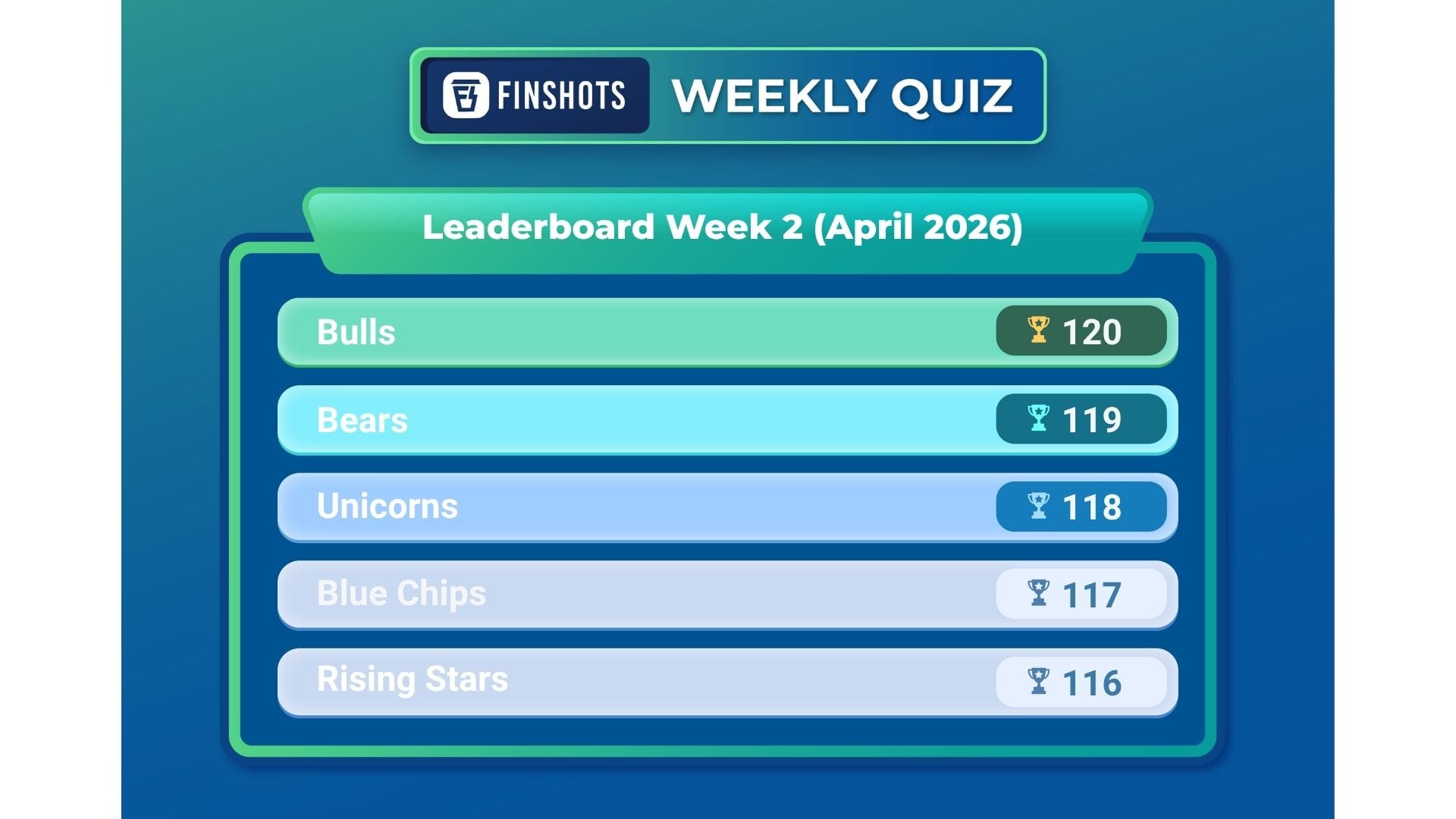
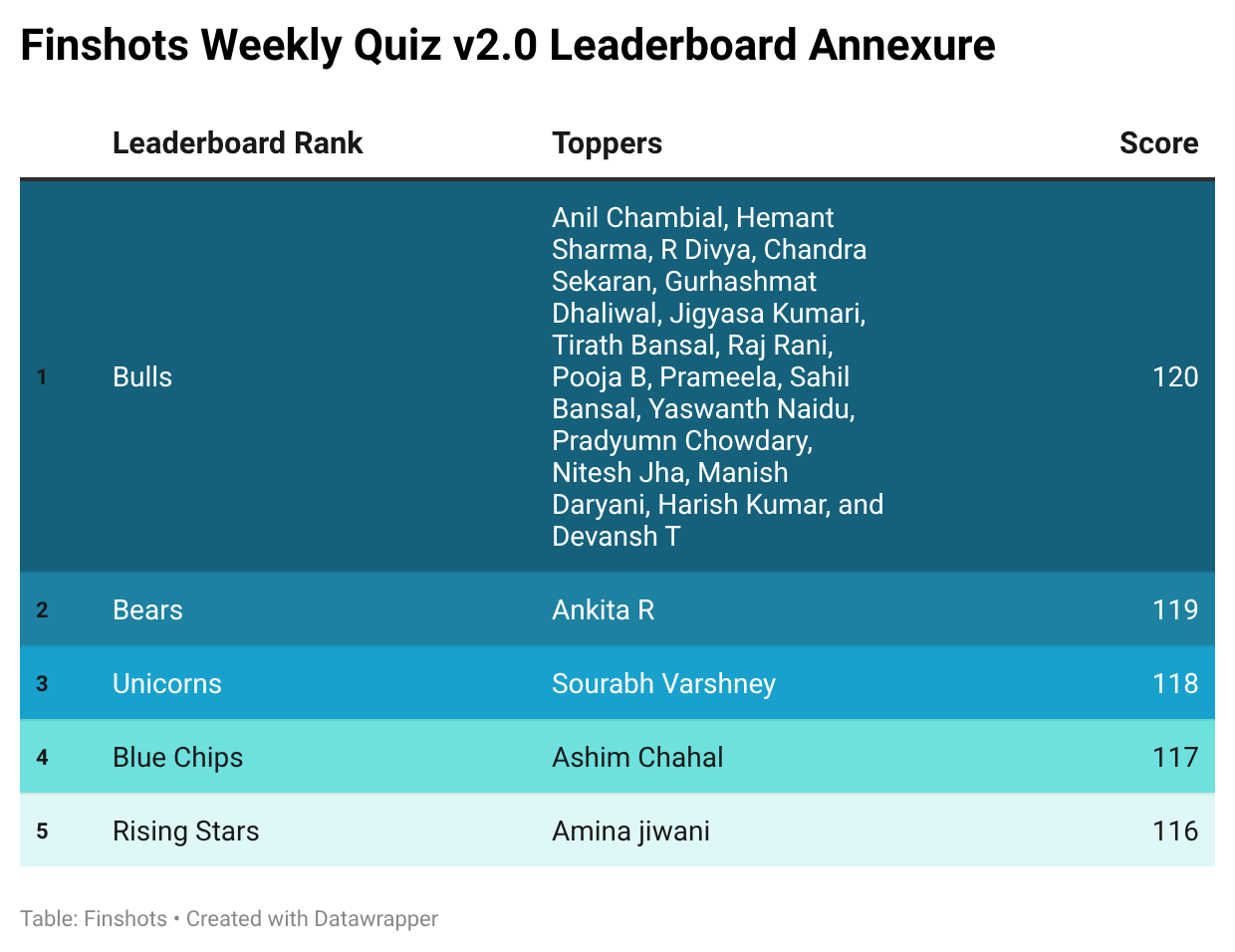
If your name has been featured on the leaderboard, then congratulations! If not, don’t lose hope. If you attempted last week’s quiz, keep at it and answer all the weekly quizzes this month. You never know when the turntables! Click on this link to take this week’s quiz, which is open till 12 noon, Friday, 24th of April, 2026. The more answers you get right, the better your chances of appearing on the Finshots Weekly Quiz leaderboard. We’ll publish it every Saturday in the Weekly Wrapup. And the winner will be announced in the first week of May.
Liked this week’s wrapup?
Don’t forget to share it with your friends, family, or even strangers on WhatsApp, LinkedIn, and X. And subscribe to Finshots, if you haven’t already. Plis!
A leading insurer is revising its health insurance premiums!
Policies issued after April 28th, 2026 (midnight) will reflect the updated premiums.
If you've already generated a quote, the premium may change once the revision comes into effect.
So, book a free call with Ditto to understand your options.