
Why the world can’t agree on taxing the internet
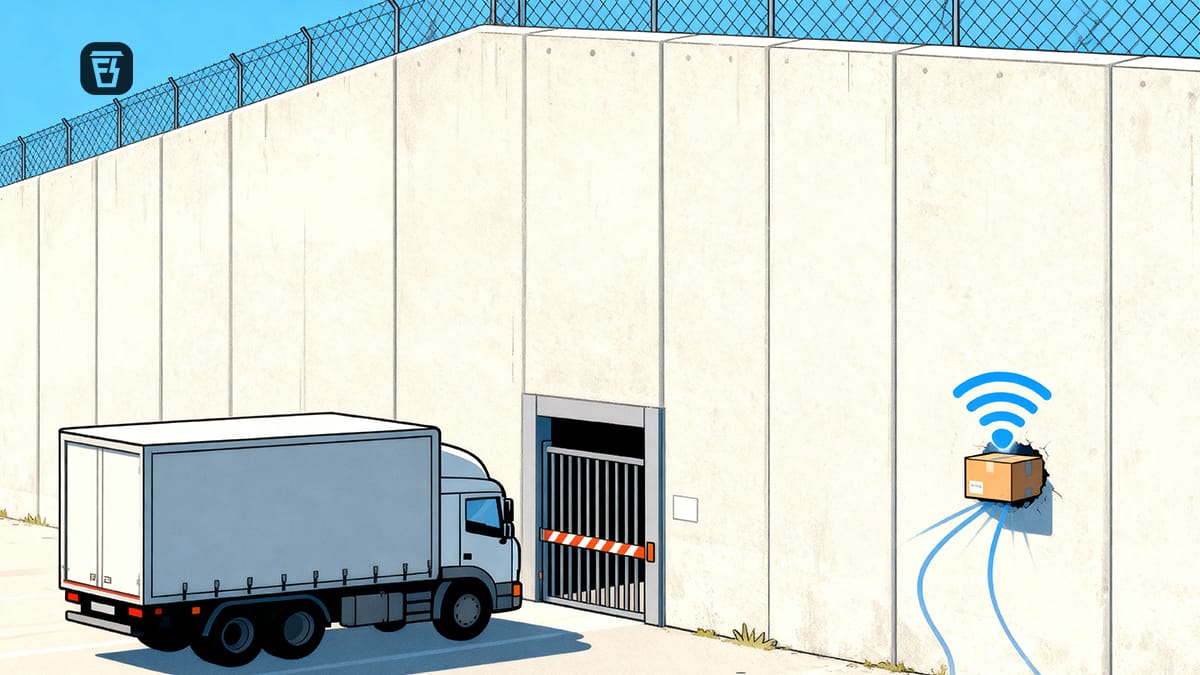
In today’s Finshots, we talk about why the WTO’s temporary rule from 1998 is still shaping global trade today.
But here’s a quick sidenote before we begin. This week, we’re hosting a free 2-day Insurance Masterclass that helps you build real financial security by understanding health and life insurance the right way.
📅 Saturday, 18th April at 11:00 AM: Life Insurance
How to protect your family, choose the right cover amount, and understand what truly matters during a claim.
📅 Sunday, 19th April at 11:00 AM: Health Insurance
How hospitals process claims, common deductions, the mistakes buyers usually make, and how to choose a policy that won’t disappoint you when you need it most.
👉🏽 Click here to register while seats last.
Now on to today’s story.
The Story
Back in 1998, something unusual was happening. For decades, global trade had followed a simple rule. Goods crossed borders, passed through customs, and were taxed. But now, for the first time, value itself was beginning to move without any physical shipment. Software, music and data could travel from one country to another without ever passing through a port.
That raised a simple question: If nothing crosses a border, what exactly should be taxed?
At the time, this didn’t feel urgent. The internet was still small, and digital trade was more of a curiosity than a business platform. Many of the tech giants we know today were still in their early days, and not long before that, the internet had been limited to research and government use.
This is what came to be known as the ‘e-commerce moratorium’. The agreement was born out of a simple problem. The internet was young and moving fast, and the World Trade Organization had no clear framework for it since it was built for a world of physical goods. But digital trade didn’t work like that. When software or music crossed a border as a download, nobody could agree whether it was a good, a service, or something else entirely.
So in May 1998, at a ministerial conference in Geneva, governments decided to press pause. They agreed not to impose customs duties on electronic transmissions while they figured out the proper rules. The agreement was temporary by design.
Alongside this, the WTO launched a work programme to study how digital trade should be classified, asking four bodies to examine whether it should be treated as goods, services, or something entirely new.
All of this matters today because a huge share of what we consume crosses borders without ever passing through customs. And that makes a temporary decision from 1998 far more consequential than anyone imagined. Every time you stream a movie, use cloud storage or buy a game online, you’re consuming something that may be coming from another country.
So while physical imports like CDs, DVDs or game discs were taxed at the border, their digital equivalents have moved across countries without any import duty.
The proper rules never came. But the placeholder stayed. At every WTO ministerial conference since, members voted to extend the moratorium — and the digital economy quietly grew up around it. So what started as a two-year breathing room became the foundation of a multi-trillion dollar global trade system.
For a long time, that worked. But the world of 2026 looks nothing like the world of 1998.
Now, developing countries like Brazil are questioning this rule. The argument is simple. As more goods turn into downloads and services, governments could be missing out on large amounts of tariff revenue.
Think of it this way. A movie on a DVD gets duties charged when it enters the country. The same movie streamed online does not. At the same time, many of these digital services are run by global tech companies, which makes the issue even more sensitive.
Some argue that the moratorium hasn’t helped developing countries build strong digital industries. Instead, it may have made it easier for global tech companies to dominate their markets.
If a country imports physical products like TVs or cars, it can use tariffs to make those imports slightly more expensive and give local companies a chance to compete. But when it comes to digital services, that option doesn’t exist. So if a business in India is choosing between a local software provider and a global one, both come in at similar prices, even though the global company has far more scale, better technology and deeper pockets. Over time, that makes it harder for local players to grow, and easier for countries to depend on imported digital services.
But there's a flip side. If countries start duties on digital transmissions, it could make online services more expensive and fragment the internet across borders. And that could have unintended consequences. Affordable access has helped bring piracy down or at least keep it controlled. If that balance shifts, some users may simply go back to free, unofficial alternatives.
So why hasn't the WTO been able to settle this after nearly three decades?
Well for starters, countries want completely different things from the same rule. And this position is also backed by industry. Over 200 global businesses, through the International Chamber of Commerce, have called for the moratorium to be made permanent, arguing that it keeps digital trade predictable and affordable. But countries like India worry they’re missing out on tariff revenue as more trade moves online.
Unfortunately, trade rules don't work one way. If India pushes to put tariffs on digital imports, other countries can respond by doing the same to India's digital exports too. And that's a real risk for a country that earns heavily from IT services and software exports.
Add to that the fact that WTO decisions need consensus, which means everyone has to agree. So when one group wants the rule to stay and another wants it gone, the easiest outcome is to postpone the decision.
That’s exactly what’s been happening since 1998. The moratorium continued not because the world agreed on it, but because no one could agree on what should replace it.
And this was until they couldn't even agree to postpone it anymore.
On March 30, 2026, at the WTO's 14th Ministerial Conference in Cameroon, the moratorium expired for the first time in its 28-year history. Negotiations ran through the night, but delegates couldn't bridge the gap. Brazil and Turkey blocked the extension, and the conference ended without a deal.
The sticking point though, wasn't simply about digital tariffs. Brazil, which had actually supported a short-term extension, ended up blocking the proposal to protest the lack of progress on agriculture — a long-running grievance with the WTO's broader priorities. So for Brazil, the e-commerce moratorium became leverage in a much older fight.
The United States, which had been pushing for a permanent extension, left Yaoundé empty-handed. Before the conference, Washington had made clear that a positive outcome was necessary for it to remain fully engaged with the organisation.
Even if the moratorium were to lapse, digital tariffs wouldn’t appear overnight. Countries would still need to pass domestic laws to impose them. But the legal certainty that businesses and governments have relied on for nearly three decades is now gone.
The bigger question is what this says about the WTO itself. Talks are set to resume in Geneva, but members are returning to the table without a clear path forward. The e-commerce agreement that 66 WTO members separately endorsed at Yaoundé offers one possible route — a smaller group moving ahead on digital trade rules without waiting for full consensus. But that still leaves the majority of the world's trading nations without a shared framework.
So yeah, what was meant to be a two-year pause has now turned into one of the most pressing unanswered questions in global trade. And whether it moves toward a common framework anytime soon is something only time will tell.
Until next time…
Liked this story? Share it with your friends, family members or even strangers on WhatsApp, LinkedIn and X.
Also, if you’re someone who loves keeping tabs on the world of business and finance, hit subscribe if you haven’t already. And if you’re already a subscriber, thank you! Maybe forward this to someone who’d enjoy our stories but hasn’t discovered us yet.