
Has India cracked its nuclear endgame?
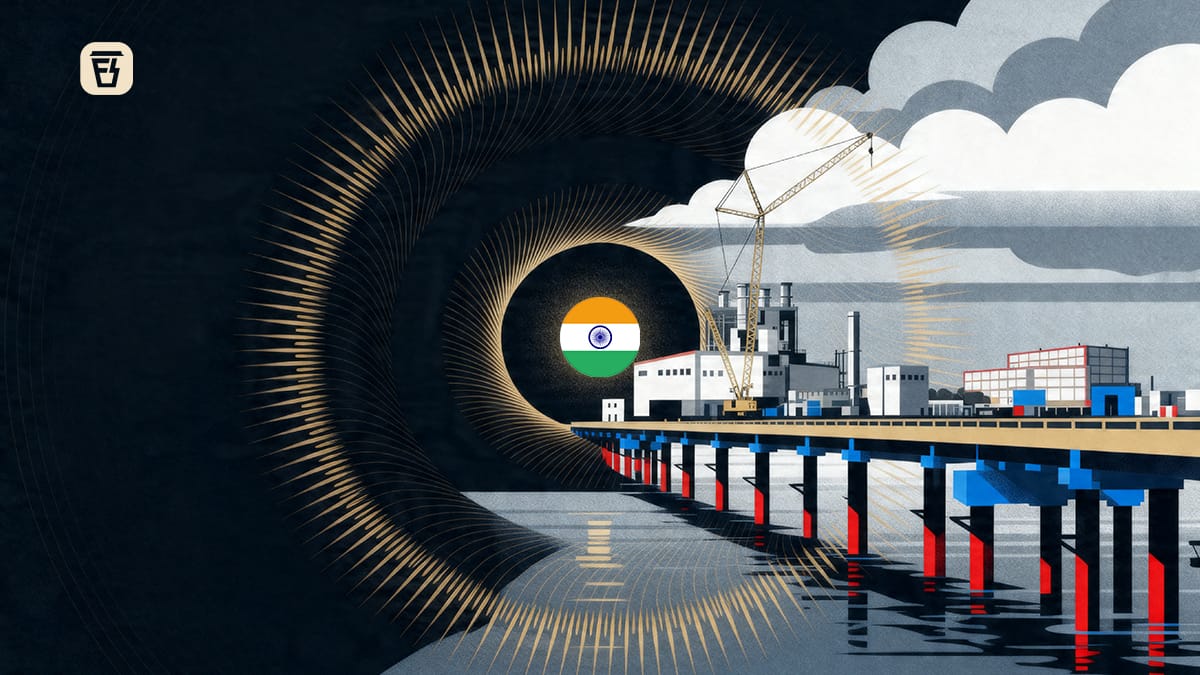
In today’s Finshots, we talk about how India achieved criticality of its first ever Prototype Fast Breeder Reactor.
But here’s a quick sidenote before we begin. This week, we’re hosting a free 2-day Insurance Masterclass that helps you build real financial security by understanding health and life insurance the right way.
📅 Saturday, 18th April at 11:00 AM: Life Insurance
How to protect your family, choose the right cover amount, and understand what truly matters during a claim.
📅 Sunday, 19th April at 11:00 AM: Health Insurance
How hospitals process claims, common deductions, the mistakes buyers usually make, and how to choose a policy that won’t disappoint you when you need it most.
👉🏽 Click here to register while seats last.
Now on to today’s story.
The Story
In the years after India gained independence, it was still finding its footing in the world, while one man was planning for decades ahead. Homi Jehangir Bhabha wasn’t just building a nuclear program. He was designing a future where India wouldn’t depend on the world for its energy needs.
But there was a problem. India didn’t have much uranium, the fuel most nuclear reactors run on. Even today, the country depends heavily on imports to keep its reactors running, including multi-billion dollar agreements with countries like Canada.
What it did have, however, was something far less talked about: vast reserves of thorium or 25% of the global total, buried in its sands. There was just one catch.
Thorium, by itself, can’t be directly used as fuel in most nuclear reactors. It needs to be converted into a usable form. And that process requires another material to kickstart it.
And at the time, countries like the US were racing ahead with uranium-based reactors, scaling nuclear power as quickly as possible. Japan, on the other hand, would go on to build its program by importing both technology and fuel.
India had neither luxury. With limited uranium reserves, it couldn’t simply replicate these models. So instead of chasing speed, Bhabha chose something far more ambitious: a system that could turn this resource scarcity into self-reliance, even if it took decades to get there.
It was a three-stage nuclear programme that would begin with uranium, move to plutonium, and eventually unlock thorium as a long-term energy source.
For context, Stage 1 involves Pressurised Heavy Water Reactors (PHWRs), which use natural uranium to generate electricity and produce plutonium as a by-product. Then comes Stage 2, Fast Breeder Reactors (FBRs), which use that plutonium to generate more fuel than they consume. And finally, Stage 3, Thorium Based Reactors, which use the bred material to unlock India’s vast thorium reserves for long-term energy.
For the longest time, it remained just that: a plan waiting to be completed because within this plan, that second stage remained the missing piece. That was, until last week.
On April 6th, India’s Prototype Fast Breeder Reactor (PFBR) at Kalpakkam, Tamil Nadu achieved criticality for the first time. Criticality is the point where a nuclear reactor becomes self-sustaining. In other words, the chain reaction inside the reactor continues on its own without needing an external push.
On paper, this might sound like another technical milestone. But it isn’t because fast breeder reactors aren’t new. Russia has the only other commercial fast breeder nuclear reactor in history, but this uses uranium instead of thorium. But in most other countries, the efforts behind these reactors haven’t exactly gone as planned. These reactors are designed to do something unusual. They don’t just generate power, they produce more nuclear fuel than they consume. Countries like the US, Japan, and France have all tried building similar reactors using plutonium. But in practice, it was far more difficult.
Japan’s Monju reactor, for instance, was shut down back in 1995 after a sodium leak triggered a fire and eventually decommissioned years later. In the US, projects like the Clinch River Breeder Reactor were abandoned after costs went out of control. Even France’s Superphenix, which was once one of the world’s most ambitious breeder reactors, struggled with low use and was eventually shut down.
Which is why, over time, much of the world moved on to simpler nuclear designs or away from nuclear altogether. Things like running conventional reactors using uranium, and securing long-term fuel supplies through domestic reserves or international partnerships.
And yet, India didn’t back down from this pursuit. It stayed committed to breeder reactors because they were essential.
This stage was never just about generating electricity. It was about creating the materials for the third and final stage.
And that’s what makes the PFBR milestone so significant.
By achieving criticality, India has shown that it can run a reactor using plutonium-based fuel. This is the step that makes moving beyond uranium possible. But more importantly, it brings the country closer to something far bigger: the ability to expand its nuclear fuel base.
If fast breeder reactors work as intended, they can produce more usable (fissible) material than they consume, effectively turning a scarce resource into more usable fuel.
In the process, they don’t just create more fuel. They also make better use of what would otherwise be treated as nuclear waste.
And that’s what unlocks the final stage of the plan: Thorium. Not as fuel on its own, but as a material that can be turned into Uranium-233, the fuel that powers stage three.
Here’s the tricky part though, because getting it right wasn’t just about switching a reactor on.
To begin with, the reactor uses what’s called mixed oxide fuel (MOX) which is a combination of plutonium and uranium. This fuel had to be fabricated precisely, loaded into the reactor core, and arranged in a way that would allow a controlled chain reaction to begin.
Unlike conventional reactors that use water as a coolant, the PFBR uses liquid sodium. This allows the reactor to operate at much higher temperatures and with fast-moving neutrons, both essential for breeding more fuel.
But sodium comes with its own risks. It reacts violently with water and even air. So the entire cooling system has to be sealed, monitored, and engineered with extreme precision. Even a minor leak could be dangerous.
And then there’s the moment of criticality itself. Achieving criticality is a gradual process. Control rods which are used to absorb neutrons are slowly withdrawn. Think of control rods like brakes. They absorb neutrons and keep the reaction in check. As operators slowly pull them out, it’s like easing off the brakes, and the reaction starts picking up pace. Step by step, it builds until it reaches a point where it sustains itself.
If it’s too fast, you risk instability and if it’s too slow, the reaction won’t sustain. Everything has to be balanced perfectly.
It took decades, but despite all these risks, they were able to achieve criticality and open the next stage for India’s nuclear programme.
Reaching criticality is just the beginning. Over the next few months, the plant will go through a series of controlled tests before it can begin fully commercial operations. Because achieving criticality proves the science but it doesn’t prove the economics.
With an installed capacity of about 8.7 gigawatts, nuclear power accounts for just over 3% of India’s total electricity generation. And that’s quite small, especially when demand is only set to rise. If India wants to reduce its reliance on fossil fuel imports, mainly coal, and move towards energy independence, it needs more reliable sources of power.
That’s where nuclear comes in. It can complement intermittent renewables like solar and wind, while providing steady, 24/7 baseload power. For now, though, nuclear energy occupies only a small slice of India’s energy mix and there’s still a long way to go.
If this works, India can move beyond a single prototype to a fleet of breeder reactors and gradually reduce its dependence on imported uranium.
And if that happens, India won’t just be generating power. It’ll be doing what Homi Bhabha envisioned decades ago: running on fuel it already has instead of relying on the world for it.
Until next time…
Liked this story? Share it with your friends, family members or even strangers on WhatsApp, LinkedIn and X.
Also, if you’re someone who loves keeping tabs on the world of business and finance, hit subscribe if you haven’t already. And if you’re already a subscriber, thank you! Maybe forward this to someone who’d enjoy our stories but hasn’t discovered us yet.