
The economics behind PNG
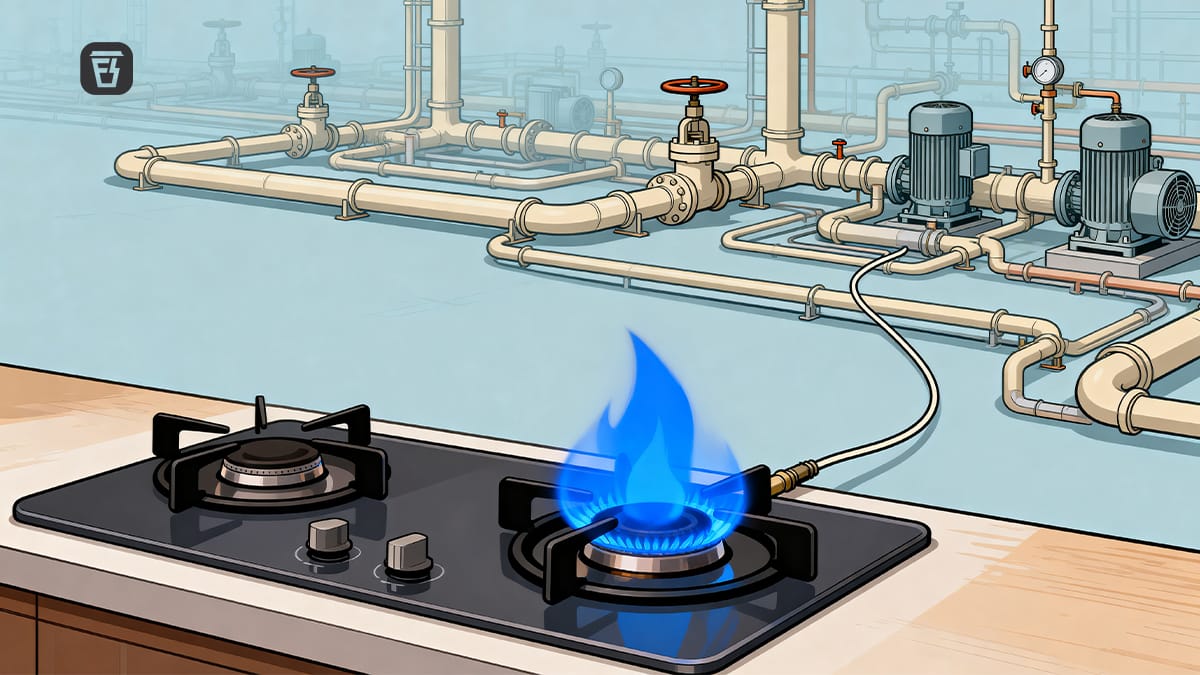
In today’s Finshots, we tell you why India is pushing consumers to switch to PNG (Piped Natural gas) and what it will take to achieve this ambitious target.
But here’s a quick sidenote before we begin. This week, we’re hosting a free 2-day Insurance Masterclass that helps you build real financial security by understanding health and life insurance the right way.
📅 Tomorrow (Wednesday), 15th April at 6:30 PM: Life Insurance
How to protect your family, choose the right cover amount, and understand what truly matters during a claim.
📅 Thursday, 16th April at 6:30 PM: Health Insurance
How hospitals process claims, common deductions, the mistakes buyers usually make, and how to choose a policy that won’t disappoint you when you need it most.
👉🏽 Click here to register while seats last.
Now on to today’s story.
The Story
About 50 lakh people in India book LPG (Liquefied Petroleum Gas) cylinders on any given day. That’s when everything is running smoothly.
But things aren’t normal right now. With the war in the Middle East, the Strait of Hormuz, a critical route in the Middle East that carries LPG into your cylinder, has been disrupted. Liquefaction facilities in the Gulf are either damaged or suspended. So even if ships pass, there’s less gas being processed for export.
This means that the daily gas bookings have jumped to nearly 90 lakh. That’s panic booking or essentially, people rushing to secure a refill, sometimes even before their current cylinder runs out.
And that’s exactly why this crisis has brought fresh attention to PNG (Piped Natural gas) connections, which the government wants you to switch to wherever the facility is available.
PNG simplifies things. Gas flows directly into homes through pipelines without you having to worry about when your cylinder will run out. So there’s no need for last-minute bookings or panic.
Besides, it also eases pressure on the system. Distributors don’t have to refill cylinders, load them onto vans, and navigate busy streets for deliveries. Fewer trips mean less fuel use, lower congestion, and cleaner air.
And most importantly, there’s the supply angle. India imports roughly 60% of its LPG demand. In FY25 alone, imports stood at about 20.67 million tonnes or nearly 66% of domestic consumption. And close to 90% of this comes through the Strait of Hormuz. PNG, on the other hand, is mainly methane. Around 40–50% comes from domestic fields like the Krishna-Godavari basin, Assam, and Gujarat, while the remaining 50–60% is imported LNG (Liquefied Natural Gas), which is regasified and supplied via pipelines.
In short, PNG simply means less import dependence and fewer bottlenecks.
But if PNG is so great, then why did it take so long to scale up in India, you ask? After all, it’s not like PNG is new. Household connections started picking up after the City Gas Distribution (CGD) framework emerged in the late 1990s and early 2000s, allowing authorised companies to supply cooking gas to homes through pipelines. That’s over 25 years ago. And yet, only about 1.6 crore households or roughly 12–13% are connected to PNG today. So what’s holding it back?
Well, it mostly comes down to three things.
First, the basics. To build a PNG network, companies first have to lay pipelines. Big trunk pipelines or massive 18–36 inch steel pipes run hundreds of kilometres from gas fields or LNG terminals to cities. From there, smaller steel or polyethylene (PE) pipes branch out within towns to reach homes.
But laying these pipelines isn’t simple.
They often have to pass under busy streets, homes, shops, or even water bodies. And that requires something called Right of Way (ROW) — essentially, permissions to dig and lay infrastructure. For city-level networks, that means approvals from municipalities, railways, highway authorities, power utilities, and more. There’s also objections that can come from private or commercial property owners. If a property owner objects to digging, the entire pipeline route can get disrupted.
But even if all permissions were granted, things don’t move smoothly. Rollouts have lagged licence awards because approvals come from multiple layers such as central, state, and local bodies, each with different timelines and fees. And enforcement hasn’t been strong either, even though the Petroleum and Natural Gas Regulatory Board (PNGRB), a statutory body that regulates consumption and distribution in the petroleum and natural gas sectors, has already awarded most areas to CGD players.
You can see it in the numbers. PNG network growth has slowed over the years from 10.6% in FY23 to 5% in FY24, and further down to just 2.2% in FY25.
The second issue is taxes. Actually on paper, PNG should be cheaper than unsubsidised LPG simply because it cuts out cylinders, bottling plants, and a large part of the logistics chain. But that’s not always the case in reality because PNG is taxed under VAT (Value Added Tax), a predecessor to the current GST (Goods and Services Tax) regime. And VAT rates vary by state, typically between 5% and over 14%. LPG cylinders, on the other hand, are taxed at a concessional 5% GST across India. So depending on where you live, PNG can end up costing more, especially since it’s often coupled with additional excise duties.
There are also upfront costs, i.e., even when pipelines reach a town, many households delay connections because they have to pay meter or connection charges anywhere between ₹5,000 and ₹9,000. Add to that the habit of using LPG cylinders, especially since subsidies are still available, and many people simply stick to familiar cooking fuels.
And finally, there’s the return-on-investment problem for CGD companies. You see, the economics of PNG simply doesn’t work so well in smaller towns because in low-density or semi-rural areas, companies have to lay long stretches of pipelines to reach a small number of homes. That pushes up infrastructure and supply costs per household. But the revenue side doesn’t keep up. Fewer homes mean fewer paying customers. And even those households often use less gas. Maybe cooking less frequently using high-demand appliances, or even relying partly on subsidised LPG, firewood, or kerosene. That leads to weak project-level returns. So naturally, CGD companies delay expanding into these areas.
This simply means that even if many consumers are willing to switch to PNG, the business case just isn’t strong enough. And that shows up in the data. Nearly 60 lakh households or about 40% of total PNG connections are inactive because customers have meters installed but don't have any gas flowing into their homes.
And yet, despite all these problems, the government now has a real shot at pushing PNG harder. In fact, it’s gone all guns blazing, using the Middle East crisis and the domestic LPG supply crunch as the perfect moment to accelerate PNG adoption.
Take the new policy move, for instance. In March, it notified the Natural Gas and Petroleum Products Distribution Order, 2026 under the Essential Commodities Act, 1955. This order effectively takes away the power of housing societies, resident welfare associations, municipal bodies, and local authorities to block or delay pipeline work. They can’t impose arbitrary charges either. So, a lot of the usual roadblocks have been overridden in favour of national interest.
The government has also asked CGD firms to provide PNG connections to places where mass cooking happens such as residential schools, colleges, hospitals, canteens, restaurants, or community kitchens, within five days, if pipeline infrastructure already exists in their area.
Even taxes are getting attention. The PNGRB is pushing states to rationalise VAT on PNG and CNG (Compressed Natural Gas). Some have already cut rates closer to 5% to make PNG more affordable and reduce price differences across regions.
If these measures actually stay on track, PNG adoption could finally pick up the way the government hopes it will.
Apart from this, more states might need to adopt faster, single-window approaches for PNG clearances. There are already a few good examples to learn from. Take Assam’s City Gas Distribution policy. It mandates that key infrastructure clearances be issued within 30 days and also empowers CGD entities to build and operate networks in their allotted areas. Karnataka offers another example. Its 2023 policy set up a dedicated desk within the infrastructure development department and created an apex committee to fast-track approvals, along with monthly district-level reviews to keep things moving.
And if more states follow similar playbooks, the rollout of PNG networks could become far smoother.
But here’s the thing. The plan is to push over 12 crore PNG connections by 2034. That’s roughly 8–9 times where we are today, all within the next eight years. So, it’s quite a massive scale-up.
So yeah, while the intent is clear, execution will be everything. And that’s what will ultimately decide how “Mission PNG” plays out from here.
Until then…
Liked this story? Share it with your friends, family members or even strangers on WhatsApp, LinkedIn and X.
Also, if you’re someone who loves keeping tabs on the world of business and finance, hit subscribe if you haven’t already. And if you’re already a subscriber, thank you! Maybe forward this to someone who’d enjoy our stories but hasn’t discovered us yet.