
M&A week, the Subhash Chandra saga, and more...
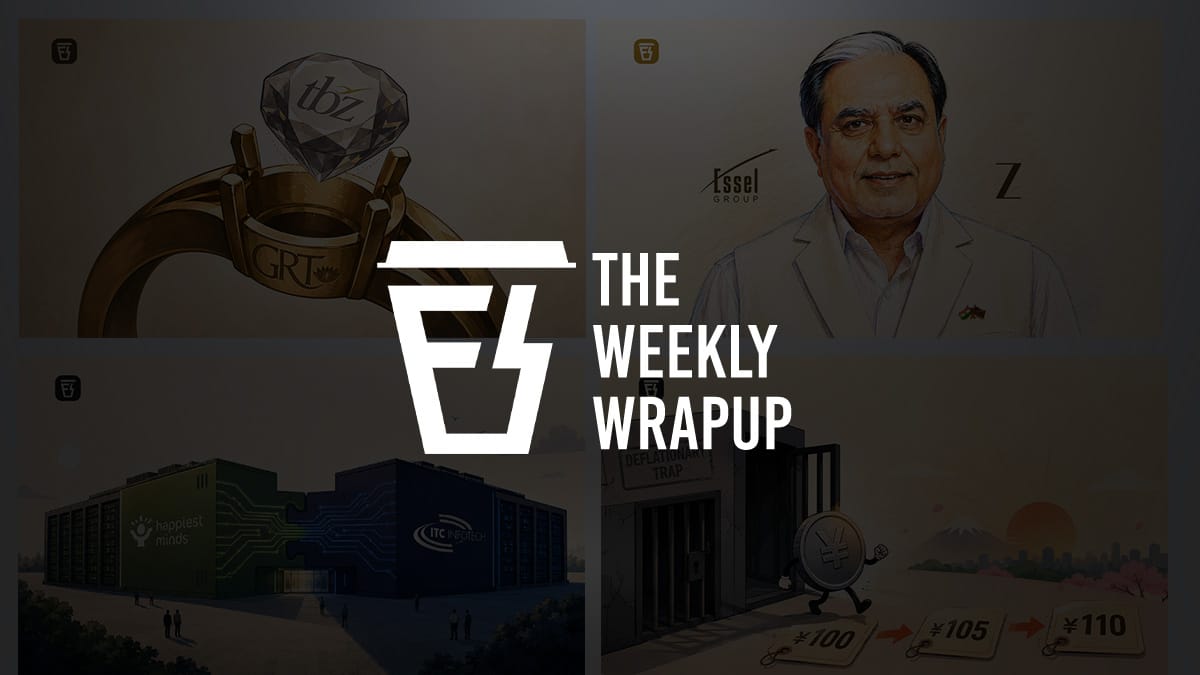
In this week’s wrapup, we discuss why India keeps struggling with rising onion prices, the Subhash Chandra saga, the Happiest Minds-ITC Infotech merger, how rising bonds yields affect Japan’s economy, and GRT Jewellery’s acquisition of Tribhovandas Bhimji Zaveri.
The economics of India's never ending onion price problem
Onion prices have crossed ₹60 a kilo. But it’s not really surprising. We’ve seen major onion price crises every eight to ten years since 1980, with sharp price spikes, and sometimes even crashes, popping up more frequently in between.
But have you ever wondered why?
Well, the answer goes far beyond bad weather and hoarding. And Monday’s newsletter has a simple explanation.
The Subhash Chandra saga explained
There was a time when Indian evenings revolved around Zee TV, with one of its many daily soaps dominating our living rooms. Behind that success was Subhash Chandra, the man who turned Zee into one of the country's largest media companies.
But while millions watched Zee's success play out on screen, a series of bad bets outside media turned the Essel Group extremely indebted.
By 2019, they had racked up around ₹45,000 crore in borrowings, with Chandra's own shares in Zee pledged as collateral. Most of that corporate debt has since been repaid. But Chandra's personal guarantees to lenders kept the crisis alive, and in 2022, Indiabulls Housing Finance used one of them to drag him into personal insolvency proceedings.
A few days ago, the NCLT finally settled that case, and Chandra may have to pay just ₹6.25 crore against ₹22,006 crore in admitted claims.
So if a promoter personally guarantees thousands of crores in loans, how much should they really be on the hook for once the companies and assets behind those loans have changed?
Read our full story to find out.
The Happiest Minds-ITC Infotech merger explained
Happiest Minds has just signed a merger deal with ITC Infotech. But the market’s reaction wasn’t exactly cheerful. The stock fell about 11% after the announcement.
But why?
On the surface, there are a few things that might make investors uncomfortable, such as the valuation. The merger seems to offer barely any premium for Happiest Minds. But there’s also a bigger picture that’s easy to miss if you only look at the headline numbers.
So, is this actually a bad deal, or are investors missing something?
We break down the deal and what each company stands to gain and lose in Wednesday’s newsletter. Click here to read the full story.
Has Japan finally escaped the Lost Decades
For more than three decades, Japan played by a different set of economic rules than the rest of the world. In the early 1990s, the country slid into deflation so persistent that the Bank of Japan tried nearly everything to fix it — cutting rates to zero, buying trillions of yen worth of bonds, even capping long-term yields outright. Yet inflation stayed stubbornly low.
However, recently, Japan's 10-year government bond yield has climbed to around 3%, its highest level in decades.
For the rest of the world, this looks like ordinary economic news. But actually, it marks the end of an era where Japanese money moved around the entire world.
You see, for decades, near-zero rates at home pushed Japanese investors abroad in search of better returns, fueling the yen carry trade, where investors borrowed cheap yen to chase higher yields elsewhere.
That trade only worked because Japan had almost nothing to offer. Now that Japan is finally paying investors to stay, that math is changing, and a reversal could mean less Japanese capital flowing into foreign bonds and equities, with ripple effects on emerging markets, currencies, and global risk appetite.
So is Japan finally escaping the deflation trap that defined its Lost Decades?
Read our full story to find out.
Tribhovandas Bhimji Zaveri is now GRT's jewel
TBZ — The Original has been around for more than 160 years. But now, the family business is being taken over by GRT Jewellers in a ₹1,033 crore deal.
And that immediately raises a couple of questions. Why would a family sell a business with such a long history? And why is the deal happening at a discount to TBZ’s market price?
The answers aren’t quite as straightforward as they seem. But it’s got something to do with a thinly traded stock, an ambitious expansion plan, rising gold prices and a business that hasn’t quite grown the way it hoped to.
Read the Markets edition to see what’s really going on.
Finshots Weekly Quiz v2.0 🧠
As you probably already know, the Finshots Weekly Quiz has a new avatar. If you missed out on it in the last few months, don’t worry. Click here to check out the rules and set a reminder to participate consistently starting next month!
But for now, it’s time to announce the winners. First up, the winner of Finshots Weekly Quiz v2.0 for August 2026. Drumroll, please… 🥁 Palash Jaipurkar! Congratulations.
Next, let’s move on to the top scorers from our previous weekly quiz. There were a whole bunch of you who participated, and many of you ended up with the same scores. So we’re calling you Bulls, Bears, Unicorns, Blue Chips, and Rising Stars. Here’s how the leaderboard looks right now:
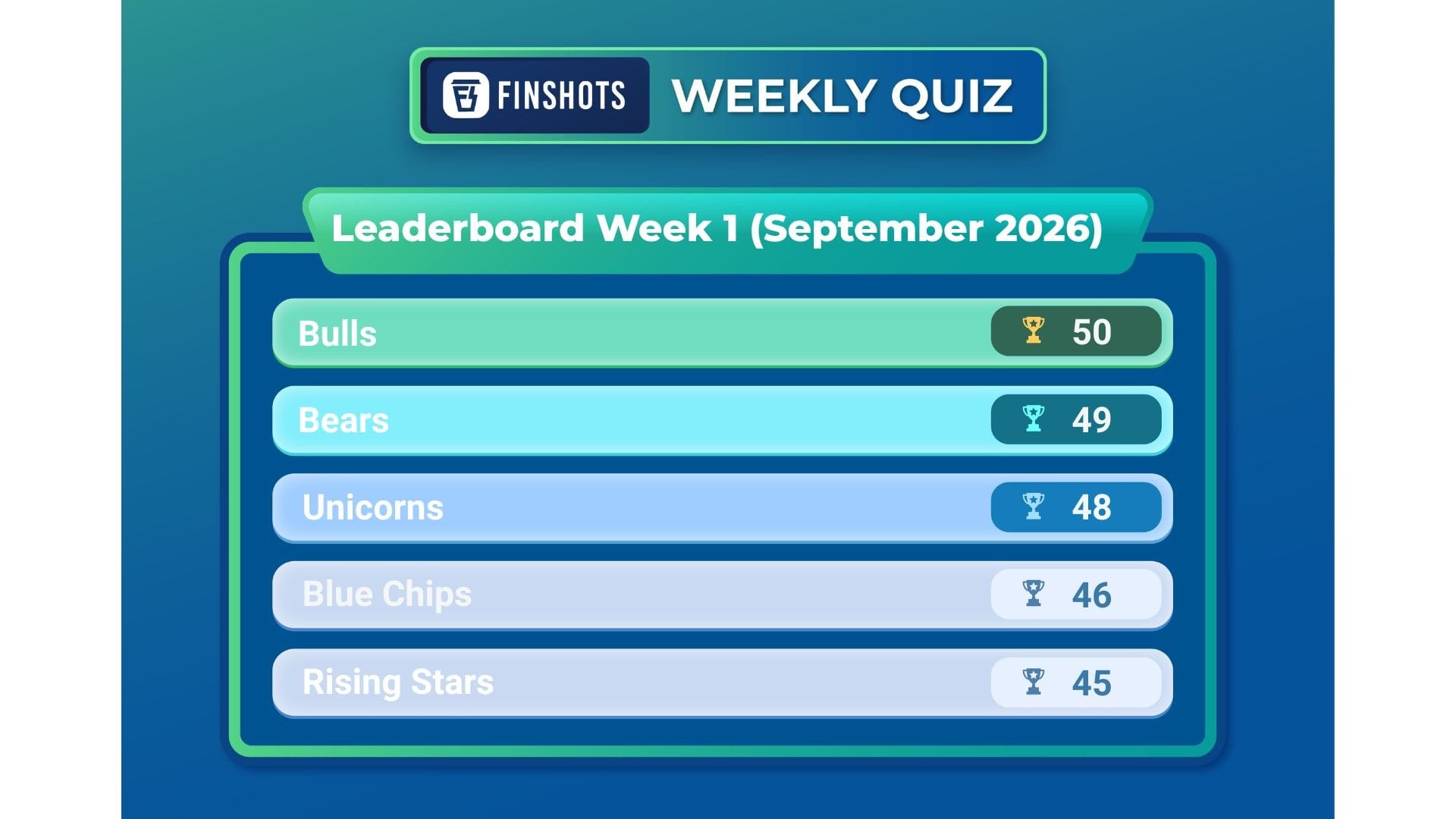
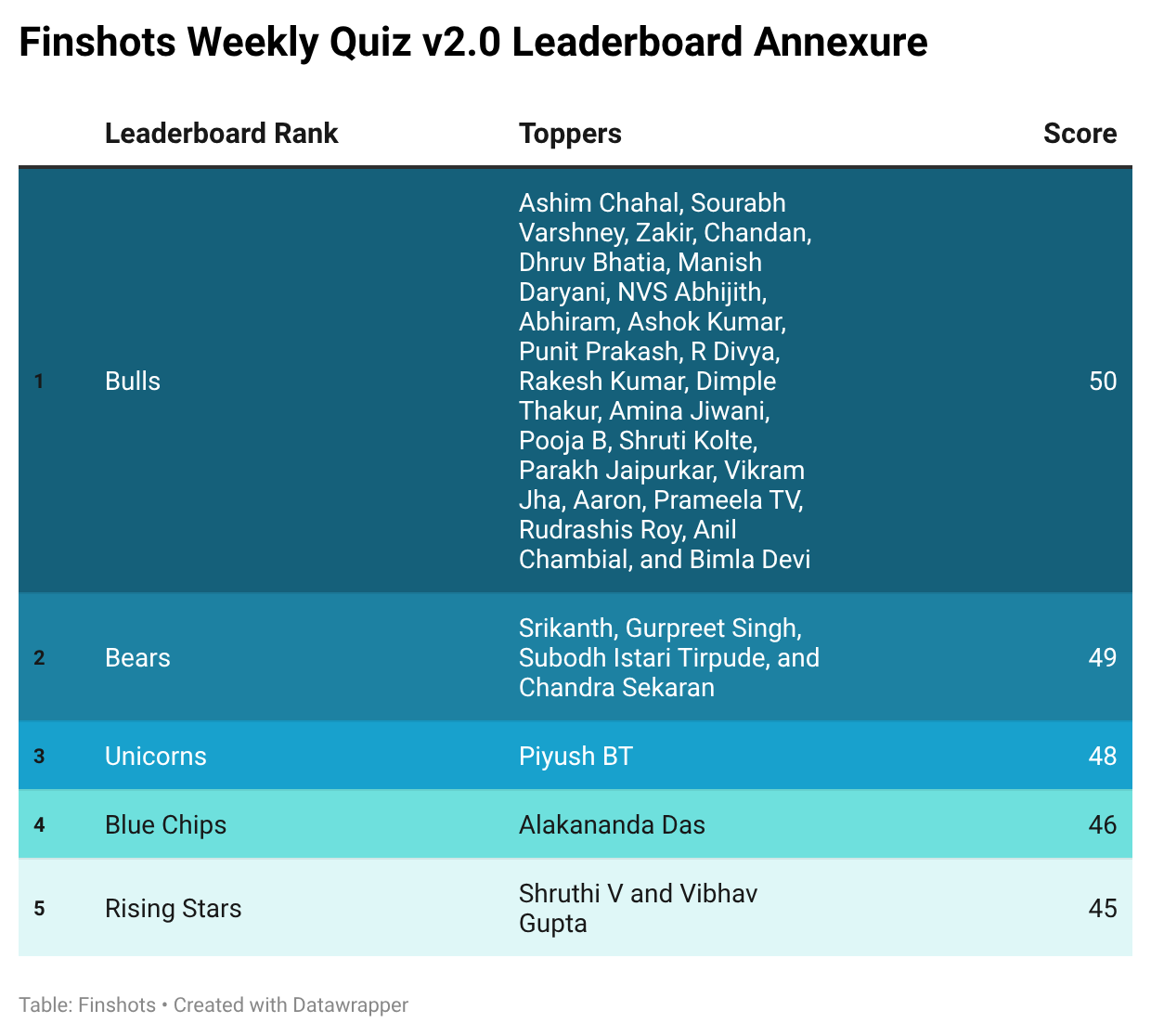
If your name has been featured on the leaderboard, then congratulations! If not, don’t lose hope. If you attempted last week’s quiz, keep at it and answer all the weekly quizzes this month. You never know when the turntables! Click on this link to take this week’s quiz, which is open till 12 noon, Friday, 11th of September, 2026. The more answers you get right, the better your chances of appearing on the Finshots Weekly Quiz leaderboard. We’ll publish it every Saturday in the Weekly Wrapup. And the winner will be announced in the first week of October.
Liked this week’s wrapup?
Don’t forget to share it with your friends, family, or even strangers on WhatsApp, LinkedIn, and X. And subscribe to Finshots, if you haven’t already. Plis!