
Has Japan finally escaped the Lost Decades
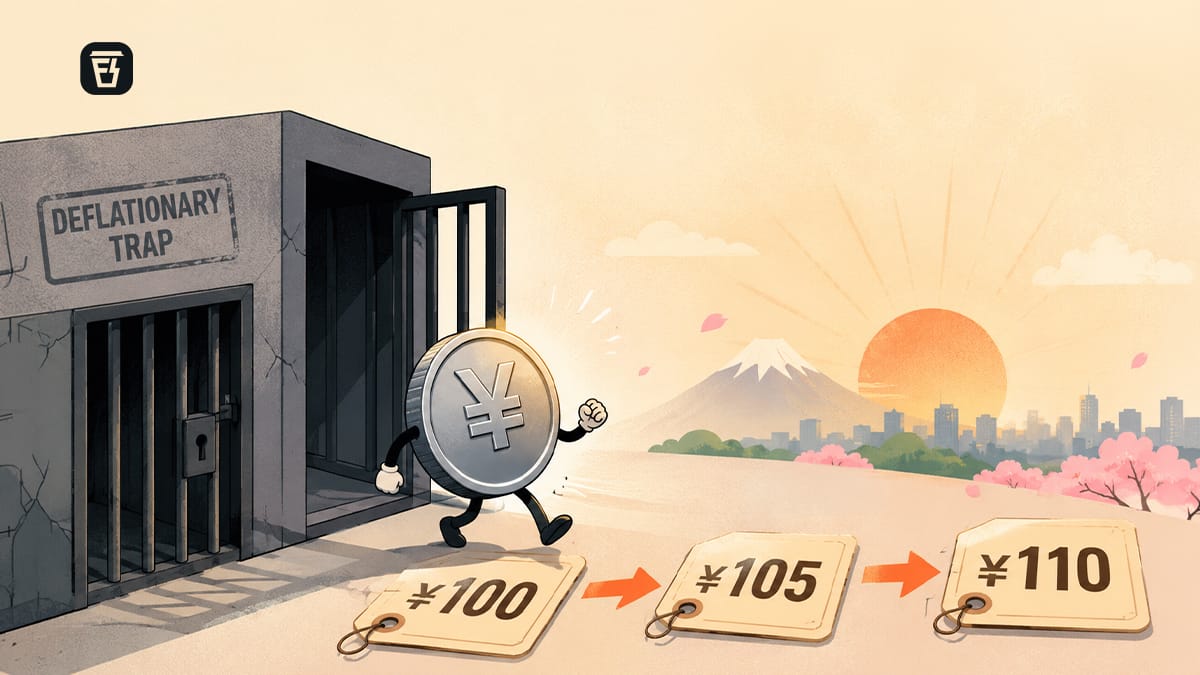
In today's finshots, we tell a tale of two metrics: why a weakening currency and rising bond yields mark a significant break for the Japanese economy.
But before we begin, if you love keeping up with the buzz in business and finance, make sure to subscribe and join the Finshots club, loved by over 5 lakh readers.
Already a subscriber or reading this on the app? You’re all set. Go ahead and enjoy the story!
The Story
For more than three decades, the Japanese economy operated under conditions that differed from almost every other developed nation. After its property and stock market bubble burst in the early 1990s, the country entered what economists now call the "Lost Decades".
As the name suggests, economic growth slowed down, consumers stopped spending, companies held on to cash instead of investing, and prices either barely moved or kept falling. This persistent deflation became Japan's defining economic problem.
Over the years, to break this cycle, the Bank of Japan tried almost every monetary policy available. It cut interest rates to zero, introduced negative interest rates, bought trillions of yen worth of government bonds, and even controlled long-term bond yields through a policy known as Yield Curve Control.
The idea here was to keep borrowing costs low enough to encourage businesses and consumers to spend and invest, while also convincing people that prices would eventually start rising again. Yet inflation remained stubbornly low.
But over the last few years, something appears to have changed.
Inflation has stayed above the Bank of Japan's target for an extended period, wages are finally rising after years of stagnation, and investors are demanding higher returns to lend money to the Japanese government.
As a result, Japan's 10-year government bond yield has climbed to around 3%, its highest level in decades.
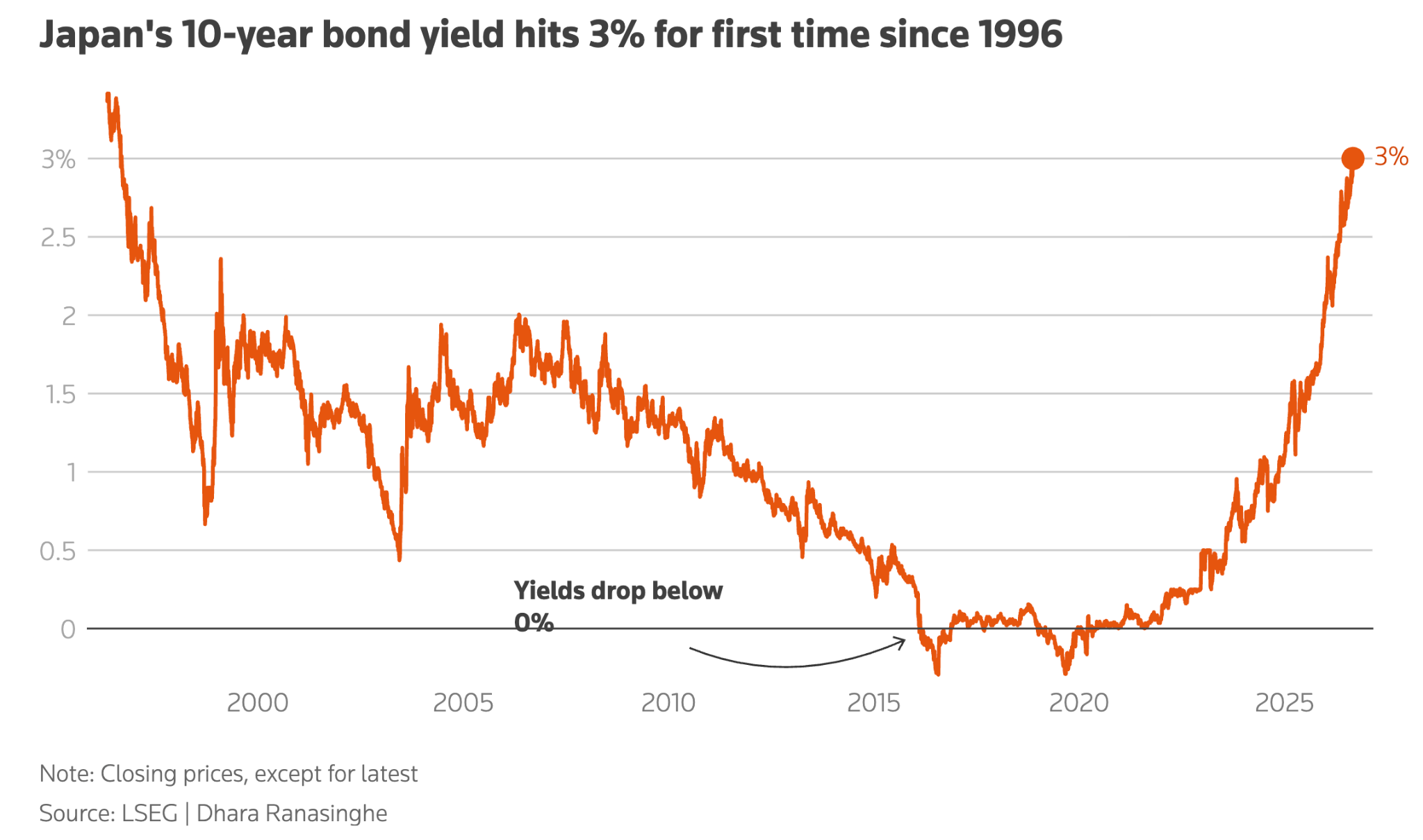
Now, this might sound fairly ordinary for most countries. But for Japan, it represents a profound shift in an economy that had almost forgotten what meaningfully positive interest rates looked like.
However, Japan isn't the only country experiencing this. Bond yields are rising across major economies. India's 10-year government bond yield, for instance, is around 7%, while yields in the US, France and Germany have also climbed to multi-year highs.
At first, these may look like separate stories. However, they are all connected by a broader shift in the global economy.
Let’s explain.
After years of relatively stable prices, economies have had to contend with higher inflation. This means investors now want greater compensation for the possibility that the value of their money will decline. In the last few years, governments have borrowed more due to the pandemic, higher defence spending, and infrastructure investments. Naturally, when governments issue more bonds, investors can demand higher returns before agreeing to absorb the extra supply.
So one reason is inflation.
But another important change is also taking place. Central banks are also no longer buying government bonds. And when a central bank steps back as a major buyer, private investors must absorb more of the government's debt. However, unlike a central bank, private investors have little reason to accept very low returns. They can simply demand a higher yield.
This matters because government bonds don't exist in isolation. Bond yields are the default “risk-free” rate of return, which affects the returns investors expect across the financial system. If a relatively safe government bond starts offering a much better return, riskier assets have to offer enough additional upside to justify the extra risk.
And this, folks, creates a difficult feedback loop for governments.
When investors demand higher yields, governments have to pay more to borrow. Higher interest payments can then put additional pressure on government finances, potentially requiring even more borrowing. At the same time, higher bond yields make government debt more attractive relative to riskier assets. So why invest in risky emerging markets for a modest additional return when a government bond offers a decent yield with almost no risk?
This is particularly relevant for countries such as India because global investors constantly compare returns across markets. If US, European or Japanese government bonds become more attractive, investors may demand a larger premium before putting money into Indian equities or bonds. That can influence foreign capital flows, the rupee and domestic borrowing costs, too.
That said, let’s get back to Japan.
As mentioned earlier, Japan was the odd one out in the global financial system. While other countries occasionally raised interest rates, the Bank of Japan kept borrowing costs close to zero because its bigger problem was deflation. Japanese investors therefore had little incentive to keep their money at home when government bonds offered almost no return. Instead, they looked abroad for better opportunities.
That helped create one of the most important trades in global finance: the yen carry trade.
The idea was simple. Investors could borrow money in yen at extremely low interest rates and use that money to buy assets offering higher returns elsewhere. As long as Japan's interest rates stayed low and investments abroad generated higher returns, investors could pocket the difference.
But the economics of that trade is beginning to change, and the story starts with the yen itself. Since about 2013, Japan has had a weakening currency.
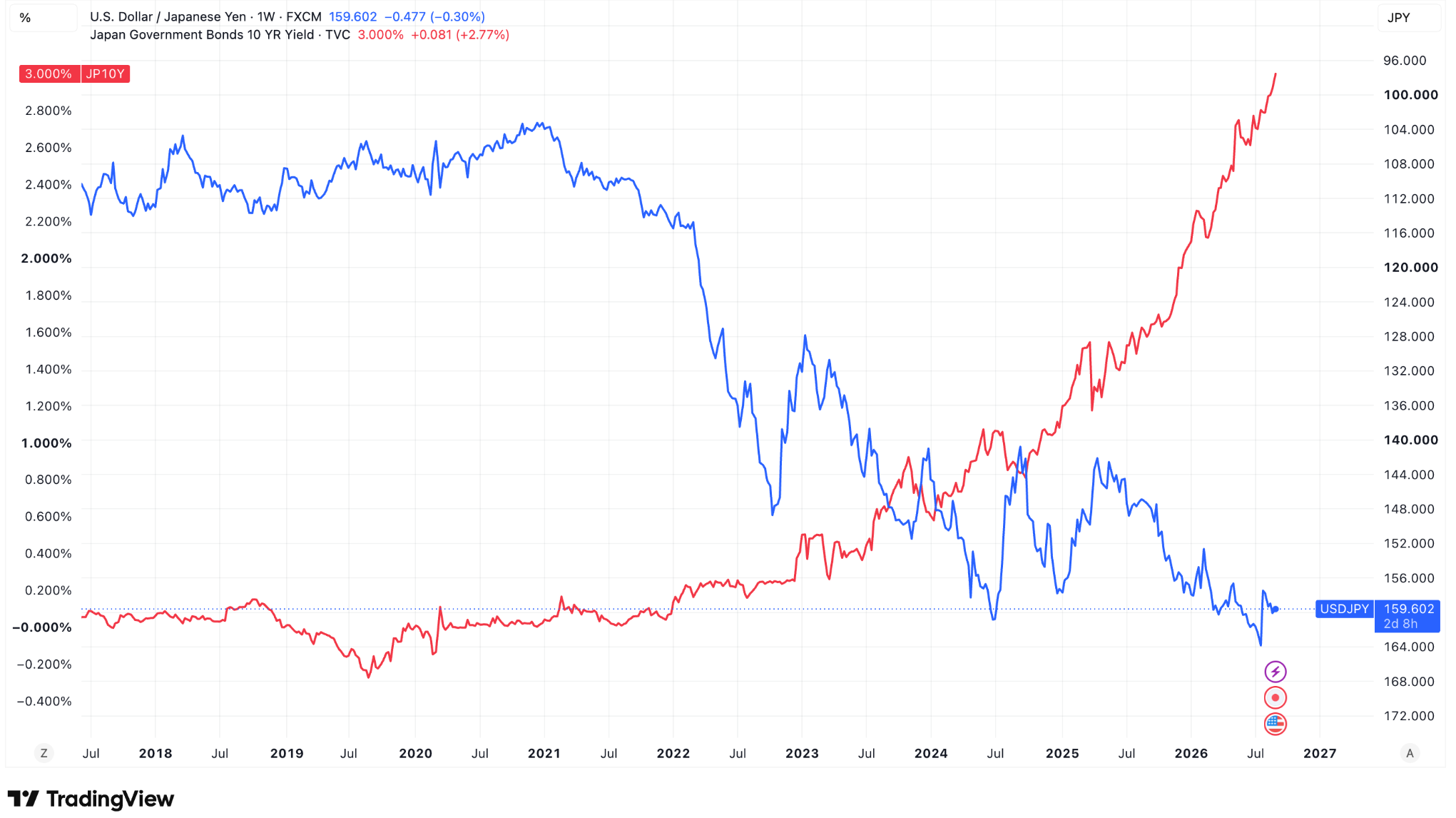
A weak yen makes imported goods such as energy, food and raw materials more expensive for Japanese consumers. That pushes up inflation.
And in a strange way, this is actually good news for Japan. Remember, the country spent decades trying to escape deflation and get inflation back to a healthy level. If prices are rising alongside wages and economic activity, it means Japan may finally be leaving that problem behind. Yay, right?
Well, not quite. Because Japan has now entered the same problem that much of the rest of the world is dealing with: what happens when inflation comes back, and interest rates have to rise with it?
For years, Japan could keep rates near zero because deflation was the bigger threat. But with inflation now more persistent, the Bank of Japan has less reason to keep monetary policy ultra-loose. And that changes the economics of Japanese bonds and, eventually, the flow of money around the world.
Once that happens, investors have a reason to ask a very different question:
Why take the risk of investing abroad when Japan itself is finally paying them to stay home?
And that can create a chain reaction across global markets. Japanese capital returning home could mean less money flowing into foreign bonds and equities. Investors unwinding carry trades could add selling pressure to the assets they had bought with borrowed yen. Emerging-market currencies could come under pressure, while investors could become more cautious about taking risks.
Of course, this does not mean trillions of dollars will immediately rush back to Japan. Investors will still compare expected returns, currency movements, economic growth and risks before deciding where to put their money.
But the important point is that the direction of the incentives is changing. And the very thing Japan spent decades trying to create could now have consequences far beyond its borders.
This is why the rise in global bond yields is worth watching. It is not simply about governments paying more to borrow. But it reflects a broader transition from an era of quantitative easing and cheap capital to one where investors are once again demanding meaningful returns for lending their capital.
For Japan, that could be evidence that the economy is finally escaping the low-inflation trap that defined the Lost Decades.
Until then...
If you liked this story about Japan's economy and rising global bond yields, feel free to share this with your friends, family or even strangers on WhatsApp, LinkedIn or X.
🚨 ATTENTION: FINSHOTS FAMILY
Your CTC includes health insurance. It does not include peace of mind.
Most employees assume their company has them covered - until they realise corporate plans have low limits, no life cover, and vanish the day they resign. There's a whole side of insurance your employer is never going to take care of.
Our 2-day Insurance Masterclass will show you exactly what that looks like and how to fix it.
📅 Saturday, 5th September at 11:00 AM: Life Insurance
📅 Sunday, 6th September at 11:00 AM: Health Insurance
Only few seats left- 👉 Click here to save your spot.