
How is SpiceJet surviving, why 7-Eleven failed, and more...
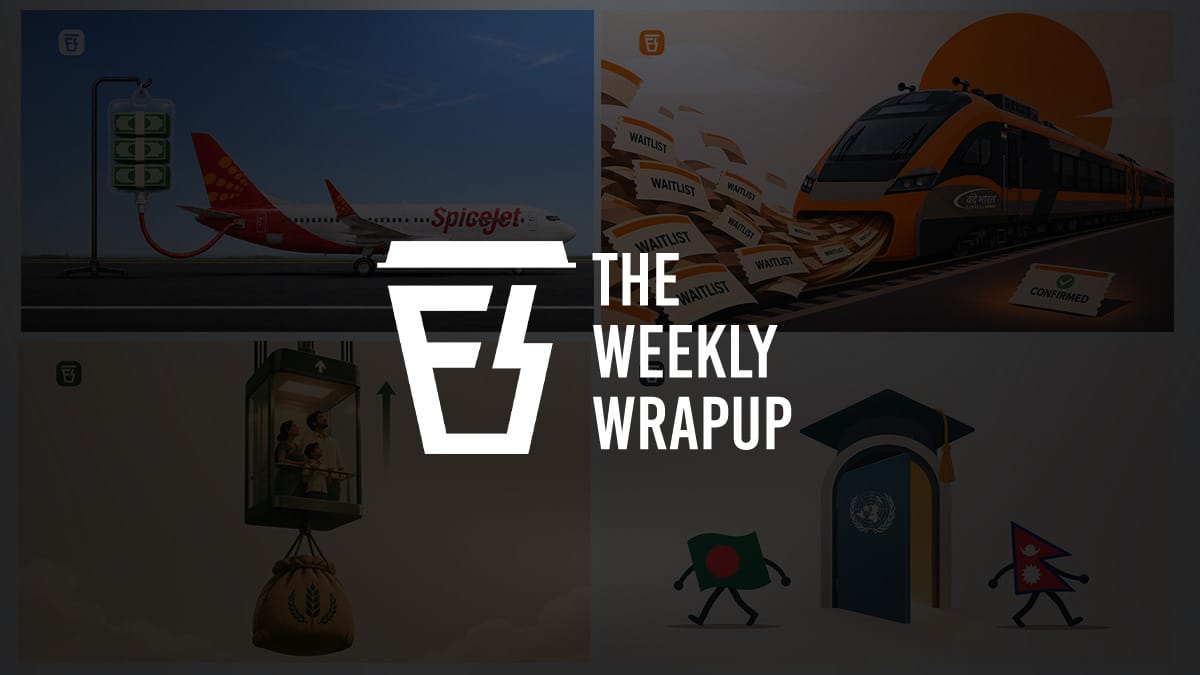
In this week’s wrapup, we talk about why 7-Eleven failed in India, why the Indian Railways is abandoning Tatkal, why India is still distributing ration when poverty has fallen so much, why Nepal and Bangladesh want to stay a ‘Least Developed Country’, and how SpiceJet is still alive.
Why did 7-Eleven fail in a country obsessed with convenience?
7-Eleven aimed to bring Japan’s cozy convenience store experience to India. So they initially partnered with Future Group, which couldn’t run it profitably, and then it eventually became part of Reliance. However, even Reliance couldn’t turn 7-Eleven around and make it profitable.
So why is the franchise loss-making in India while it’s incredibly successful elsewhere? And what went wrong in the first place?
Read our Monday story to find out.
Why is the Indian Railways abandoning Tatkal?
Anyone who has tried booking a train ticket around Diwali or a long weekend knows how it goes. The train is full, Tatkal opens up, and suddenly the same journey costs a lot more.
But here’s the thing: The Indian Railways has actually spent years keeping passenger fares low. In FY25, passenger services made an operating loss of ₹63,721 crore.
This is when the new Vande Bharat Sleeper launched without a Tatkal quota, it looked counterintuitive.
So, why would the Railways give up a chance to charge more on a premium train?
Read our full story to find out.
If poverty is falling, why is India still distributing free rations?
India has reduced its poverty rapidly. Millions have risen above the poverty line. Yet, the government continues to disburse free foodgrains to more than half the country. Does India really need such a broad food security programme?
Well, there's more to the story than meets the eye. From protecting vulnerable households against sudden financial shocks to ensuring farmers have a reliable buyer for their produce, there are several reasons why the government is reluctant to shrink the scheme. At the same time, a significant share of beneficiaries may not even need the assistance, wasting much of taxpayer money.
So, how can India protect its most vulnerable without stretching its welfare system too thin?
Find out in Wednesday’s story.
Why would a country ask to stay least developed?
Imagine being told that your country has developed enough to no longer be considered poor. You’d think that’s cause for celebration, right?
Bangladesh and Nepal seem to disagree. Both were supposed to graduate from the UN’s list of least developed countries this week. Instead, they asked for three more years. And the UN agreed. Which begs the question, why would countries want to hold on to a label that signals economic disadvantage?
The answer lies in the trade benefits and international support that come with it.
But there’s another question that came to our mind. Are these countries genuinely unprepared, or are they getting too comfortable with these benefits?
Find out in Thursday’s newsletter here.
How is SpiceJet still surviving?
India's aviation industry is preparing for a remarkable expansion, with the government expecting passenger traffic to grow sixfold to around 1.1 billion by 2040. Yet one airline seems to be moving in the opposite direction. And it’s none other than SpiceJet.
Its domestic market share peaked at about 21% in July 2014, but by September 2026 it had fallen to just 0.6%.
And this isn't a new problem. SpiceJet has survived multiple crises that led to losses.
So how does an airline in this condition stay in the air?
Read our Market’s story to find out.
Finshots Weekly Quiz v2.0 🧠
Hey folks! As you probably already know, the Finshots Weekly Quiz has a new avatar. If you missed out on it in the last couple of months, don’t worry. Click here to check out the rules and set a reminder to participate consistently starting next month!
But for now, it’s time to announce the top scorers of our previous weekly quiz. There were a whole bunch of you who participated, and many of you ended up with the same scores. So we’re calling you Bulls, Bears, Unicorns, Blue Chips, and Rising Stars. Here’s how the leaderboard looks right now:
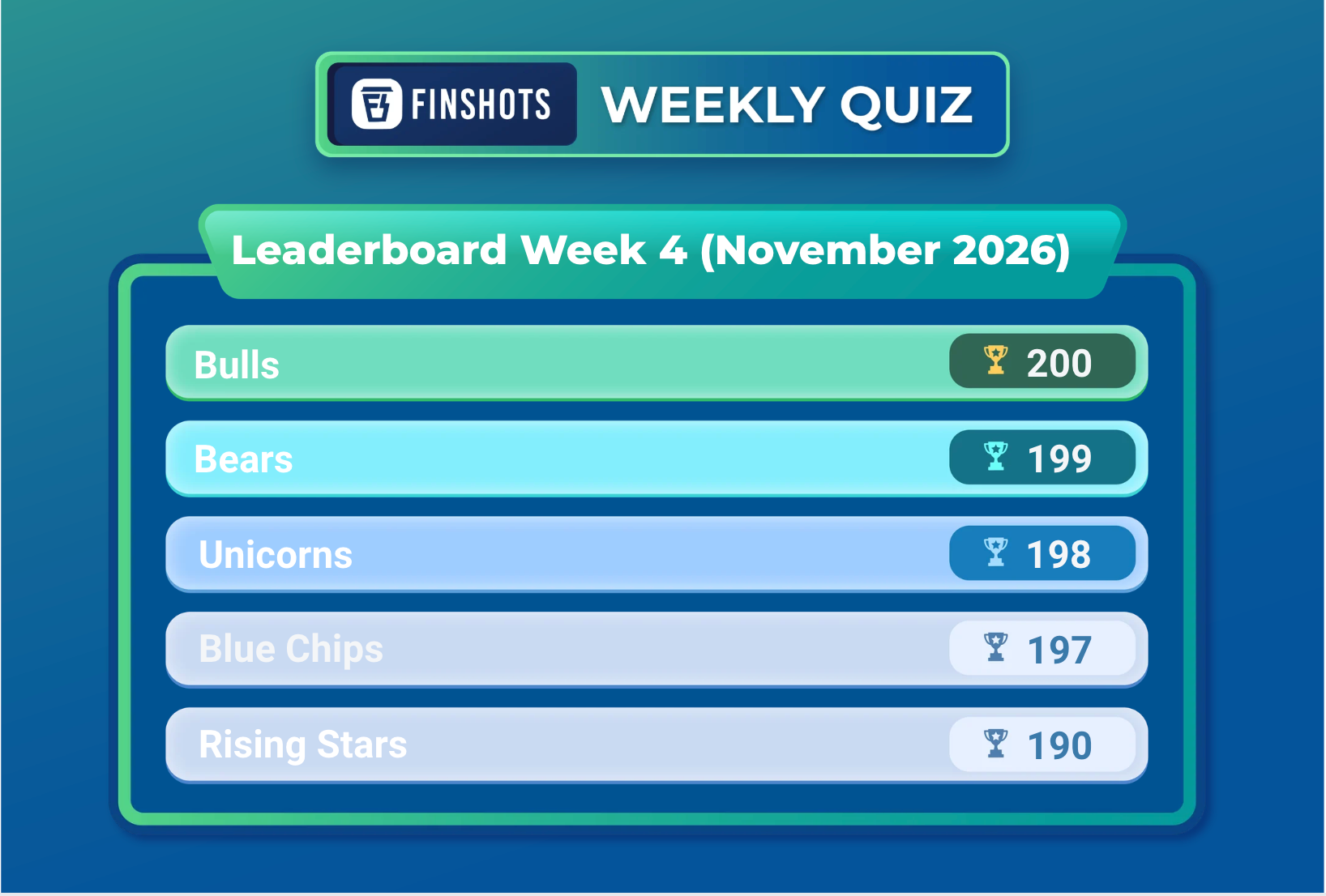
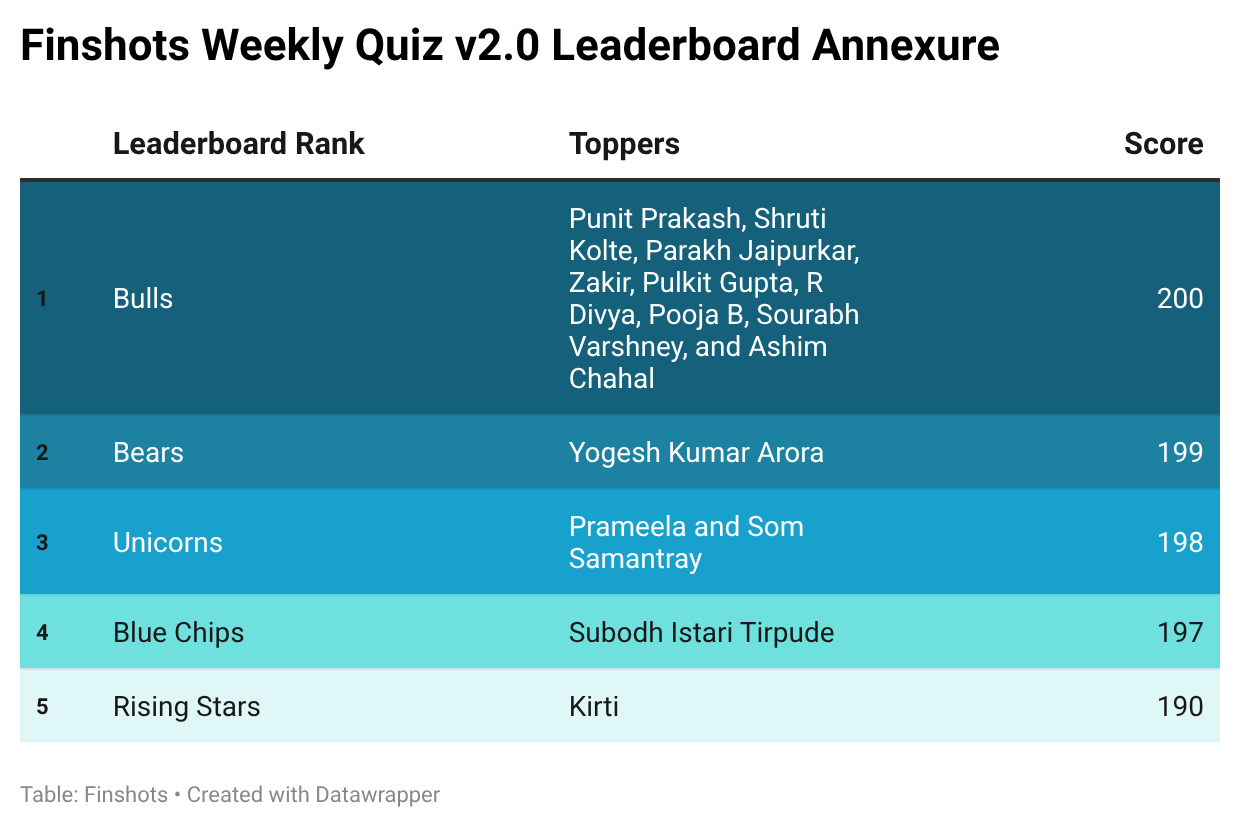
As you can see, we have nine top scorers fighting for the merch. But unfortunately, there’s just one merch box to be won every month.
So to break the tie, we’ll be sending a tie-breaker question to all the “Bulls” via email. Keep an eye on your inbox! The one who gets it right the fastest wins the exclusive Finshots merch for November 2026, and we’ll reveal the winner’s name next week.
And to the rest of you whose names made it to the leaderboard, congratulations! You may not have won the merch this time, but you showed up consistently and earned a spot on Finshots’ weekly leaderboard. That’s pretty cool.
So don’t lose hope. Hit the reset button this month and keep answering all the weekly quizzes. Who knows? You might just be the winner this time around.
Click on this link to take this week’s quiz, which is open till 12 noon, Friday, 4th of December, 2026. The more answers you get right, the better your chances of appearing on the Finshots Weekly Quiz leaderboard. We’ll publish it every Saturday in the Weekly Wrapup. And the winners will be announced next week.
Liked this week’s wrapup?
Don’t forget to share it with your friends, family, or even strangers on WhatsApp, LinkedIn, and X. And subscribe to Finshots, if you haven’t already. Plis!