
FPE #5: Economics explains why people stay in bad relationships
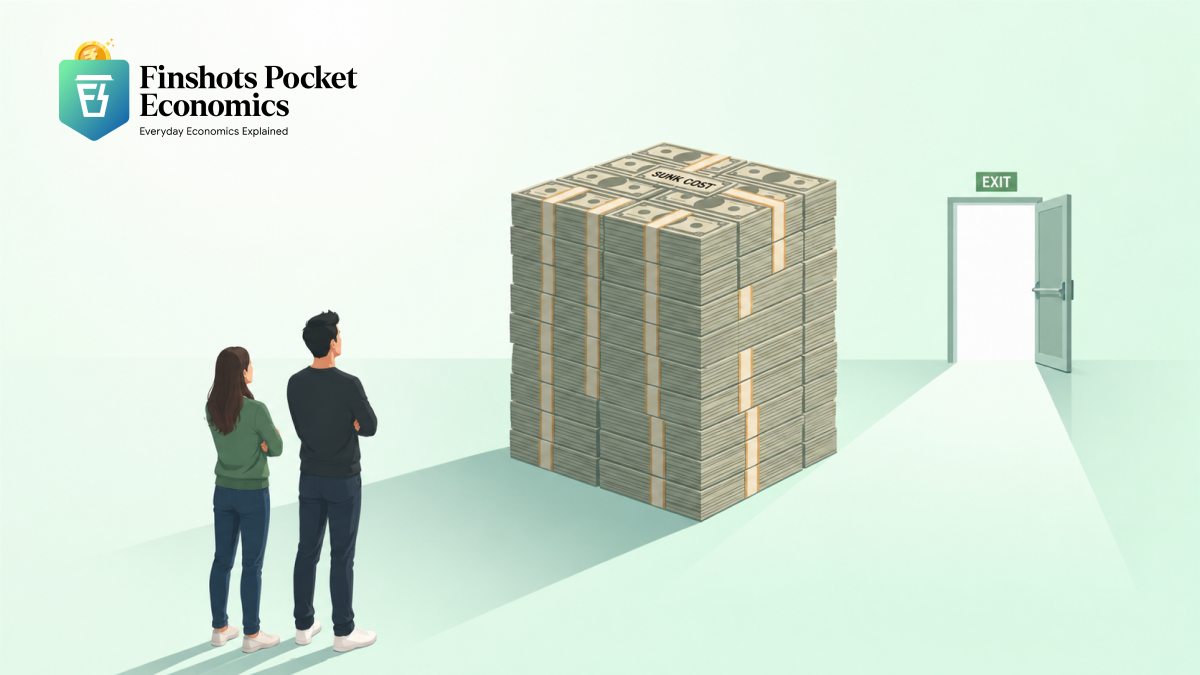
In today’s Finshots Pocket Economics edition, we talk about sunk costs and how economics can sometimes save you from bad relationships.
But before we begin, here’s a quick recap of what we wrote over the past week. On Monday, we wrote about what India needs to do to catch up in the AI race. On Tuesday, we explained why E85 fuel has become a reality far sooner than planned. On Wednesday, we did an explainer on the government’s ₹10,000 crore ATF (Aviation Turbine Fuel) Price Stabilisation Fund. On Thursday, we looked at Zepto’s IPO filing. And yesterday, we tried to make sense of whether the MSCI Emerging Markets Index is still an emerging markets index.
With that out of the way, let’s get started with FPE, Edition #5.
Ever since we started this Finshots Pocket Economics series, we’ve been getting a whole lot of love from many of you. Beautifully written appreciation emails. People telling us that their view on economics has changed, even if slightly, for the better after reading this. And honestly, that’s a great feeling for us. So thank you for that.
But just for the sake of today’s edition, let’s assume things were very different.
Let’s say this series wasn’t really working for the audience. To make matters worse, imagine that every time a new edition came out, Finshots lost about 1,000 subscribers in a single day!
Now this puts the writing team in a dilemma. Should we continue the series or not?
After all, we’ve spent so many weeks ideating this concept, creating briefs, writing drafts and figuring out ways to make these editions useful. That’s a whole lot of effort that would go to waste if we discontinued the series, right?
That folks, is exactly what sunk cost, the protagonist of today’s edition, revolves around.
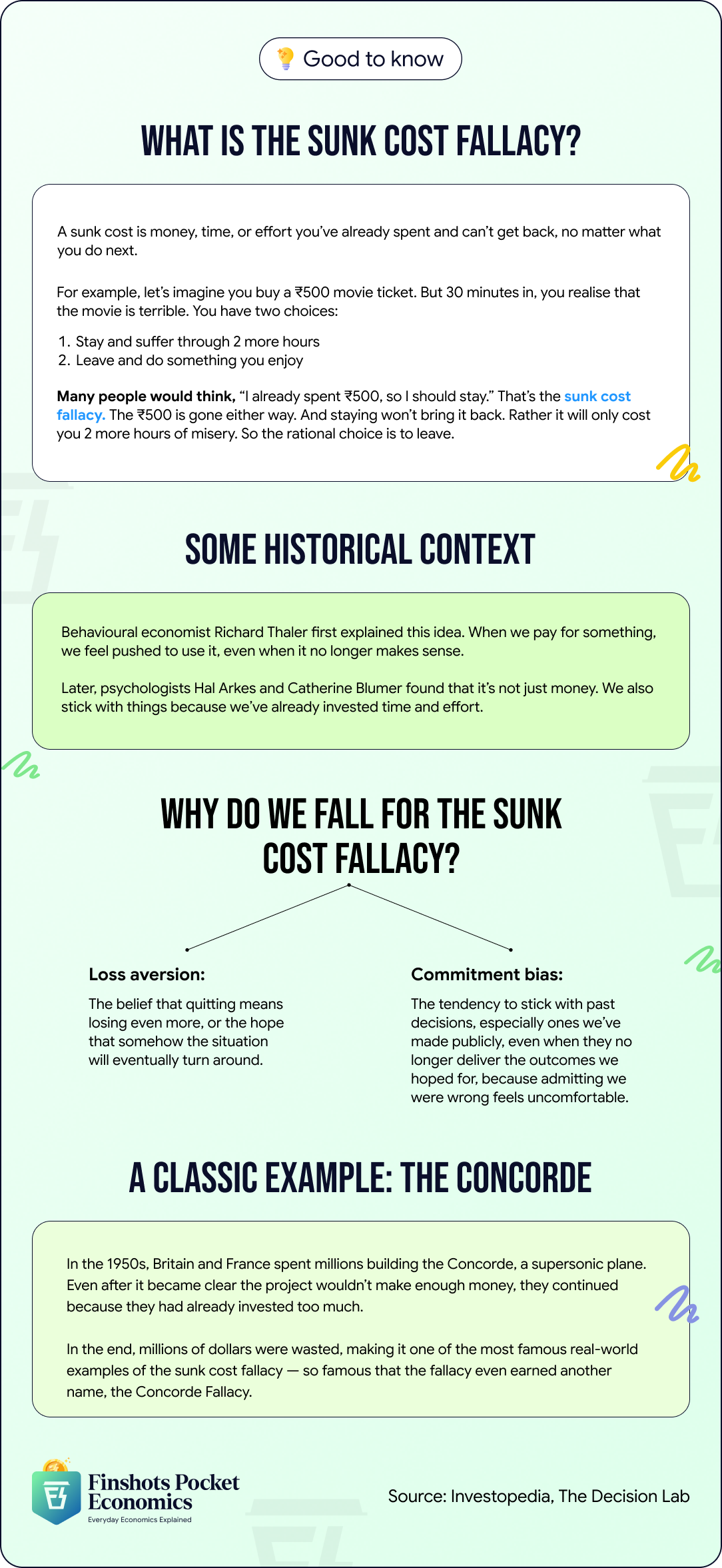
See, sunk cost in economics simply means the costs you’ve already incurred on something and cannot recover. From our example, that would be the boatloads of time and effort we put into researching, developing and writing these editions.
And that’s where something called the sunk cost fallacy comes in or the mindset of continuing with a decision simply because of past costs and investments, even when logic would say otherwise.
Like choosing to continue the FPE series because we’ve worked so hard on it, despite the risk of losing 1,000 subscribers each time. But is that actually a wise thing to do?
Well, economics would say “No”.
That’s because making decisions based on past costs you can’t recover, may not always be rational. Instead, what really matters is the cost of what happens next or the future costs you may have to bear.
So in our imaginary situation, the better option would be to discontinue FPE since it clearly isn’t working out and instead focus on a different content format or strategy that resonates better with readers like you.
Now, on that note, we’d like to let you know that next week will be the last edition of this FPE series. And no, we’re not stopping it because nobody likes it. In fact, it’s quite the opposite and we’ve genuinely had a lot of fun building this for you.
But the plan was always to do just six editions. So if you haven’t read the full series yet, do click here to catch up on all the editions.
And hey, if you’ve enjoyed the series so far, do consider sharing it with your friends, family or even strangers on WhatsApp, LinkedIn or X.
Coming back to sunk costs and the sunk cost fallacy, while we may have explained the concept using a hypothetical situation, what’s actually interesting is that it also explains why we make many of life’s biggest decisions in ways that can end up being emotionally, mentally or even financially hard on us in the long run.
To begin with, perhaps the most relatable example is why married couples or even people who are dating continue to stay in distressed relationships despite knowing things aren’t really working out.
You may be stuck in a bad or dishonest relationship or simply fallen out of love with your partner. But you still try to make it work because you think of the years you’ve spent together, the memories you’ve built and even the social consequences of a breakup or divorce.
But sometimes, the decision to continue may take an ugly turn in the future.
Similarly, think about education or career decisions. And this happens with many of us.
Sometimes we enrol in a non-refundable short-term online course, a programme at a prestigious university or even a 3 or 4-year degree. But after a certain point, say a few weeks, months or even years in the case of a degree, you realise it’s not something you’re really interested in or something that would actually benefit you.
But you still continue because you feel you’ve already spent so much money on it. So instead of switching to something else, you stick with it, even though the long-term consequences may not be great for your career.
That’s also precisely why professionals like lawyers, pilots, doctors, engineers, chartered accountants or even people in stable government jobs, some of whom may not enjoy what they do, hesitate to switch careers to something they may actually be good at and happier doing.
Because they feel they’ve already gone through years of training and, in some cases, paid for an expensive degree too. But they tend to forget that continuing down a career path that doesn’t fulfil you simply because of past investments can also lead to long-term dissatisfaction.
And finally, financial investment decisions, especially in the stock market.
Let’s say I bought a stock one day for ₹1,000. After a few months, its value drops to ₹500 despite similar stocks and the overall market rising over the year. (No, we’re not referring to any stocks you bought this year. Just imagine a different time. 😂)
But instead of selling the stock and putting that money into a different stock that’s more likely to rise in value, I continue to hold on to it.
Now, all these situations are very different. But ever wondered what’s the one common thing that makes us hold on or continue instead of boldly choosing otherwise?
Well, there are actually two reasons why we do this:
- Loss aversion
See, in the end, we humans are a very emotional species. And we tend to feel the pain of loss much more deeply than the happiness of gains.
That explains why it’s hard for someone to walk away from a relationship that clearly isn’t working anymore. Or why we fear giving up a stable salary even when we know something else we’re genuinely good at, say art, cooking or content creation, could potentially make us the same amount of money (especially if you’ve already tested it as a side gig).
And because of this, we start feeling that if we quit something midway, we’ll somehow lose even more.
But here’s the thing. In many cases, the loss has already happened. The relationship is already damaged. You’re already unhappy with your job. You’ve already paid non-refundable course fees. Or you’ve already taken a hit on a stock investment. You’re not getting those things back.
But the reason we continue anyway is often a belief, or maybe just hope, that somehow the situation will turn around. This is called loss aversion.
- Commitment bias
Humans have one more tendency — the tendency to stay committed to past decisions, especially ones we’ve made publicly, even when they no longer give us the outcomes we hoped for.
Because once we decide something, changing course becomes hard. Maybe we don’t see better options. Or maybe we simply don’t want to admit we got it wrong.
This is also tied to something called cognitive dissonance, where we justify our decisions even when deep down we know that they no longer serve us.
And once again, this applies to almost every situation we spoke about earlier.
So naturally, you’re probably thinking, “Okay, but how do I actually use this to make better life decisions?”
Well, for that, the most important thing is to understand the common traps we’ve spoken about and how to avoid them. So here’s what you can do:
- In relationships: Ask yourself a simple question, “If I hadn’t already spent all this time and effort on this relationship, what would I choose today?”
The answer may not be easy to accept. But it may also tell you what’s actually better for your mental health and future, despite the short-term emotional consequences. - In career choices: Focus on future costs and benefits instead of past ones. Ask yourself whether what you’re learning will actually lead to a fulfilling career or whether staying stuck on a career path is really worth the stress and toll it’s taking on your mental health. And honestly, this doesn’t just apply to careers. It applies to almost every major life decision.
- In money or education-related decisions: One of the best things you can do is set exit rules before you begin. Let’s go back to our stock market example. Say I decided in advance that if the stock price falls below ₹800, I’ll sell it and move on. That’s simply called a stop loss. But interestingly, you can also apply stop losses in life, especially when it comes to education, by being okay with giving yourself permission to change your mind.
Sure, before taking up a course, you evaluate it as best as you can. But sometimes, despite all that, you may realise halfway through that it doesn’t align with what you actually want from your career.
And letting go at that point is not a weakness. If anything, it’s a learning experience. Because if you continue, you may feel like at least you’re making use of the money you spent. But in reality, you may not just be losing that money if the course isn’t helping you, you may also be losing time you could’ve spent learning something far more useful.
In fact, it’s entirely possible that even if you force yourself to finish the course, you may eventually end up doing a different one anyway that suits you better.
So either way, you may still switch paths. The only difference is that making a rational decision earlier can save you time, money and the mental stress of doing something that no longer serves you.
So yeah, understanding sunk costs is really about freeing your future from your past. The money, time and energy you’ve already spent are gone. What’s really important is how wisely you use what you still have right now.
And on that note, we come to the end of this FPE edition. We’ll see you one last time next Saturday. Until then, tell us what you thought of today’s edition. Just hit reply to this email (or if you’re reading this on the web, drop us a message at morning@finshots.in).
Finshots Weekly Quiz v2.0 🧠
As you probably already know, the Finshots Weekly Quiz has a new avatar. If you missed out on it in the last couple of months, don’t worry. Click here to check out the rules and set a reminder to participate consistently starting next month!
But for now, it’s time to announce the winners. First up, the winner of Finshots Weekly Quiz v2.0 for May 2026. Drumroll, please… 🥁 Gurhashmat Dhaliwal! Congratulations.
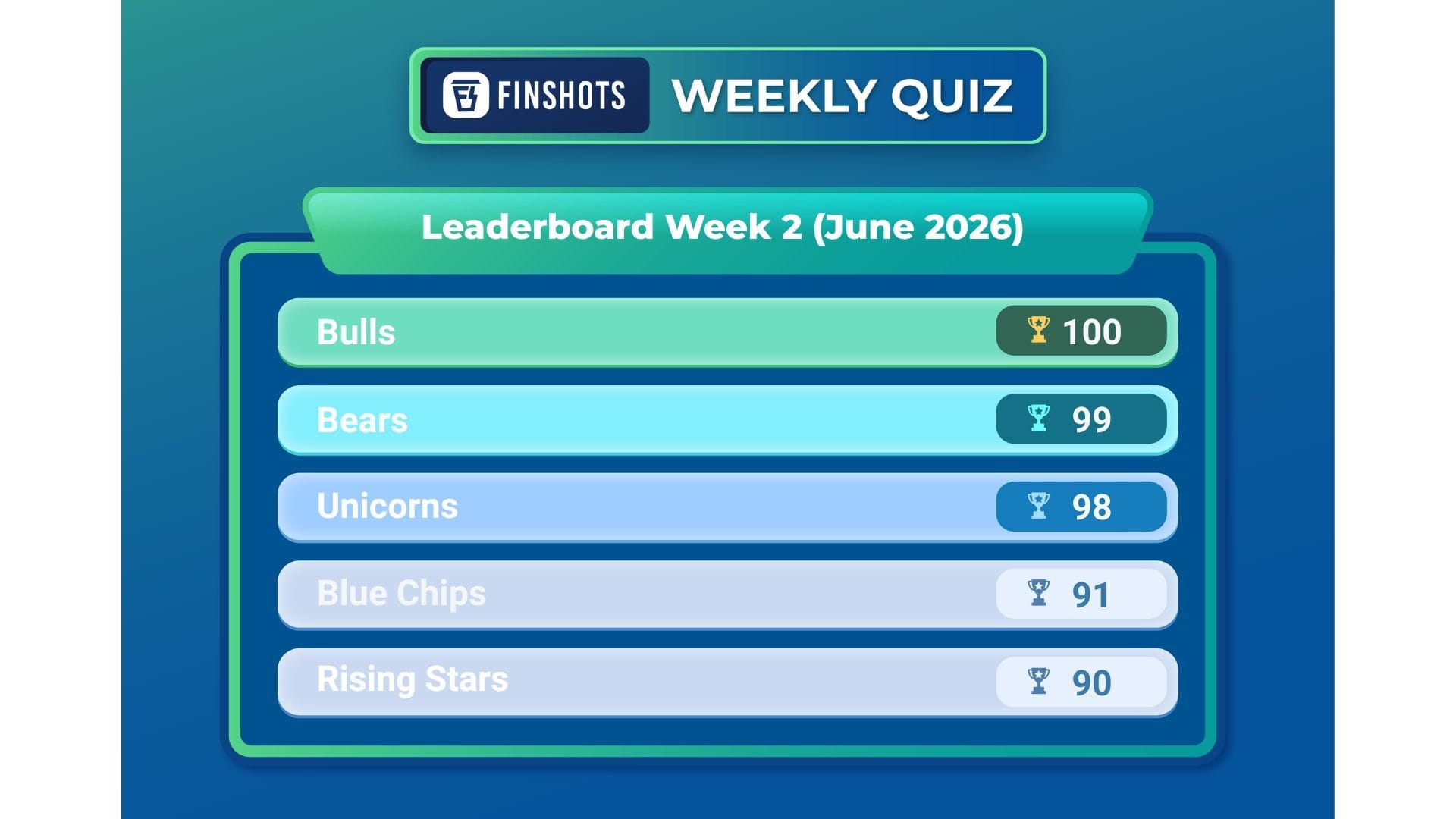
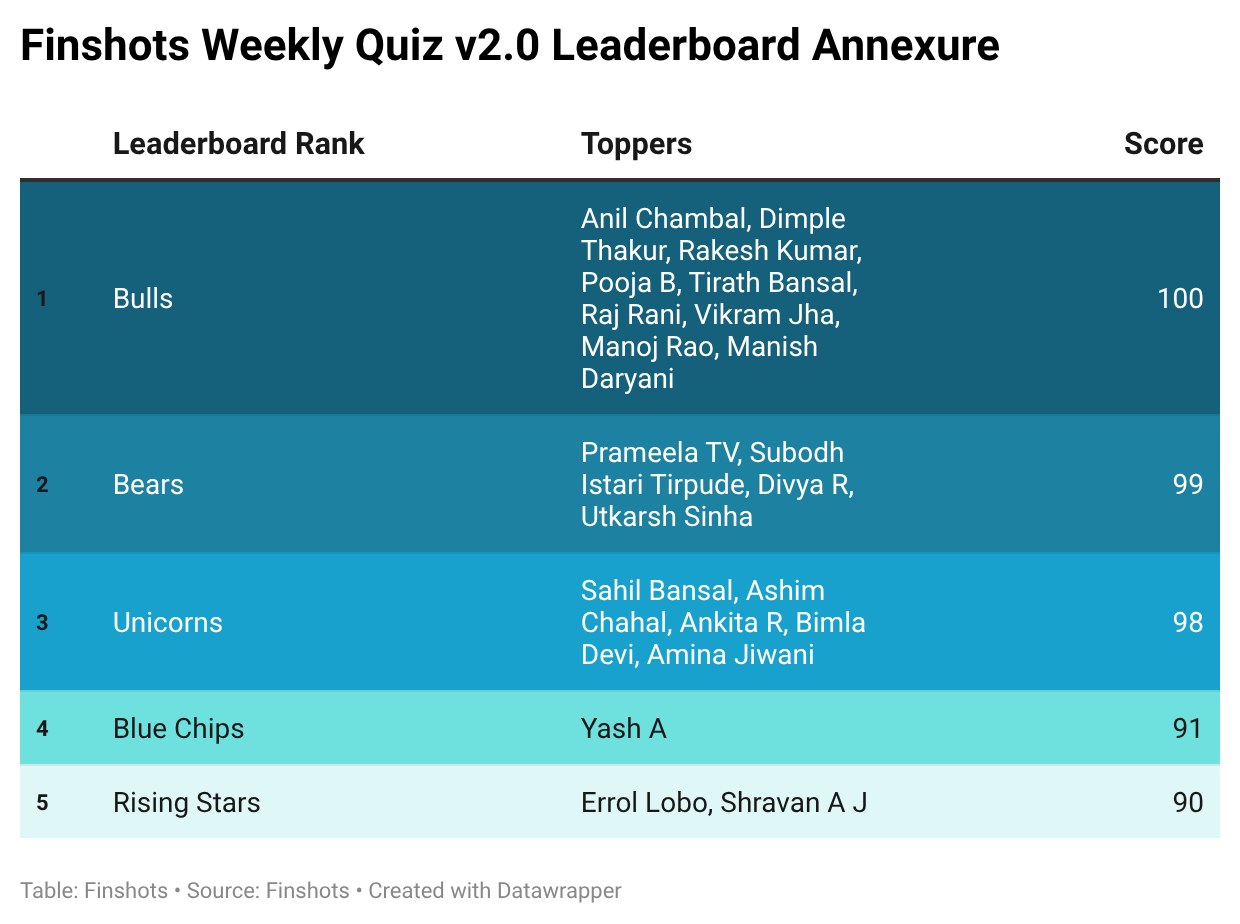
Next, let’s move on to the top scorers from our previous weekly quiz. There were a whole bunch of you who participated, and many of you ended up with the same scores. So we’re calling you Bulls, Bears, Unicorns, Blue Chips, and Rising Stars. Here’s how the leaderboard looks right now:
If your name has been featured on the leaderboard, then congratulations! If not, don’t lose hope. If you attempted last week’s quiz, keep at it and answer all the weekly quizzes this month. You never know when the turntables! Click on this link to take this week’s quiz, which is open till 12 noon, Friday, 19th of June, 2026. The more answers you get right, the better your chances of appearing on the Finshots Weekly Quiz leaderboard. We’ll publish it every Saturday in the Weekly Wrapup. And the winner will be announced in the first week of July.