
How exam paper leaks became an industry
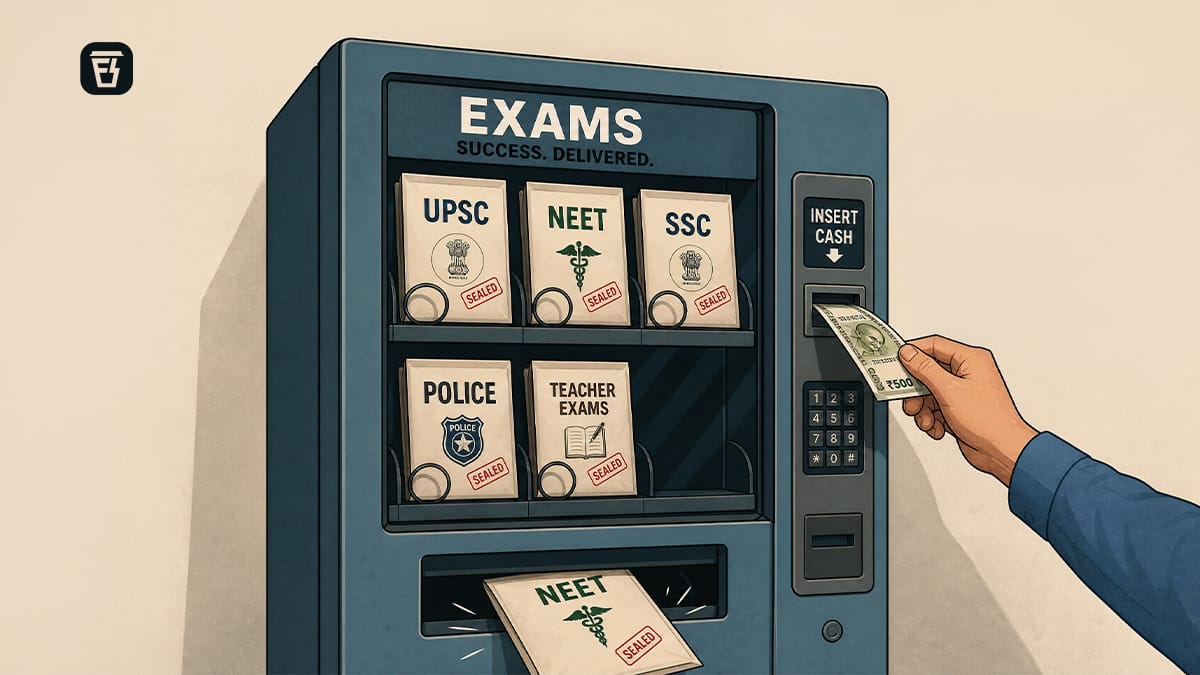
Over the last couple of months, we’ve seen students take to the streets in Delhi, Mumbai, Jodhpur, Bhopal, Kolkata and several other cities, protesting against an education system plagued by paper leaks and policies they believe encourage corruption. Last weekend, those protests culminated in India’s education minister stepping down. The government also acknowledged that the education system has serious gaps and announced a high-powered task force, headed by Infosys co-founder Nandan Nilekani, to address them.
So in today’s Finshots, we’ll explain how exam paper leaks turned into a thriving industry in India and what it might take to even slightly fix the problem.
The Story
By now, you already know that exam paper leaks have become a thriving industry in India. But how did it get here?
The simplest answer lies in one economics concept: scarcity.
Take NEET (National Eligibility cum Entrance Test), the medical entrance exam that has been at the heart of these protests. Instead of appearing for separate entrance tests at different colleges, aspiring doctors take one exam. Score well, and you stand a chance of getting into some of India’s best medical colleges, especially government institutions where an entire medical degree can cost less than ₹30,000. But slip down the rankings, and that same degree could cost you lakhs or even crores at private colleges.
That enormous difference is why nearly 20 lakh students appeared for NEET 2026. Sure, more than half qualified, which might sound encouraging. But the catch is that the coveted low-cost government medical seats go to fewer than 6% of those who qualify or under 3% of everyone who takes the exam.
And when millions compete for a tiny pool of life-changing opportunities, scarcity creates the perfect conditions for an economic problem called rent-seeking.
This idea was first introduced by economist Gordon Tullock in 1967, and later given the name “rent-seeking” by Anne Krueger in 1974. At its core, rent-seeking is about people trying to win a valuable prize by influencing the system instead of competing fairly. Like a company lobbying the government for subsidies or regulations that make life difficult for competitors, instead of creating a better product using their own resources.
Now apply that idea to something like NEET. Every year, lakhs of students compete for just a few thousand coveted medical seats. Those seats are the prize. Secure one, and your future can look very different, much like landing a scarce government job. That’s why students spend years preparing for this exam instead of pursuing other careers or building products and services that create value for the economy.
And if the cost of securing that prize is lower than the value of the prize itself, which in effect is a secure career, lower education costs, and a lifetime of opportunities, some people will inevitably be willing to pay that price to get ahead of everyone else, right?
That’s exactly the gap the paper leak industry exploits.
Its operations are almost pyramid-like. At the top are kingpins who build networks of insiders across printing presses, courier firms, transport staff, exam centre officials and others who can access question papers before the exam. Everyone involved takes a cut. The leaked papers are then quietly sold to selected candidates through encrypted platforms like WhatsApp and Telegram, with some aspirants paying as much as ₹30 lakh for them.
But this also makes you wonder, if such a large, organised network exists, shouldn’t the laws and policies already be enough to stop it? Yet exam papers continue to leak, arrests are made, investigations follow, and before long, the cycle repeats.
So why does this keep happening?
This time, the answer boils down to two things.
First, the downside of leaking exam papers has often been much smaller than the upside.
Until recently, India didn’t even have a dedicated central law to tackle organised exam fraud. The Public Examinations (Prevention of Unfair Means) Act, 2024 changed that by prescribing 5–10 years of imprisonment and a minimum fine of ₹1 crore for organised paper leak rackets. But according to The Print, some of these syndicates can earn as much as ₹60 crore by selling leaked papers. So when the potential reward is many times larger than the punishment, the deterrent simply isn’t strong enough.
And even when a paper leak is detected, convictions are rare. These are sprawling, pan-India networks that generate massive amounts of evidence, leading to investigations and court cases that can drag on for years. By the time a verdict arrives, public attention usually shifts elsewhere and many accused remain out on bail awaiting trial.
The second problem is that the law itself has gaps.
The Public Examinations Act covers only central examinations such as those conducted by the NTA (National Testing Agency) — NEET, JEE, or UPSC and IBPS. State-level competitive exams like Police Service Commission exams or state CETs, fall outside its ambit. That means each state has to enact and enforce its own laws, creating an uneven system. In some cases, syndicates blacklisted in one state can simply change identities, move elsewhere, and continue running the same racket.
And finally, perhaps the biggest problem with the exams conducted by the NTA is that the organisation relies heavily on outsourced and contractual staff.
A government response in the Rajya Sabha shows that while the NTA has 39 sanctioned permanent positions, only 24 are filled. Compare that with nearly 197 contractual or outsourced personnel and that creates problems. Temporary workers handling sensitive stages like paper-setting, printing and transportation may not always be bound by the same institutional accountability as permanent employees, making it easier for standard operating procedures to be bypassed.
And the economic consequences, as you can imagine, are enormous. Every paper leak forces authorities to spend money cancelling and conducting exams all over again. Unofficial estimates also suggest that Indian families spend nearly ₹1.2 lakh crore every year preparing their children for competitive exams. That’s almost as much as the country’s annual education budget. So, when an exam is compromised, a part of that investment goes to waste.
Also remember that the people who buy leaked papers end up beating candidates who got there on merit. And some of them eventually become the country’s future doctors. Which means a paper leak doesn’t just undermine an exam, but can eventually weaken the quality of healthcare for years to come.
So how do we fix this, you ask?
Well, the first step is making paper leaks a loss-making business by imposing penalties that genuinely outweigh the profits. The second is building a professionally staffed NTA with far fewer temporary vendors involved in critical processes. And finally, if possible, moving more exams online could help. JEE is already computer-based, eliminating much of the physical chain where leaks occur. And the NTA can afford these reforms. Over the past six years, it has generated about ₹3,500 crore in revenue and nearly ₹450 crore in surplus — money that could be reinvested to build a more secure examination system.
That said, some of these reforms are already being considered. The government is looking at expanding the law to cover state-level examinations as well, while also increasing the punishment for organised exam-related crimes to as much as 10 years in prison and a minimum fine of ₹10 crore. And since this is still a developing story, more reforms could be on the way.
Whether these measures are enough to restore trust in India’s competitive examinations and education system is something only time will tell.
But at this point, the system can’t afford to get any worse. These student protests have stirred the country’s collective conscience and made it clear that organised crime cannot be allowed to become the norm, especially when India’s future is at stake.
Until then…
If this story helped you understand the mechanics of India’s exam paper leak rackets and why they continue to thrive, consider sharing it with your friends, family, or even strangers on WhatsApp, LinkedIn, and X.
And if you’re someone who loves keeping tabs on the world of business and finance, hit subscribe if you haven’t already. And if you’re already a subscriber, thank you! Maybe forward this to someone who’d enjoy our stories but hasn’t discovered us yet.
🚨 ATTENTION: FINSHOTS FAMILY
This weekend, we’re hosting a free 2-day Insurance Masterclass that helps you build real financial security by understanding health and life insurance the right way.
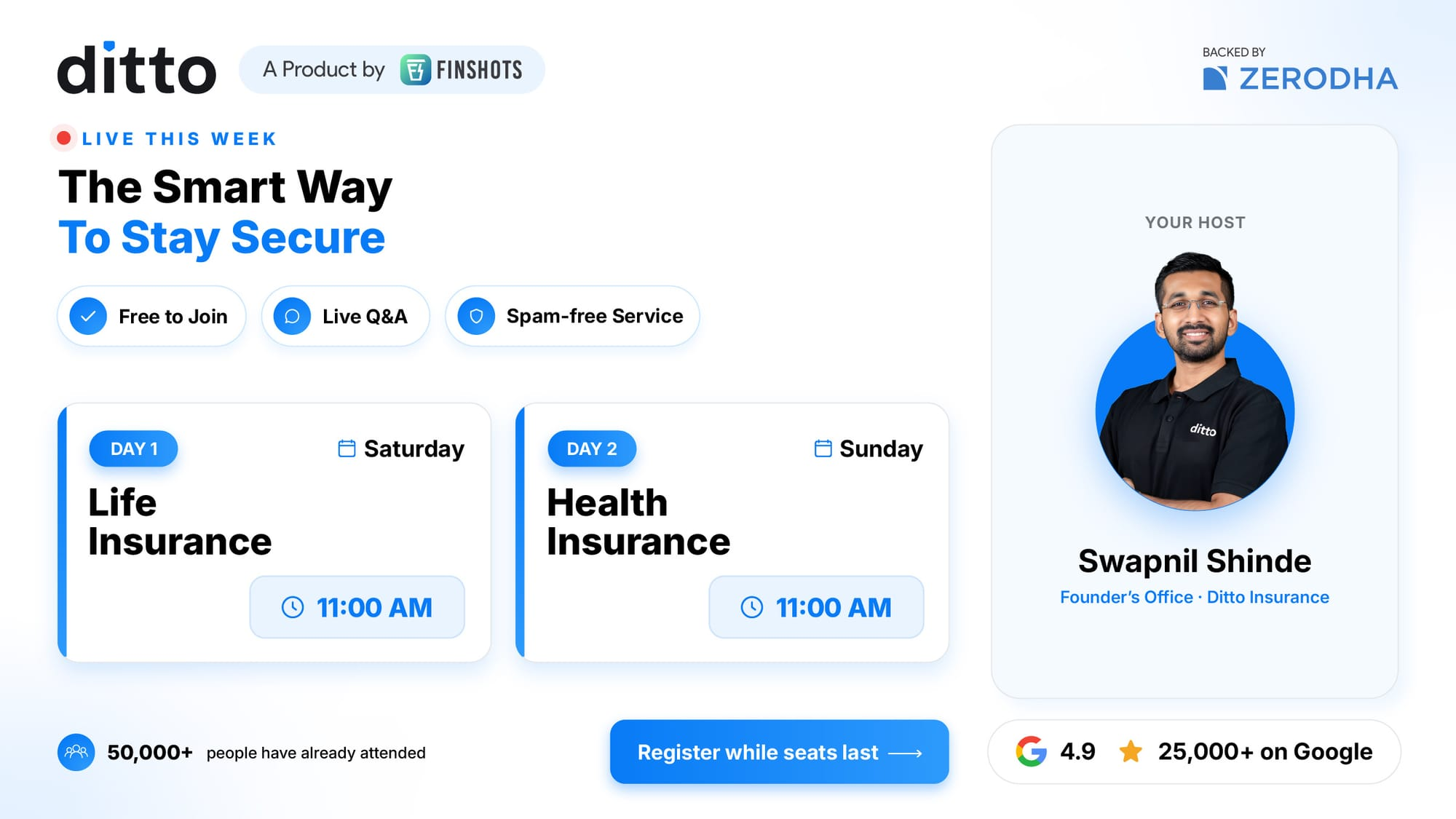
📅 Saturday, 1st August at 11:00 AM: Life Insurance: How to protect your family, choose the right cover amount, and understand what truly matters during a claim.
📅 Sunday, 2nd August at 11:00 AM: Health Insurance: How hospitals process claims, common deductions, the mistakes buyers usually make, and how to choose a policy that won’t disappoint you when you need it most.