
Spiders cooling data centres, the UN's crisis, and more...

Hey folks!
Back when computers were still in their infancy, researchers at Harvard were trying to figure out why their room-sized machine had suddenly stopped working. After some investigation, they discovered the culprit: a moth trapped between the computer's relay contacts. The insect was carefully removed, taped into the machine's logbook, and labelled as the "first actual case of a bug being found."
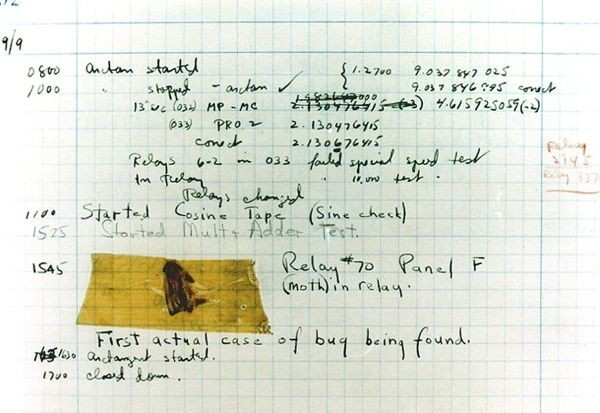
The story became famous thanks to computer scientist Grace Hopper and gave us one of technology's most enduring terms. And today, it looks like we've come full circle. Because a group of researchers has proposed putting spiders into data centres.
Now, before you picture thousands of tarantulas crawling across server racks, let's take a step back to understand why.
Every time you surf the web (pun intended), you're relying on massive warehouses packed with computers working round the clock. These facilities, known as data centres, already consume significant resources. Astonishingly, most of that energy goes into cooling them.
In fact, we’ve written about this here, here, here, and here.
Modern AI chips have become so powerful and densely packed that air cooling is struggling to keep up. That's why many operators are now turning to liquid cooling systems that circulate water around the hardware. But liquid cooling systems cost a fortune to install and maintain. Which is where the spiders enter the story.
Researchers studying the silk of the golden silk spider discovered something remarkable. Its silk conducts heat extraordinarily well, so well, in fact, that under certain conditions it can rival or even outperform copper.
That immediately raised a bizarre possibility. What if spiders could become part of a data centre's cooling infrastructure?
That proposal sounds like something that came out of a late-night brainstorming session. Instead of relying entirely on pipes and coolant, future servers could feature spiders that would naturally weave their webs across these structures, creating thermal bridges that help transfer heat away from the chips.
But there are also plenty of unanswered questions. Nobody knows how spiders will respond to the temperatures inside a data centre or whether spiders will reliably cooperate by spinning their webs exactly where engineers want them.
Still, there's something oddly poetic about the whole idea.
Computing began with engineers removing a bug from a machine.
Now, nearly eighty years later, researchers are wondering whether bugs might help keep the next generation of computers running.
Here’s a soundtrack to put you in the mood…
Tum Na Mile by Shalmali Kholgade recommended by our reader Mrunalini Pillai.
Thank you for the rec, Mrunalini!
What caught our eye this week
The world’s referee depends on the players
Let's imagine that you're watching a football game. The referee walks onto the field, the players take their positions, and the game begins.
Now, imagine discovering that the umpire's salary is paid by the two teams playing the match. Even if the umpire is completely fair, there is an uncomfortable reality lurking in the background, don’t you think?
That exact thought came to my mind recently when the United Nations (UN) warned that it could run out of cash as early as August. But why?
You see, most of us think of the UN as something that exists above individual countries. Sure, nations argue within it, lobby for influence, and occasionally ignore its resolutions, but the institution itself feels permanent and stable.
Which is why it came as a surprise when the UN recently warned that it could soon go broke. At first, that sounds almost absurd. This is the organisation that coordinates peacekeeping missions across conflict zones, helps manage humanitarian crises, oversees everything from aviation standards to telecommunications protocols, and serves as the closest thing the world has to a common diplomatic forum.
So, how does an institution like that suddenly find itself worrying about bankruptcy?
The answer, as it turns out, is surprisingly simple.
The US currently owes more than $4 billion in unpaid contributions to the UN, while China still owes hundreds of millions despite recently making a substantial payment. Together, the two countries account for roughly 42% of the UN's basic funding. And while the headlines focus on the size of the unpaid bills, what really caught our attention was the deeper question beneath it all.
What does it mean for an institution to be independent when it relies on the very people it is supposed to oversee?
Think about it for a moment.
For decades, this arrangement worked reasonably well because the money kept flowing. The US, as the world's largest economy, accepted that funding a significant portion of the post-war international order came with the title. China, whose economy was much smaller when it first joined the UN, played a far less significant financial role. But as the global balance of power shifted, so did the dynamics surrounding the UN itself.
The US increasingly argues that international institutions have become bloated, inefficient, and disconnected from their original purpose. The Trump administration has been particularly vocal about this, openly linking future funding to deeper spending cuts and reforms.
China, meanwhile, portrays itself as a supporter of international cooperation and often contrasts this with America's more sceptical approach to global institutions.
On the surface, the two countries appear to be pursuing very different strategies. One openly pressures the institution. The other publicly supports it. But when you zoom out, both are exercising influence through the same mechanism.
Money.
And that's what makes this story interesting. Most people assume power inside the UN comes from Security Council vetoes, diplomatic alliances, or political negotiations. Those things certainly matter. But the current crisis is a reminder that financial dependence can be just as powerful. After all, if nearly half your funding comes from two countries, their decisions inevitably shape your options.
And perhaps that's the bottom line. The UN's financial troubles are a reminder that independence is often more fragile than it appears. Because at the end of the day, someone has to pay the bills.
And when the people paying those bills decide to stop, everyone is suddenly reminded where a great deal of power actually comes from.
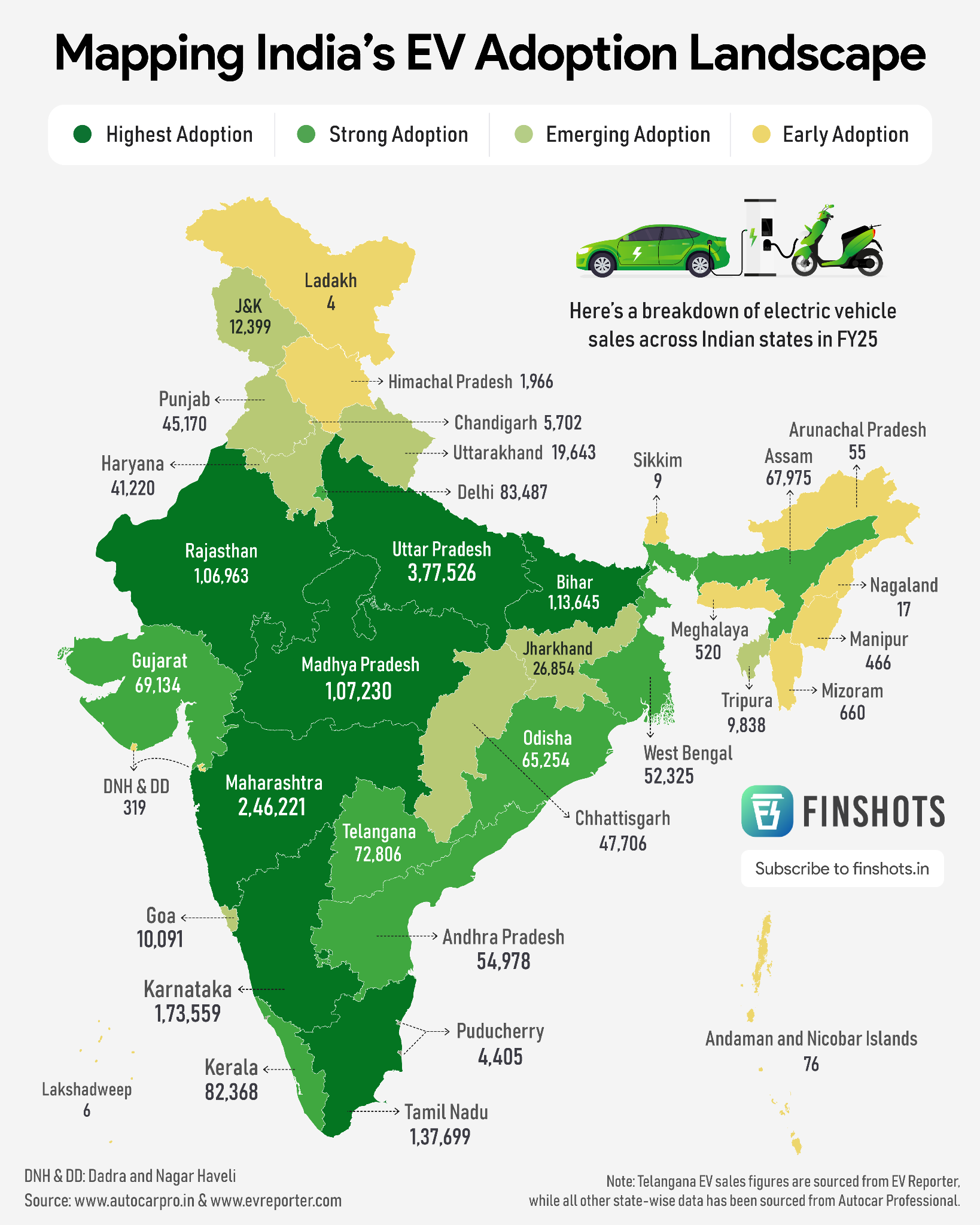
Infographic
Readers Recommend
This week, our reader Mrunalini Pillai also recommends reading “The Kon-Tiki Expedition” by Thor Heyerdahl.
It's the real story of the first expedition taken by 5 men on a wooden raft from Peru to Polynesia to prove that the South American people reached and settled there before the Columbus era.
Thanks again for the rec, Mrunalini.
That’s it from us this week. We’ll see you next Sunday!
Until then, send us your book, music, business movies, documentaries, or podcast recommendations. We’ll feature them in the newsletter! Also, don’t forget to tell us what you thought of today's edition. Just hit reply to this email (or if you’re reading this on the web, drop us a message at morning@finshots.in).
Don’t forget to share this edition on WhatsApp, LinkedIn and X.