
A look at the Milky Mist IPO
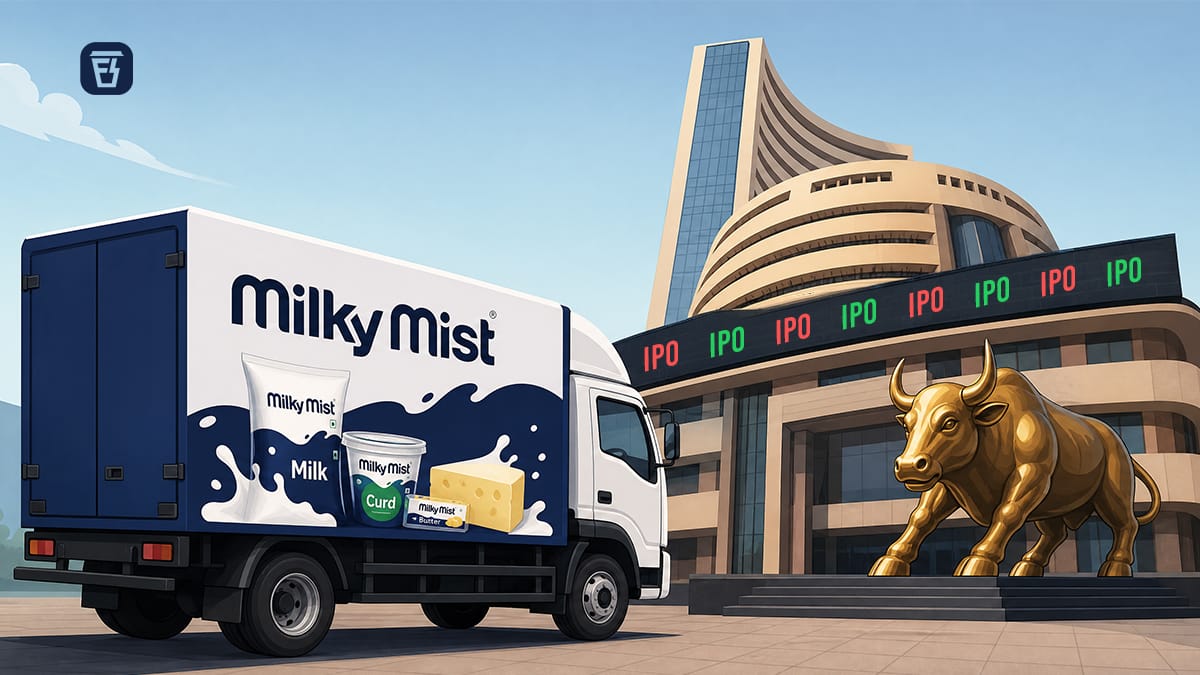
In today’s Finshots, we break down the Milky Mist IPO, which opens for subscription today and closes on August 13th.
But before we begin, if you love keeping up with the buzz in business and finance, make sure to subscribe and join the Finshots club, loved by over 5 lakh readers.
Already a subscriber or reading this on the app? You’re all set. Go ahead and enjoy the story!
The Story
When you think of Milky Mist, what comes to mind?
Probably paneer, curd, Greek yogurt and all kinds of other dairy products. Everything except fresh packets of milk that you’d typically get from giants like Amul or Nandini.
But a dairy company that doesn’t sell the very milk that goes into making these products sounds a little strange, right?
Well, there’s a story behind it.
In 1985, before Milky Mist officially kicked off, the company’s founder, Chairman and Managing Director T Sathish Kumar’s family was already in the milk trading business. Kumar, who came from an agricultural background, joined the business but soon realised that milk supply was highly unorganised.
So he decided to try something different: making paneer, which was seeing growing demand at the time.
More than three decades later, Milky Mist has stuck to that basic philosophy, just with a dash of diversification. It sells value-added dairy products such as cheese, paneer, butter, curd, ghee, yogurt and ice cream, along with frozen, ready-to-eat and ready-to-cook products.
And there’s a good reason for this. Fresh milk is a low-margin commodity, with margins typically around 5-8%. Value-added products, on the other hand, can offer margins upwards of 8% and even reach 40% for products like ice cream.
Then there’s the logistics problem. Fresh milk has a short shelf life and needs a cold chain, making it expensive to transport over long distances. That’s why companies like Amul work with local farmers and regional cooperative unions across India, while regional players like Nandini largely stay within their home markets.
But since Milky Mist’s value-added products last much longer, they can be made at one location and shipped across the country. For context, the company sources milk from more than 74,600 farmers across Tamil Nadu, Andhra Pradesh and Karnataka, all within a 400-kilometre radius of its single large manufacturing plant in Perundurai, near Coimbatore. From there, it sends its products across 22 states and 5 Union Territories.
There’s another advantage too. Milk supply fluctuates between a “flush season”, when production is abundant, and a lean season, when it falls. Fresh-milk businesses have to deal with this mismatch because milk can’t be stored for long. Milky Mist, however, can turn surplus milk during the flush season into products with longer shelf lives, effectively storing that excess milk as inventory.
So perhaps it’s better to think of Milky Mist as a packaged food company built around dairy.
And this strategy seems to have worked. The company generated ₹3,138 crore in revenue in FY26, with nearly 60% coming from paneer, cheese and curd. The rest came from products like ice cream, ghee, butter and yogurt. Revenue has grown at over 30% CAGR in recent years, while operating margins have stayed around 12-14%.
But now, Milky Mist wants to take the next step. It wants to raise money from the public through an IPO, which is expected to raise ₹1,553 crore. About 92% of this will come from a fresh issue. Most of the money will go towards repaying its outstanding debt and expanding or modernising its Perundurai plant. The rest will be used to deploy freezers and coolers and for general corporate purposes.
And that brings us to the real question. Is this a good business at the price investors are being asked to pay?
Let’s start with the sweet side. For starters, Milky Mist has managed to build a meaningful position in categories that are generally more profitable than plain milk. It calls itself the fastest-growing packaged food company among peers with revenues of ₹1,500 crore or more. It is also the largest private packaged paneer brand in the organised market, with roughly 19% market share by value.
It has a strong presence in South India too, with around 12% of the organised cheese market by value in the region, making it the third-largest private player nationally.
Another advantage is how it sources its raw material. Milky Mist buys milk directly from farmers, without middlemen. That helps it build stronger relationships with its suppliers while also ensuring that farmers receive their payments within 7-10 days.
Then there’s distribution. The company sells through retail stores, supermarkets, HoReCa (Hotels, Restaurants and Cafes), its own platform, e-commerce, quick commerce and exclusive Milky Mist parlours. And just so you get a clearer picture, about 86% of its revenue comes from offline channels and the rest from online channels.
So far, so good. But there’s another side to the business, and it’s not quite as sweet.
For starters, Milky Mist is heavily concentrated in South India. About 95% of its raw milk comes from Tamil Nadu, while nearly 70% of its revenue comes from South India. That concentration can be risky because any disruption to demand or supply in these regions could hit its revenues and profits.
Then there’s another concentration risk: production. As we’ve mentioned earlier, the company relies on one large manufacturing plant in Perundurai. If a natural disaster, industrial accident or some other disruption forces the facility to shut down, production could take a serious hit. Even though nothing like this has happened in recent years, it's still a risk the company can’t completely control.
The bigger concern, though, is the balance sheet. Milky Mist carries a lot of debt, with a high debt-to-equity ratio of 3.6 times. It plans to use nearly ₹500 crore of the IPO proceeds to repay some of it. That, along with the fresh equity created through the IPO, could reduce its debt-to-equity ratio by about 83%.
But don’t mistake that for the company wiping out most of its debt. Because even after the planned repayment, Milky Mist could still have around ₹1,175 crore of debt on its books. And that means a sizeable chunk of its cash flows will continue to go towards servicing its borrowings.
There’s also one particularly unusual risk. The original Milky Mist trademark is pledged as collateral to lenders. If the company defaults or breaches certain loan terms, lenders could enforce this security and potentially sell the trademark, meaning Milky Mist could lose the right to use it.
Now, the company currently uses a different trademark that isn’t pledged. So it isn’t as if the entire business would suddenly disappear. But for a brand built around a familiar name, losing the original trademark could still be a serious blow to its reputation and business.
And finally, there’s the question of valuation. Milky Mist compares itself with dairy and FMCG names such as Nestle India, Britannia Industries, Bikaji Foods, Dodla Dairy, Parag Milk Foods and Hatsun Agro.
Now, the three largest peers here — Tata Consumer Products, Nestle India and Britannia Industries, each with revenues of upwards of ₹19,000 crore trade at P/E (Price-to-earnings) ratios of roughly 50-70. The industry average is around 52.
Milky Mist, meanwhile, is seeking a valuation of ₹10,778 crore at the upper IPO price band of ₹140. That works out to roughly 85 times its FY26 earnings.
And that’s where things get a little uncomfortable. Milky Mist is much smaller than those large FMCG companies, while peers operating at a more comparable scale, such as Dodla Dairy and Parag Milk Foods, trade at P/Es of around 21-24.
If you compare the valuation on an EV-to-EBITDA basis (enterprise value compared with operating profit), it looks a little better at around 25 times. That’s not too far from Dodla Dairy’s 20 times, though still significantly higher than Parag Milk Foods’ 9 times.
So yeah, Milky Mist is a profitable, unique and promising business. It has grown quickly, built strong positions in value-added dairy products and managed to create an FMCG-style business out of what is traditionally a low-margin commodity.
But the real question is whether it is good enough to justify the premium investors are being asked to pay for it.
And right now, that answer isn’t entirely clear. The company may well continue to grow and prove that its FMCG-style positioning deserves a premium. But perhaps that’s something investors will only be able to judge a few years after it goes public.
Until then…
If this story helped you understand Milky Mist’s business and IPO, feel free to share it with your friends, family, or even strangers on WhatsApp, LinkedIn, and X.
Trust Finshots for Finance? You'll love Ditto for insurance.
Built by the same four friends behind Finshots, Ditto is here to make insurance simple. No spam, only honest advice to help people make smart insurance decisions.
✅Backed by Zerodha
✅Rated 4.9 on Google (31,000+ reviews)
✅Over 7 lakh customers advised