
Why Bank of America wants a piece of India's lending boom
In today's Finshots, we explain why a global banking giant is pouring billions into Jio Financial Services Ltd and what it means for the future of financial services in India.
But here's a quick sidenote before we begin. The moment you became a parent, insurance stopped being optional. It's the one thing you keep meaning to sort out but never quite get to. And the longer you wait, the more expensive and complicated it gets.
Our 2-day Insurance Masterclass will help you figure out what to buy, how much cover you need, and how to avoid common mistakes.
📅 Saturday, 22 August at 11:00 AM: Life Insurance
📅 Sunday, 23 August at 11:00 AM: Health Insurance
Only few seats left - 👉 Click here to save your spot.
The Story
A decade ago, getting a loan in India usually meant walking into a bank, filling out paperwork, and waiting. Today, you can borrow money from your phone in a matter of minutes.
And that isn't just because technology has made lending easier. India itself is changing. More people have bank accounts, more transactions happen digitally, credit histories are becoming more widespread, and millions of households are entering the formal financial system for the first time.
That creates a unique opportunity for anyone who can figure out how to serve this new generation of financial consumers. And Bank of America (BofA) thinks Jio is one such player.
BofA’s subsidiary, NB Holdings Corporation, will initially invest ₹6,613 crore in Jio Credit, giving it a 26.5% stake. It will then subscribe to another ₹11,655 crore worth of warrants, which could eventually take its holding to 49.9%. All in, it could put nearly ₹18,300 crore into Jio's lending business.
Sidebar: Jio Credit was previously called Jio Finance, and it is the NBFC sitting behind Jio Financial Services' consumer-finance ambitions.
But why would one of the world's biggest financial institutions commit nearly ₹18,300 crore to a relatively young lending business?
To understand that, we need to zoom out from Jio Credit and look at what is happening to India itself.
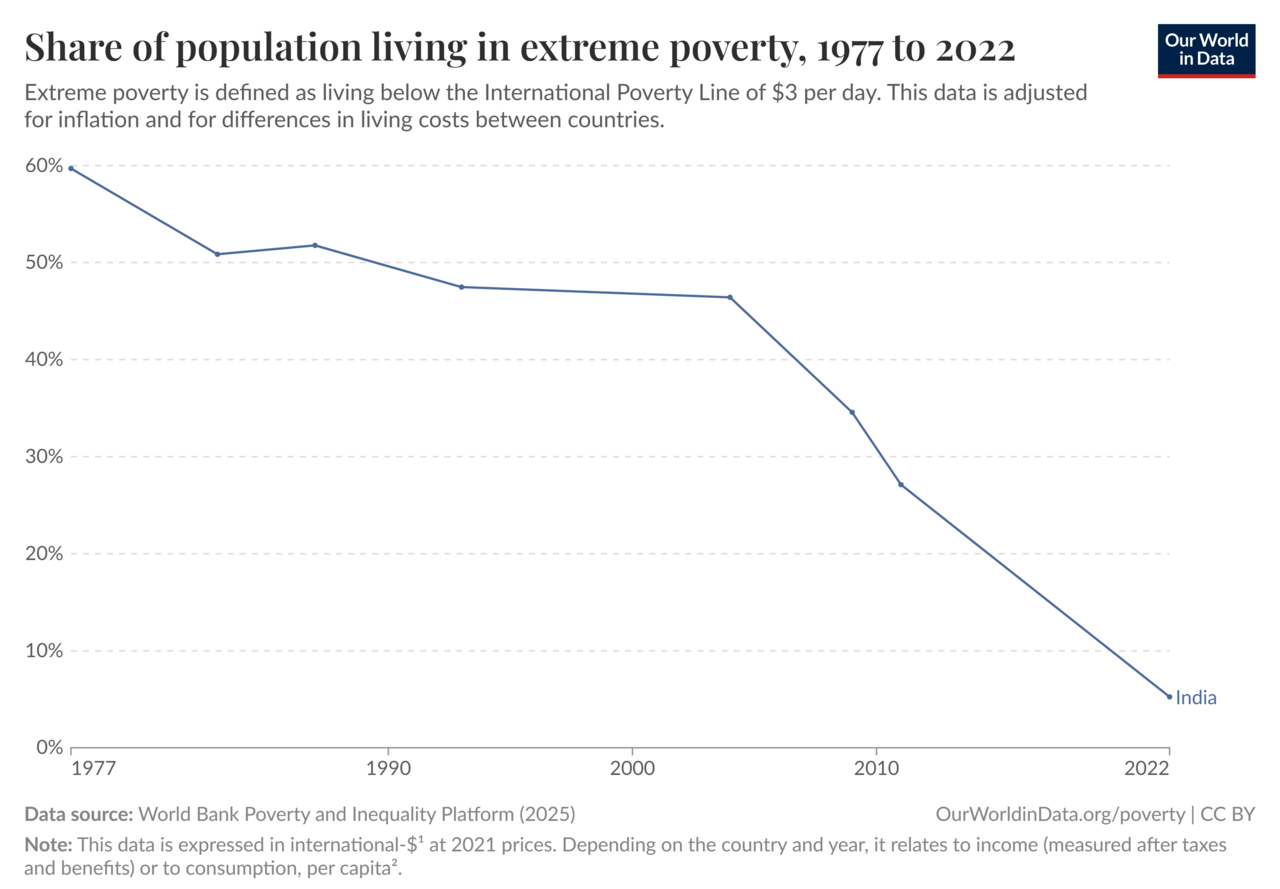
Over the last decade, hundreds of millions of Indians have moved up the income ladder. The World Bank estimates that the share of India's population living below its lower-middle-income poverty line fell from 58% in 2011-12 to 24% in 2022-23, while the share living in extreme poverty fell from 27% to around 5%.
As people become wealthier, their financial needs change. A family that once focused primarily on basic consumption eventually starts thinking about buying a two-wheeler, then perhaps a car or a house. A young professional who has just entered the formal economy may want a credit card and want to invest in a mutual fund.
Almost all of these aspirations require access to capital. That is why India's rising incomes could create an enormous opportunity for financial companies over the next few decades. Lending is only the first layer of that opportunity because, once someone enters the formal financial system, the same customer can potentially become a borrower, saver, investor, and insurance policyholder over the course of their life.
That is the opportunity Jio is trying to capture.
And this isn't just a theoretical opportunity. Indians are already borrowing more.
Household financial liabilities have risen sharply in recent years. According to the RBI, household borrowing from financial institutions jumped from 3.8% of GDP in FY22 to 6.4% in FY24. Bank credit to individuals has also grown rapidly, with personal loans expanding 14% year-on-year as of March 2025.
In other words, Indian households are already borrowing more. And Jio Financial Services is particularly well placed to pursue it.
This is because it isn't starting with a blank sheet of paper. The wider Jio ecosystem already reaches more than 500 million subscribers, giving the company what most new financial institutions spend years building: distribution. Its JioFinance platform is being developed to bring products such as loans, payments, investments, insurance, and financial-management tools into the same digital ecosystem.
But having millions of potential customers is only half the equation. Lending isn't simply about finding people who want money. It is about figuring out who should receive it, how much they can safely borrow, and whether they are likely to repay it.
That is where BofA becomes useful.
BofA isn't bringing a network of Indian branches to this partnership. It is bringing financial expertise, risk-management capabilities, and the credibility that comes with one of the world's largest financial institutions. The partnership will also give BofA and Jio equal representation on Jio Credit's board. At the same time, Jio Credit's existing domestic management team will continue to run the business and execute its strategy.
The arrangement includes another interesting feature. Even if BofA eventually exercises all its warrants and reaches a 49.9% stake, Jio Credit will remain a subsidiary of Jio Financial Services and continue to be consolidated into JFSL's accounts. That means Jio can bring in a deep-pocketed global partner to fund the expansion of its lending business without surrendering control of the wider financial-services ecosystem.
And lending is only the beginning.
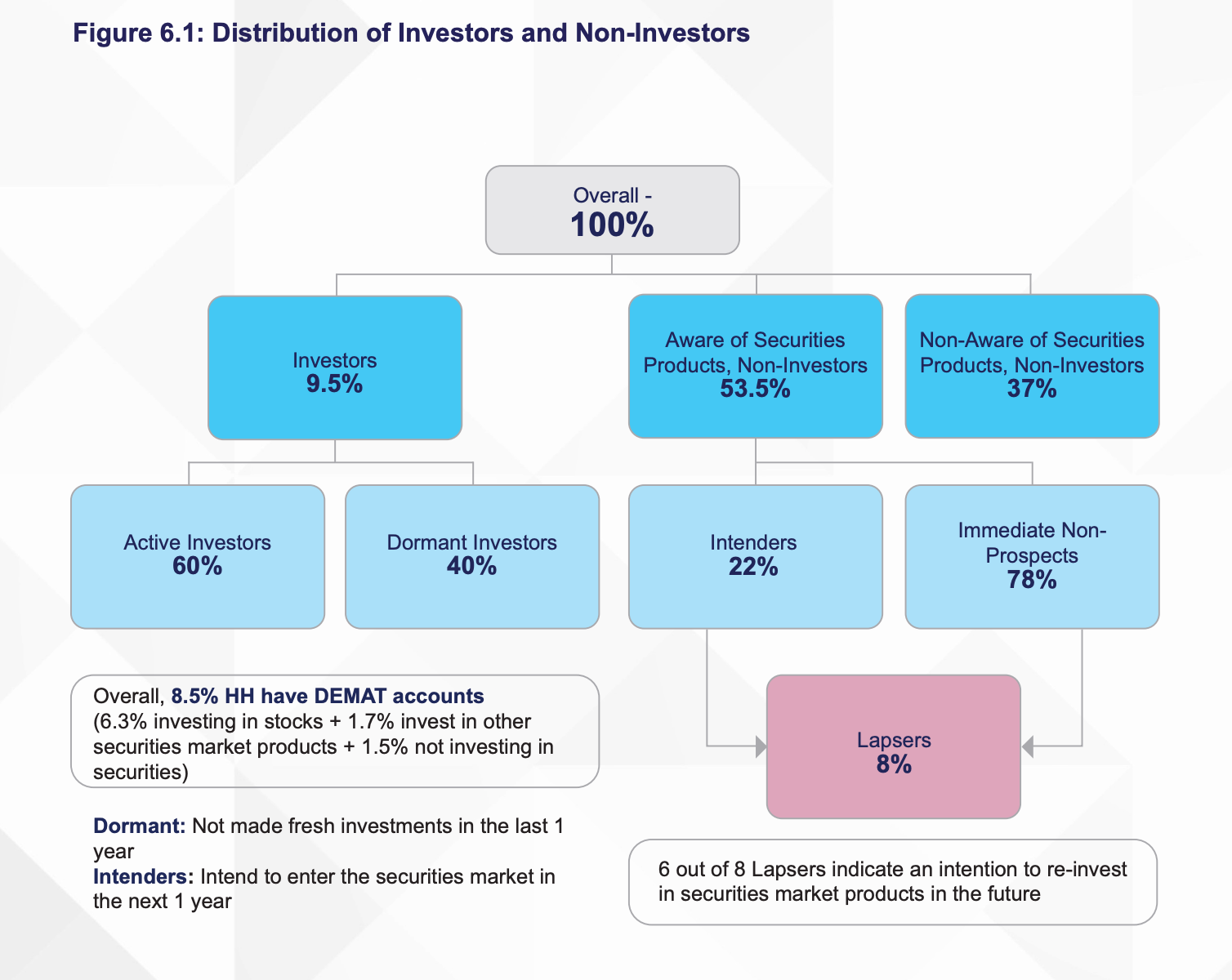
As more Indians enter the formal financial system, they won't just borrow. They will also start saving, investing and buying insurance. Take the stock market. SEBI found that only 9.5% of Indian households invest in the securities market. Compare that with the US, where the Federal Reserve found that 58% of American families owned stocks, either directly or indirectly, in 2022.
That gap represents an enormous opportunity. As India's middle class grows and more households become comfortable with financial assets, the beneficiaries won't just be brokers and mutual-fund companies. The entire BFSI sector stands to gain: exchanges such as BSE and NSE, depositories such as CDSL and NSDL, registrars such as KFin Technologies, asset managers and wealth-management platforms.
And Jio has been assembling the pieces to capture precisely this kind of ecosystem. It has a 50:50 joint venture with BlackRock for asset and wealth management, while its insurance ambitions include partnerships with Allianz. Jio Payments Bank provides another layer through payments and banking services. The BofA partnership adds a large-scale lending capability to that collection of businesses.
The strategy starts to look less like an attempt to build another NBFC and more like an attempt to build a financial distribution platform around the Indian consumer.
But there is a catch.
India's credit boom could easily become a credit problem if lenders become more interested in expanding their loan books than in maintaining underwriting discipline.
We have seen versions of this cycle before. When credit is easy to obtain, lenders compete aggressively for customers, borrowers become comfortable taking on more debt, and defaults can remain deceptively low for a while. The real problems often emerge only when incomes slow, interest costs rise, or borrowers must repay multiple loans at once.
That risk becomes even more interesting in digital lending because technology removes much of the friction that once existed between wanting a loan and actually receiving one. A process that previously required a branch visit, paperwork, and several days of waiting can now happen almost instantly. That can be enormously valuable when it expands access to productive credit. Still, the same convenience can become dangerous when it encourages households to borrow beyond what they can comfortably repay.
There is also a broader question around data. Jio potentially sits on an enormous amount of information about how millions of customers communicate, transact and consume services. Using that information responsibly could help lenders assess risk more accurately and make financial products cheaper and more accessible. At the same time, it raises obvious questions about privacy, data use, responsible lending, and whether a company with such a broad ecosystem could gain an unfair advantage over competitors.
That is what makes the Bank of America–Jio Credit deal much more interesting.
BofA isn't entering India's retail-banking market. Instead, it is taking a strategic stake in a lending platform that could become an important gateway to India's rapidly expanding financial economy.
For BofA, the appeal is combining Jio's distribution and local execution with its own financial expertise. For Jio, the partnership provides capital and institutional know-how without requiring it to build every capability internally.
For Jio, lending could therefore be the gateway, not the destination. A customer who takes a loan today could eventually become an insurance customer, a mutual-fund investor, a payments customer or a wealth-management client. If Jio can connect those products effectively, the value of acquiring that customer goes far beyond the interest earned on a single loan.
That could eventually make Jio Financial Services something far more ambitious than a traditional NBFC: a financial ecosystem in which Jio owns the customer relationship. At the same time, specialist partners provide expertise across individual products.
But that strategy's success will ultimately depend on something far less glamorous than the size of Jio's user base or the reputation of its partners. It will come down to credit quality.
If Jio can grow its loan book while maintaining disciplined underwriting through an entire credit cycle, it could capture a meaningful share of India's financialisation. If it prioritises growth at the expense of underwriting, the same opportunity could become a very expensive source of bad loans.
So perhaps the most interesting thing about BofA's investment is that one of the world's biggest financial institutions believes Jio could be one of the most effective ways to participate in India's transition toward a mass-market financial economy.
And if that bet works, the real prize won't be the interest earned from a few more loans. It will be the millions of customers just beginning to discover everything modern finance has to offer.
Until then...
If you liked this story about India's lending boom and the Jio-BofA deal, feel free to share this with your friends, family or even strangers on WhatsApp, LinkedIn or X.
Also, if you’re someone who loves keeping tabs on the world of business and finance, hit subscribe if you haven’t already. And if you’re already a subscriber, thank you! Maybe forward this to someone who’d enjoy our stories but hasn’t discovered us yet.