
IRDAI wants to change how insurance is sold
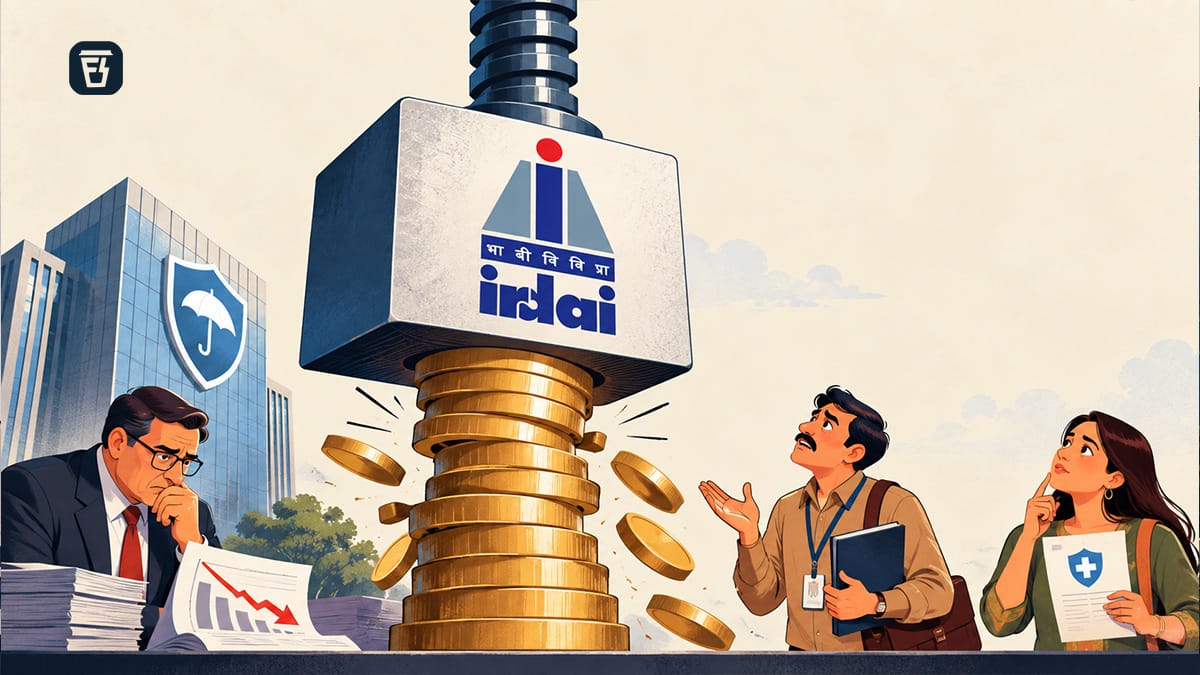
In today’s Finshots, we break down IRDAI’s new consultation paper that could change the dynamics of the insurance industry and how insurance is sold in India.
Just a heads up, though. This story is a little longer than our usual ones.
 Love our insights? Add Finshots as a Preferred Source on Google ⭐
The Story
For however long you’ve been reading Finshots, you probably know that we also have a product called Ditto.
It’s an insurance platform that provides free advice on health and term insurance through knowledgeable as well as IRDAI-certified advisors. And if somebody wants to then buy insurance from us, they can do so too. We help you through the purchase, and also whenever you need us during a claim.
The main idea though is to be spam-free and not be pushy with insurance sales like you may have seen otherwise. So if you set up a call with our advisors, no one will call you again to bother you to buy insurance or follow up unless you specifically want us to.
Now you might think that this is a plug or an ad before we start the story, right?
It’s not. It’s actually to set up the context of this story and tell you what Ditto Insurance does because actually last week IRDAI, the insurance regulator, dropped a bit of a bombshell on us and other insurance distributors like us.
It released a consultation paper proposing a bunch of reforms that could change how insurance is sold in India. If these proposals eventually become law, they could cap commissions paid to distributors, stop banks from compulsorily bundling insurance with loans and other products, and limit how much insurers can spend on things like commissions and operating expenses.
Now this means that for a company like ours, revenues could drop because what the regulator is essentially saying is that if an insurer like, say, HDFC or ICICI gets premiums from customers like you, it would have to share a smaller portion of it with insurance distributors and agents as commissions.
And since that’s how we make money, it’s obviously a problem. Which is also why you’ve seen stocks of companies like Policybazaar and Turtlemint (our listed peers), fall by as much as 30% or even more over the last few days.
Now as much as it affects us, IRDAI’s intentions aren’t wrong at all. If anything, they’re actually good.
Because you see, insurance penetration or the percentage of premiums to a nation’s GDP, in India is just a measly 3.7%, compared with the global average of 7.3%. And as you know, India wants to have adequate life, health and property cover by 2047, the year in which we celebrate the centenary of our independence.
But to get there, there’s a problem. Even if insurance penetration in India is low, a lot of whatever penetration we do have is, in fact, mis-selling.
How do we know that?
Well, IRDAI has it documented. Its annual report suggests that in FY25 alone, there were more than 26,600 complaints of insurance mis-selling and unfair business practices. That’s a 14% rise in cases from the previous year.
And one of the few reasons why this mis-selling happens lies in how insurance is sold in India.
Insurers don’t sell most policies directly to customers. They rely on a huge network of intermediaries like individual agents, corporate agents like us, banks, brokers, web aggregators and even car dealers who sell motor insurance when you buy a vehicle.
And the way these distributors were paid changed around 2023 and the year after that. Before that, IRDAI had separate commission caps for different insurance products. But in 2023, it scrapped these product-wise limits and introduced a broader ceiling called Expenses of Management, or EoM.
Essentially, insurers got more freedom to decide how much they wanted to pay distributors for different products, as long as their overall expenses (as a percentage of premiums) stayed within the prescribed limit. The idea was to simply give insurers more freedom to decide how they spend their money and let competition and efficiency eventually benefit customers.
But things didn’t quite work out that way. Insurers began competing aggressively for distributors by offering higher commissions on products that were more profitable. Some even breached the expense limits they were allowed.
And that created an obvious incentive problem. Take banks, for example. They have massive customer bases and are therefore a very powerful channel for selling insurance. If an insurer is willing to pay a high commission, there’s a strong incentive to push that product through the bank’s network.
And that’s also where mis-selling can creep in. Imagine you take a home loan. You may genuinely want life insurance so your family isn’t left with the loan if something happens to you. But the problem starts when you’re made to believe that buying a particular insurance policy is necessary to get the loan, even when it isn’t suitable for you.
Now, banks aren’t the only channel where this can happen. We’re using them as an example simply because they are such a large distribution network.
But IRDAI had been watching all of this closely and also warning the industry about this for a while. It had essentially said that if insurers didn’t pass on the benefits of the more flexible system to customers, it could bring back stricter commission limits. And that’s essentially what this consultation paper is trying to do.
It has five big changes being proposed.
To begin with, it wants to simplify the distribution system. Instead of having separate rules for agents, brokers, corporate agents, web aggregators and other intermediaries, IRDAI wants to group them into three broader categories. The basic idea is that if two businesses are doing essentially the same thing, they should face similar rules.
Second, reduce the overall amount insurers can spend on distribution. Basically, the EoM limits would be brought down gradually over five years. That means insurers would have less room to spend on commissions and other distribution-related expenses.
Third, it wants to bring back product-level commission caps which were removed in 2023. For example, the proposed cap on first-year health insurance commissions is 15%, while renewals would be capped at 5%. And commissions on new-vehicle third-party motor insurance could be zero.
Fourth, it wants to make commissions more transparent and crack down harder on mis-selling. That could mean that insurers and distributors would have to disclose more information about commissions and incentives. And if a sale is later found to have been improper, commissions could even be clawed back.
And finally, IRDAI wants to build more digital infrastructure. Platforms such as Bima Sugam and the proposed Public Insurance Registry could make it easier for customers to buy and manage policies directly, reducing their dependence on commission-driven intermediaries.
And with all of this, you can probably guess who this hurts the most. Insurance distributors like us.
Of course, insurers will also feel the pressure too because they’ll have less freedom to spend on commissions. That could affect their profits.
But distributors could be hit harder because many of their business models benefitted from the flexibility introduced in 2023. Citi, for instance, estimates that distributor earnings from some types of insurance could fall by 70–90%. Credit-linked insurance could be particularly vulnerable because commissions on these products are currently much higher than the proposed limits.
And if the changes become final, the industry could see some consolidation too. Smaller distributors with limited cash reserves may find it harder to absorb the hit, while larger players may be better placed to adapt.
But all of this was about how the insurance industry gets restructured. But you’re also probably wondering, what does it mean for you, the person actually buying the insurance?
You may have also assumed that lower commissions automatically mean lower premiums. But that isn’t necessarily how it works.
Because you see, when you pay an insurance premium, the insurer doesn’t simply keep the entire amount as profit. Your premium becomes part of a larger risk pool, which is collectively used to pay claims when policyholders suffer an insured loss.
So if an insurer spends less on commissions, marketing and other expenses, a larger portion of the premium could remain available to pay claims.
Alternatively, insurers could also choose to simply retain some of those savings and improve their margins.
But there could also be another potential benefit, especially with life insurance savings products, which we’re not active evangelists of (you can check these stories out to understand why: here and here). Suppose you pay ₹1 lakh as a premium. If ₹25,000 of that earlier went towards various costs. And that now falls to ₹20,000, there’s an extra ₹5,000 that could potentially be reinvested and ultimately contribute to the benefits you receive from the policy over the longer term.
So lower distribution costs could ultimately benefit policyholders in a way. But how much of that benefit actually reaches you will depend on what insurers do with the savings.
But yeah, none of these changes are final yet. IRDAI has released the consultation paper and given the industry and other stakeholders a month to respond with their feedback. What happens after that is something we’ll have to wait and see. And maybe that’ll be another story to write about.
But whatever happens, we at Ditto Insurance will continue to be here to help simplify insurance for you.
And yes, we’ll still be just a phone call away.
And if you want to go a step further and actually understand how health and life insurance work, we’re hosting a free 2-day Insurance Masterclass to help you build real financial security by understanding insurance the right way.
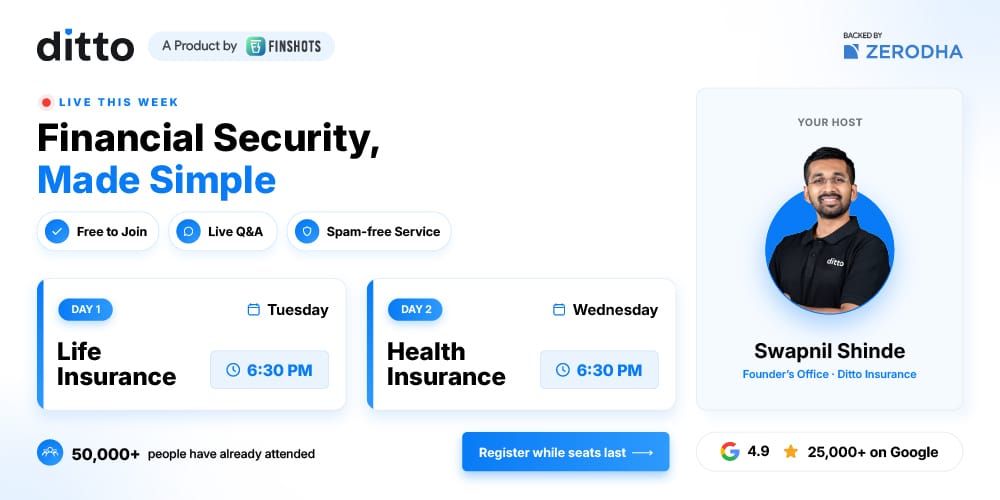
📅 Tuesday, 29th September at 6:30 PM — Life Insurance:
How to protect your family, choose the right cover amount, and understand what truly matters during a claim.
📅 Wednesday, 30th September at 6:30 PM — Health Insurance:
How hospitals process claims, common deductions, mistakes buyers usually make, and how to choose a policy that won’t disappoint you when you need it most.
👉🏽 Click here to register while seats last.
Also, if you liked this story, don’t forget to share it on WhatsApp, LinkedIn, and X.