
Carlsberg's profit margins look great. But...
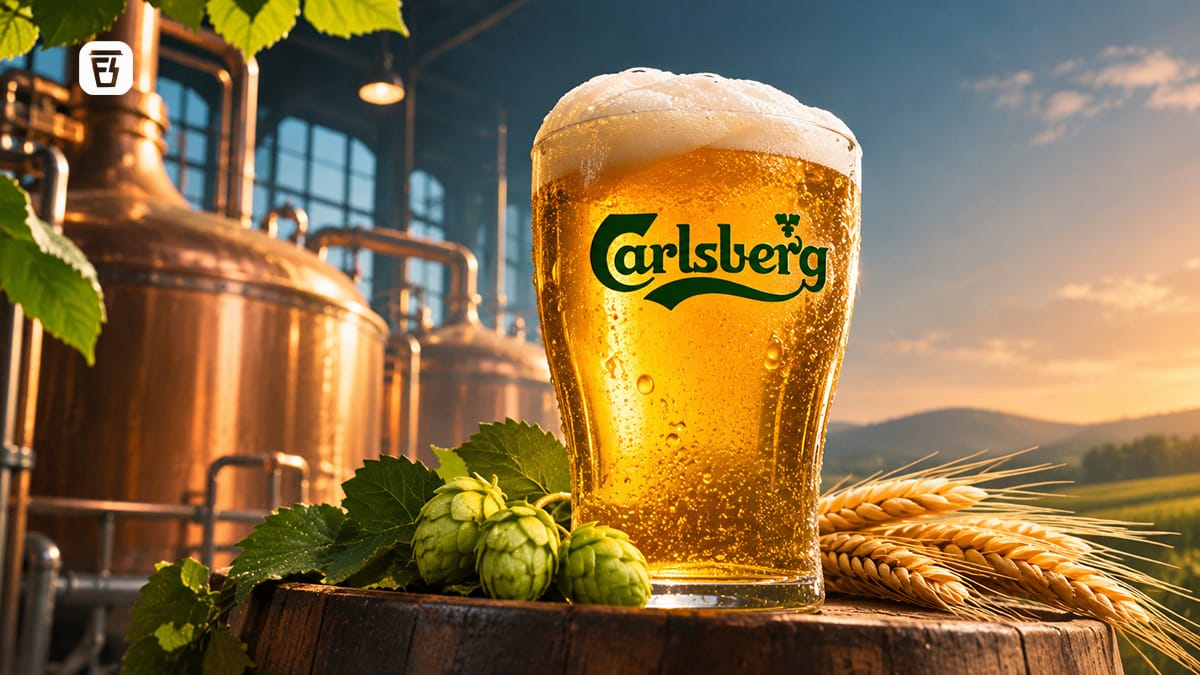
In today’s Finshots, we break down India’s beer industry through the lens of Carlsberg’s UDRHP and explore how it manages to earn such impressive profit margins.
 Love our insights? Add Finshots as a Preferred Source on Google ⭐
The Story
If you walk into a liquor store in India, chances are you’ll find more Kingfisher bottles than Carlsberg ones. After all, United Breweries, the maker of Kingfisher, sells about half the beer consumed in the country. Carlsberg, on the other hand, accounts for roughly one in five beers sold.
But here’s the thing. Despite selling far less beer, Carlsberg’s profit margins are much higher.
To put that in perspective, in FY26, Carlsberg India reported an EBITDA margin of 20.9%. In simple terms, that’s the share of revenue left after paying for production and operating costs. United Breweries, meanwhile, managed a margin of just 9.2%.
And Carlsberg has been getting better at this as a couple of years ago (in FY24) its EBITDA margin was at 16.9%.
But then came Q1FY27 (April-June), which is usually the busiest period for beer companies, thanks to the summer heat. Carlsberg sold more beer than it did a year earlier, and its revenue jumped by 21% to ₹1,366 crore. Yet its profit fell by 3.9% to ₹158 crore. Its EBITDA margin also dropped sharply from 22.1% to 17.4% year on year.
So, what happened?
To understand that, let’s first look at how the beer business works.
The first thing that comes to mind is the beer itself. It’s made using water, barley, wheat, rice, sugar, hops (an ingredient that gives beer its bitterness, to balance out the natural sweetness that comes from the grain) and yeast. The grains are soaked to release their sugars, boiled with hops and then fermented with yeast to produce alcohol.
But it’s the packaging that’s more expensive.
In FY26, Carlsberg spent ₹1,966 crore on raw materials. And only a quarter of that went towards ingredients. The rest went towards glass bottles, aluminium cans, caps and cartons. That’s also why beer companies prefer collecting and reusing glass bottles. It helps keep packaging costs under control. And when aluminium prices rise, the cost of selling beer in cans goes up too.
There’s another problem. Beer is heavy, and transporting it over long distances can quickly eat into profits. Moving it across state borders also attracts additional duties. So brewers generally prefer making beer close to the markets where they sell it. Carlsberg, for instance, operates seven breweries of its own and works with nine external brewers to meet demand.
But manufacturing beer is only half the challenge. Selling it profitably in India is another story altogether.
For starters, Indian beer drinkers have a clear preference. Strong beer, which contains 5-8% alcohol, accounts for around 80-83% of all beer sold in the country. Mild beer, meanwhile, contains less than 5% alcohol. And a large part of the demand for strong beer comes from people looking to buy it at an affordable price. Carlsberg understood this early. So it built its business around Tuborg Strong, which now accounts for roughly 70% of its sales.
But focusing only on affordable beer isn’t enough. Brewers also want customers to trade up to more expensive varieties because that’s where they can make better margins.
Just to give you some more context on that, beer in India is sold across four price categories: economy, mainstream, premium and super-premium. A 650 ml bottle in the economy category typically costs ₹120-170, while a premium one can cost ₹180-290. Super-premium beers, usually sold in smaller 330 ml bottles, can cost ₹230-350 or more.
And premium beer can be particularly attractive for brewers. That’s because it generally costs only a little more to brew and package than regular beer, but sells at a much higher price. For Carlsberg, premium and super-premium beers accounted for 24.7% of its net revenue in FY26, up from 21.3% in FY24. Its earnings per 100 litres of beer sold also increased by 8% over these two years to ₹6,011.
And as Carlsberg sold more beer, it also benefitted from economies of scale. Basically, running a brewery and paying its employees cost money regardless of how much beer it sold. But as sales increased, these costs got spread across more bottles, making each bottle cheaper to produce.
A few other things helped too. Barley became cheaper in FY24, aluminium cans cost less in FY25, and until March 2026, Carlsberg’s Danish parent company provided certain IT and support services to its Indian business for free.
But in the recent quarter, many of these advantages started disappearing.
For one, marketing became much more expensive. Since beer companies aren’t allowed to advertise their products directly in India, they rely on music festivals, promotional events, discounts and branded merchandise to build their brands. And as Carlsberg tries to attract more premium drinkers, it needs to spend more on these activities. As a result, its marketing and promotional expenses jumped by 76%, from 2.9% of net revenue to 4.2%.
Then came higher input costs. The West Asia crisis, which began in February 2026, pushed up energy and aluminium prices. A weaker rupee also made imported inputs more expensive. And because beer prices need state government approval before they can be increased, Carlsberg couldn’t immediately pass these higher costs on to customers. Its gross margin therefore slipped from 47.2% to 46.6%.
The company also had to rely more on external brewers. Its own breweries in Maharashtra and Rajasthan are operating close to full capacity. So the share of beer produced by outside brewers increased from 31% in FY24 to 45% in the latest quarter. And since these brewers charge Carlsberg a fee to manufacture its beer, this adds to its costs.
Finally, the free support services from its Danish parent came to an end in March 2026. Since April, Carlsberg India has had to pay for IT licences and other services, adding another cost equivalent to 0.4% of its net revenue.
Put all this together, and you'll see why Carlsberg’s operating margin fell to 15.9% in Q1FY27.
So, what will it take for Carlsberg to hold on to the healthy margins it has built over the years, you ask?
Well, some of these pressures could ease over time. For instance, if energy prices cool, packaging costs could come down. Carlsberg is also building a new brewery in Maharashtra and expanding its Mysuru facility by FY29. This should reduce its dependence on external brewers. And premium beer continues to gain ground, accounting for 27.6% of net revenue in the latest quarter.
But there are still a few challenges. Rival brewers and independent craft breweries are competing for the same premium customers. So marketing expenses could remain high.
There’s also a fresh problem brewing. Last month, Rajasthan’s pollution control board ordered Carlsberg’s Alwar brewery to shut down. And that’s quite a blow because Rajasthan accounted for 18% of the company’s sales in Q1FY27. If Carlsberg has to supply the state from breweries located further away, it could face higher transportation costs and additional inter-state duties.
So yeah, while Carlsberg still enjoys much healthier margins than the king of beer, United Breweries, maintaining them may not be easy.
Only the numbers from the coming quarters, especially Q3FY27 (October-December), which will be the first quarter to reflect the impact of the Alwar shutdown, can tell us whether Carlsberg’s margin troubles are temporary or something more lasting.
Until then…
Don’t forget to share this story on WhatsApp, LinkedIn, and X.
And if you’re someone who loves keeping tabs on the world of business and finance, hit subscribe if you haven’t already. And if you’re already a subscriber, thank you! Maybe forward this to someone who’d enjoy our stories but hasn’t discovered us yet.
How Strong Is Your Financial Plan?
You've likely ticked off mutual funds, savings, and maybe even a side hustle. But if Life Insurance isn't a part of it, your financial pyramid isn't as secure as you think.
Life insurance is the crucial base that holds all your wealth together. It ensures that your family stays financially protected when something unpredictable happens.
If you’re unsure where to begin, Ditto's IRDAI-Certified insurance advisors can help. Book a FREE 30-minute consultation and get honest, unbiased advice. No spam, no pressure.