
Why MSC wants a stake in Vizhinjam Port
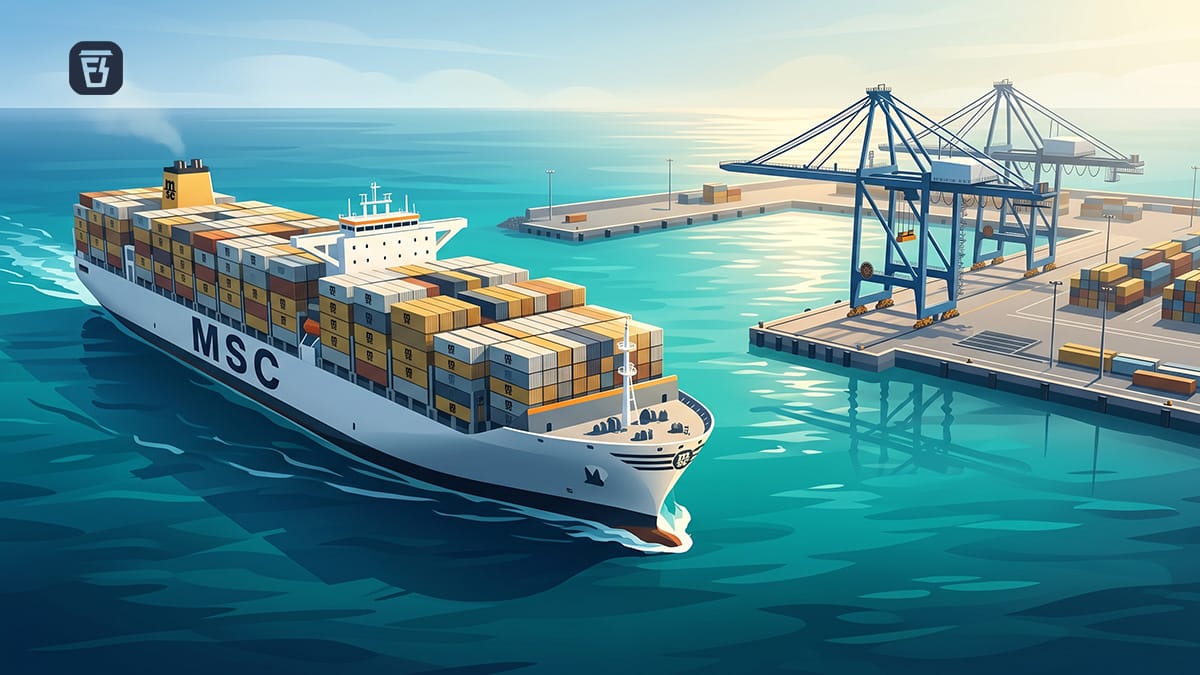
In today’s Finshots, we explain the strategy behind MSC’s billion-dollar bet on Vizhinjam Port.
But here’s a quick sidenote before we begin. We’re looking for a business writer to join Finshots’ newsletter team. If you’re someone who can tell compelling stories and explain financial concepts in plain English without drowning readers in jargon, do consider applying through the link here. Or share this with someone who might be a good fit for the role.
Now onto today’s story.
The Story
Just a few kilometres from Thiruvananthapuram, on Keralam’s western coast, sits a natural deep-water port that most Indians had probably never heard of until last week.
It’s the Vizhinjam port, which is operated by Adani Ports & SEZ.
This port has been commercially operational for less than two years. Yet Adani has just convinced MSC, the world’s largest shipping company, to buy a 49% stake in the port for nearly $1.4 billion.
Which raises an obvious question. MSC didn’t need to own the port to use it. It could have simply paid the port charges like every other shipping line. So why spend billions becoming a co-owner?
To answer that, you first need to understand what Vizhinjam was built to fix.
Currently, over 75% of India’s container cargo is transshipped. Say, a container from Kochi leaves for the US, it would often be shipped to Colombo or Singapore first. There, it would be unloaded, sorted and reloaded onto a much larger vessel headed across the oceans.
This process is known as transshipment, and it is a business in itself. Every extra stop means more time, more handling costs and more revenue flowing to a foreign port instead of an Indian one.
And all of this was happening because global trade across oceans today is dominated by ultra large container vessels (or ULCVs). These ships need a port that is around 55 feet deep to dock safely, and most Indian ports aren’t built deep enough.
So instead of sailing directly out of India, these mega-ships stop at hubs like Colombo or Singapore, offload containers onto the larger UCLVs and those ships then travel to the final destination.
Vizhinjam was built to change that. Located just a few nautical miles from one of the world’s busiest East-West shipping corridors, it is one of the few Indian ports naturally deep enough to host these giant vessels. The idea was simple: if India could offer the same depth and efficiency as Colombo or Singapore, shipping lines would have little reason to stop elsewhere first.
Since commercial operations started back in December 2024, Vizhinjam has ramped up faster than any port in Indian history, crossing 2 million TEUs within just 18 months.
(A TEU, or Twenty-foot Equivalent Unit, is the shipping industry’s standard way of counting containers. One standard 20-foot container equals one TEU.)
But building a world-class port is only half the battle. The harder part is convincing the world’s biggest shipping lines to actually send their cargo there instead of the hubs they’ve relied on for decades.
This is where MSC comes in.
Interestingly, this isn’t the first time MSC has followed this playbook with Adani.
In 2016, MSC partnered with Adani to develop the container terminal at Mundra. Three years later, the two announced a major expansion to turn it into a transshipment hub for South Asia. Today, the CT3 terminal at Mundra has become the first container terminal in India to handle over 3 million TEUs in a financial year.
And close to a decade later, MSC repeated the strategy at Ennore. That terminal too has seen container volumes accelerate as the partnership has matured.
Vizhinjam is just the third chapter of the same strategy.
The logic is fairly straightforward once you look at it from MSC’s perspective.
As a shipping line, MSC doesn’t just want ports. It wants ports that are efficient, rarely congested and quick to turn ships around. When it simply rents space at someone else’s port, it has very little control over any of that.
If a port under-invests, becomes congested or prioritises another customer’s ships, MSC simply has to live with it. Owning a stake changes that equation.
Instead of being just another customer paying port charges, MSC gains a voice in how the port develops and a financial stake in its success. Every additional container that moves through Vizhinjam now creates value not just for Adani, but for MSC too.
And that’s what makes this arrangement particularly interesting. The company that decides where millions of containers travel each year now also has a financial stake in one of the gateways competing for it.
That is also why the partnership matters for Vizhinjam. MSC operates ships across the globe and can route more cargo through a port it now partly owns. That’s the kind of steady traffic Vizhinjam will need as it expands capacity from 1.6 million TEUs to 5.7 million TEUs by December 2028.
Now to be clear, MSC itself isn’t making the investment directly. The buyer is Terminal Investment Limited, or TiL. Think of it as MSC’s real estate business.
MSC runs the ships. TiL buys stakes in the ports those ships depend on.
In fact, that’s exactly why TiL was created back in 2000. Its original job wasn’t simply to own ports to secure capacity for MSC at the world’s busiest trade hubs. Since then, TiL has steadily expanded through acquisitions, joint ventures and new developments across major shipping routes year after year.
Take Antwerp, for example. TiL’s joint venture terminal there is Europe’s largest container terminal and today handles more than half of the Port of Antwerp’s container traffic.
Today, TiL has interests in more than 70 terminals around the world, from Long Beach in the US to Antwerp in Belgium. And now Mundra, Ennore and Vizhinjam are all part of the same strategy.
There’s another detail that reveals how TiL sees this investment. The $1.4 billion isn’t being paid all at once. TiL will pay $539 million upfront, while the remaining $858 million will only be paid after Vizhinjam completes its planned expansion.
For Adani Ports on the other hand, the deal solves two problems at once:
- They’re bringing in a partner that not only has deep pockets but also operates one of the world’s largest shipping networks so they have every incentive to help,
- They’re also raising capital without taking on additional debt.
Now all of this sounds good. But there’s one small problem.
Vizhinjam is owned by the Keralam government, with Adani operating the port under a long-term concession agreement. Keralam says it wasn’t told about the transaction beforehand, even though the concession agreement requires the state’s approval for any ownership change above 25%.
Adani has since asked the Keralam government to approve the deal. But for now, the transaction remains on hold until both the state government and the Competition Commission of India give it the nod.
Until then…
If this story helped you understand one of shipping's biggest deals, share it with a friend, family member or even strangers on WhatsApp, LinkedIn and X.
And subscribe to Finshots, if you haven’t already. Plis!