
India is in a dilemma over cabotage laws
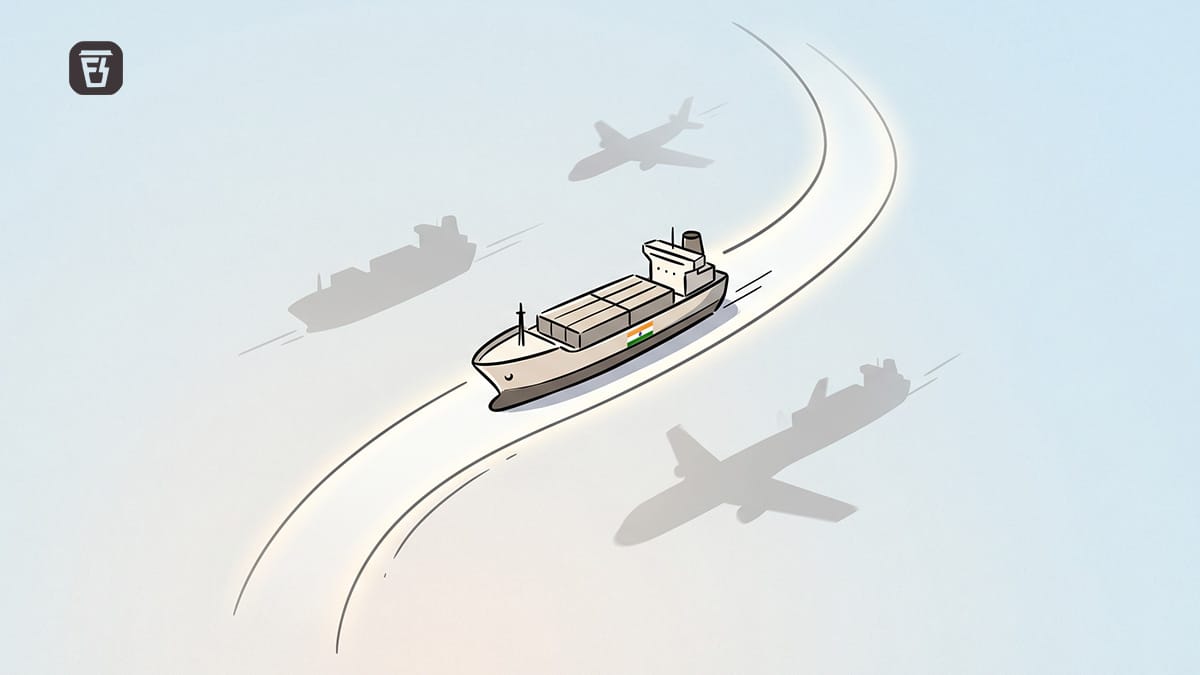
In today’s Finshots, we talk about cabotage and why India is in a dilemma over the relaxations it introduced to its cabotage rules.
But here's a quick sidenote before we begin.
We’re hosting a free 2-day Insurance Masterclass that helps you build real financial security by understanding health and life insurance the right way.
📅 Saturday, 25th April at 11:00 AM: Life Insurance
How to protect your family, choose the right cover amount, and understand what truly matters during a claim.
📅 Sunday, 26th April at 11:00 AM: Health Insurance
How hospitals process claims, common deductions, the mistakes buyers usually make, and how to choose a policy that won’t disappoint you when you need it most.
👉🏽 Click here to register while seats last.
Now on to today’s story.
The Story
Today is April 21st. This date may or may not mean much to you. But it does for India’s shipping industry.
Because from today, the government was actually supposed to scrap a few exceptions it introduced in 2018 that partially eased cabotage rules to boost coastal shipping.
Now, we know that line sounds a bit confusing. So let’s slow down and first understand what cabotage rules really are.
‘Cabotage’ simply refers to a foreign shipping or transport operator carrying goods or passengers between two ports or places within the same country. For instance, Blue Whale Shipping Inc., a foreign transporter, moving cargo between Mumbai and Chennai. That’s cabotage.
But India’s rules are quite clear here. Under the Merchant Shipping Act, only Indian ships are allowed to engage in coastal trade. Foreign ships can step in only if Indian ships aren’t available, or if they’ve been granted a specific exception or licence.
And that exception came in 2018. India’s Ministry of Ports temporarily allowed foreign-flagged container ships to carry certain domestic cargo along Indian coastal routes without needing a licence. Stuff like export or import containers, some agricultural and fertiliser cargo, and even transshipment empties or simply empty containers that are transferred at an intermediate port while heading to their final destination.
This was done because even though cabotage rules were meant to protect the Indian shipping industry and promote local ships, restricting foreign vessels had started to slow down the movement of goods by sea and push up costs.
To put this in perspective, let’s assume there’s cargo that needs to be exported from Bengaluru to Australia. Normally, this cargo would move from Bengaluru to a Chennai transshipment hub (a port where cargo is transferred from one ship to another before heading to its final destination), and then onward to Australia.
Now, since this is an export, it would make sense to choose a foreign carrier that can handle the Bengaluru–Chennai leg and then directly ship the goods to Australia as part of one integrated service. It’s simpler, cheaper, and more efficient.
But with strict cabotage rules, the Bengaluru–Chennai leg has to be handled by an Indian coastal feeder ship.
And that’s a problem because now the exporter has to deal with two different carriers — one Indian for the domestic leg and one foreign for the international journey. Naturally, this pushes up logistics costs for anyone using Indian ports.
Besides, higher costs make Indian goods more expensive and less competitive in global markets. So shippers start looking for alternatives. For instance, instead of routing cargo from Bengaluru to Chennai, they may choose an international carrier that takes the goods straight to a global transshipment hub like Singapore, and then onward to Australia.
The end result is fewer transshipments at Indian ports, and more India-bound cargo quietly moving through hubs in Singapore, Sri Lanka, or Malaysia.
Now, this might sound like just one example. But situations like this were playing out often enough that Indian ports were losing nearly ₹1,500 crores worth of business every year, which is a significant hit to their revenue potential.
And that’s exactly why the 2018 relaxation came into the picture.
The government’s idea behind this relaxation was fairly simple. It believed that easing these rules could increase transshipment at Indian ports, and even pull back nearly 10% of Indian cargo that was otherwise being transshipped abroad.
But a couple of months ago, after nearly eight years of this relaxation, the government decided to scrap these cabotage relaxations. It felt the policy hadn’t quite delivered on its promise. Stakeholders had raised concerns that foreign carriers were indulging in predatory practices or undercutting competitors by offering lower freight rates, partly because they had more vessels at their disposal. And as a result, cargo movement via Indian-flagged ships wasn’t really growing. It had more or less stagnated.
So the government thought “If these relaxations are hurting our domestic fleet, why not roll them back? That way, it could boost Indian-flag container tonnage, support shipbuilding, reduce dependence on foreign carriers, and strengthen India’s own shipping lines.” — all of which ties into the larger $1 trillion exports goal by 2030.
Sounds reasonable, right?
After all, protecting Indian ships was the whole point of cabotage rules to begin with.
But there’s a problem. Of course, the problem of Indian exports becoming more expensive and less competitive globally already exists. But there’s another issue too. At any given time, only about 30 feeder vessels operate along India’s coast which can go up to around 50 depending on demand. That’s simply not enough to handle all transshipment-style demand efficiently.
So with fewer ships available and no competition from foreign-flag carriers on these routes, freight rates for coastal container legs could end up rising.
Another thing is the Middle East conflicts, especially around the Red Sea and the Gulf, which have made traditional routes riskier and more expensive. Carriers have rerouted ships, cut sailings, and raised freight rates. This has already pushed up logistics costs for Indian exporters and importers.
So even before any cabotage rollback, shipping lines were under pressure, and Indian shippers were already paying more for ocean freight. On top of that, because of the disruption, ships are getting held up at sea, things aren’t moving as per schedule. This means fewer Indian feeder vessels are actually available to carry the next set of cargo.
And that’s exactly why, after representations from lobby groups representing both Indian and foreign container shipping lines, the government has decided not to roll back the cabotage exemptions from today. Instead, it has extended the relaxations for another six months, until October, and will reassess the situation after that.
But that just sets up another dilemma. Because if the relaxations continue, Indian shipping representatives argue that the movement of cargo through foreign ports hasn’t really reduced, nor have costs for Indian exporters and importers come down. On the other hand, foreign carriers claim the opposite. That these exemptions have slashed freight rates to long-haul destinations by as much as 80% and brought down the cost of coastal movement of transshipment cargo to some of its lowest levels.
Besides, there’s yet another issue building in the background.
After eight years of partial liberalisation, even the talk of an abrupt rollback has raised concerns about policy consistency. For foreign carriers, this uncertainty is a problem because if rules can change suddenly, they may think twice before building India-focused coastal feeder networks, fearing another regulatory U-turn.
So how can the government solve this, you ask?
Well, there are a couple of fairly simple options.
One, give Indian-flag ships the first right to carry cargo. And only if they don’t have enough capacity, allow foreign ships to step in. In special situations like the current geopolitical tensions, foreign ships could be allowed more freely.
Second, if the government does introduce relaxations, it should clearly define an end date or a proper sunset clause. That way, the policy doesn’t drag on and feel like the default option like the current relaxations that have stretched on for eight years.
At the same time, India also needs to build more shipping capacity if it wants to protect both its container lines and its ports.
And that’s already starting to happen. India’s shipping fleet capacity crossed 14.2 million Gross Tonnage (GT) for the first time, with 92 vessels added in FY26. Out of these, 50 were coastal vessels — the kind that matter for domestic transshipment. That’s roughly a 12% increase over last year. Plus, the 1.5 million GT added in FY26 is nearly thrice what was added the year before. This simply shows that fleet expansion is picking up pace.
So yeah, things are moving in the right direction. But we’ll have to wait and see what happens in six months.
Until then…
If you liked this story, feel free to share it with your friends. family or even strangers on WhatsApp, LinkedIn, or X.
Also, if you’re someone who loves keeping tabs on the world of business and finance, hit subscribe if you haven’t already. And if you’re already a subscriber, thank you! Maybe forward this to someone who’d enjoy our stories but hasn’t discovered us yet.
A leading insurer is revising its health insurance premiums!
Policies issued after April 28th, 2026 (midnight) will reflect the updated premiums.
If you've already generated a quote, the premium may change once the revision comes into effect.
So, book a free call with Ditto to understand your options.