
Who owns Tralalero Tralala, Sima Aunty's new competitor and more...
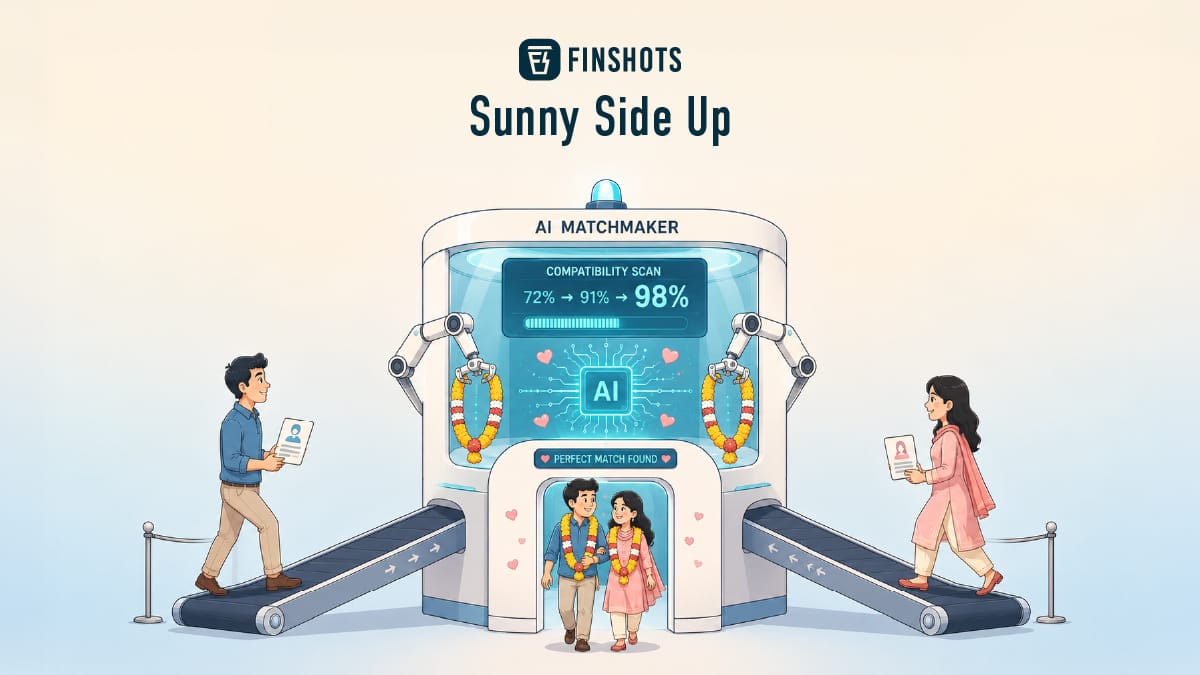
Hey folks!
Do you know who created Cinderella?
I don't. And it turns out that no one does.
But what we do know is that the story has existed for over two thousand years, with over 500 variations travelling across continents and cultures long before books, movies or copyright laws existed.
Along the way, every generation added something of its own. The French gave Cinderella a fairy godmother. The Brothers Grimm made the story, well, more grim. And Disney turned it into the version most of us know today.
Yet no one can point to the "original" creator because that's not how folklore works. Stories survive precisely because they belong to everyone.
For a while, it seemed like the internet had killed that idea. Every photo had a creator, and every YouTube video belonged to someone. Platforms were built around individual creators, complete with monetisation tools and copyright claims.
At the end of the day, the internet transformed creativity into something that could be measured, attributed and, more importantly, owned.
But artificial intelligence may be starting to reverse that trend.
If you've spent any time on Instagram this year, you've probably encountered the bizarre universe of Italian Brainrot.
There's Tralalero Tralala, a shark with three legs wearing sneakers. Bombardiro Crocodilo, a crocodile fused with a bomber plane. Ballerina Cappuccina, a ballerina with a cappuccino cup for a head. And many more characters.
None of these characters emerged from a studio or a marketing agency. Instead, they evolved through thousands of anonymous posts, AI-generated images, voiceovers, remixes and inside jokes.
One person generated a character. Someone else added a backstory. Another created rival characters. Before long, an entire fictional universe existed, even though no one could confidently say who created it.
In other words, the internet accidentally rediscovered folklore (or lore, as Gen Z would call it).
And this is why the unfolding legal battle is so fascinating.
Several companies are now racing to trademark names such as Tralalero Tralala or Tung Tung Tung Tung Tung Tung Tung Tung Tung Sahur.
You see, under trademark law, that isn't as absurd as it sounds. Unlike copyright, which generally protects the creator of an original work, trademarks are about commercial identity. In many jurisdictions, what matters isn't who first imagined a character, but who first claims its use in commerce.
So a meme that thousands of strangers collectively built could ultimately become the exclusive property of whichever company reached the lawyer's office first.
That's a strange collision between two very different worlds. AI has made it easier than ever for millions of people to create stories together, much like communities once created folklore around campfires. But modern intellectual property law still expects every valuable idea to have an owner.
And perhaps that's the real story here. We spent two decades turning the internet into a marketplace of individual creators, but AI may be turning it back into a giant storytelling village. The only difference is that this time, instead of wondering who tells the best story, we're arguing over who gets to own it.
Here’s a soundtrack to put you in the mood… 🎵
Main to hun pagal by Amogh Agarwal, recommended by our teammate Avni Mittal.
Thank you for the rec, Avni!
But that was one recommendation from us. But keep your music recommendations coming. We’d love to feature them in our Sunday editions, especially gems from underrated Indian artists many of us haven’t discovered yet. Can’t wait to hear them!
What caught our eye this week
Sima Aunty has a new competitor
Before dating apps, many Indian families relied on a fairly sophisticated matchmaking system: Sima aunty.
There was always this one person who knew whose son had moved to Bengaluru, whose daughter had finished her MBA, and which family was “Modern, but not too modern”. She would study your requirements, ignore half of them, and return with three biodatas she considered suitable, with a request to adjust.
Her success rate was debatable, but she understood one thing rather well: nobody wants to evaluate 10,000 potential partners.
Then dating apps arrived and declared this entire system obsolete.
Why restrict yourself to a handful of people when an app could introduce you to an entire city?
That was the premise behind online dating. After all, more choice would improve your chances of finding the right person, right?
Except it didn’t always work that way.
A friend recently told me that swiping left and right wasn’t even the exhausting part of using dating apps.
It was, in fact, talking to people. Because every match meant opening a profile and beginning another version of the same conversation.
Soon, the chats started resembling unread work emails. And they would even ignore genuinely interesting people because keeping the same conversation alive with five people felt exhausting.
In fact, a 2024 Forbes Health survey found that 78% of dating app users are burned out. Respondents spent close to an hour on dating apps every day, often without finding the meaningful connection they were looking for.
And now, one of the people responsible for building the swipe era wants to fix it.
Justin McLeod, the founder of Hinge, recently announced that he had raised $18 million for a new matchmaking company called Overtone. Match Group, which owns Hinge, Tinder, and OkCupid, is among its backers.
But what's new in this?
Well, McLeod says Overtone won’t operate like a conventional dating app. There will be no endless feed of profiles or juggling conversations with several people at once.
Instead, the service will use voice and AI to better understand users. It will then make only a few curated introductions and explain why it believes those people would be compatible.
So after spending years replacing human matchmakers, Silicon Valley is rebuilding one.
Only this time, Sima Aunty is an algorithm.
And Overtone isn’t the only company thinking this way. Newer services such as Ditto (not us) and Date Drop are also betting that users would rather receive a few promising introductions than sift through an apparently endless pool themselves.
And this highlights a paradox, don’t you think?
The early internet was designed to maximise access.
Netflix gave us thousands of shows. Spotify offered millions of songs. Amazon filled its shelves with nearly every product imaginable. And dating apps let us talk to an enormous pool of people.
But access is no longer the scarce resource. Attention is.
That’s why Netflix wants to recommend your next show, and Spotify builds playlists for you.
The internet once promised to give us infinite options. Now, its most valuable products help us avoid looking at most of them.
Dating seems to be entering the same phase. Because the challenge is no longer meeting enough people, but deciding who deserves your limited time and emotional energy.
Of course, allowing AI to make that decision feels slightly unsettling.
In the Black Mirror episode “Hang the DJ”, an algorithm decides whom people date, how long each relationship should last and who their ideal partner eventually is. So are we finally entering a Black Mirror episode?
Well, Overtone isn’t quite proposing that. Its AI will handle the introduction, while humans still have to handle the awkward coffee, bad jokes, and the actual relationship.
But the basic question is similar: Can compatibility really be decided by an algorithm?
What do you think? Let us know by replying to this email!
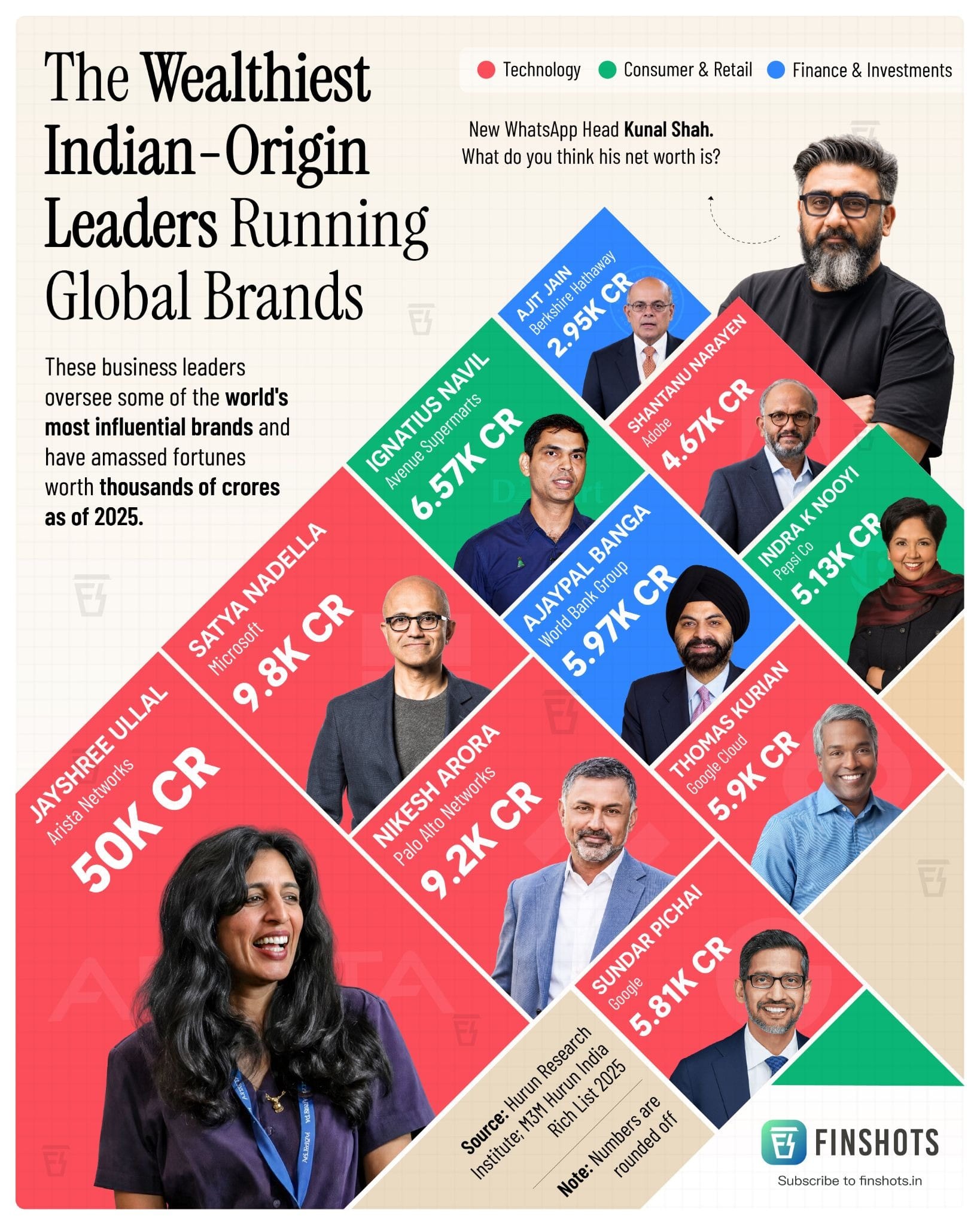
Infographic
Readers Recommend
This week, our reader Lokesh Puri Goswami recommends reading Farnam Street.
Farnam Street is a treasure trove of ideas and mental models, distilling timeless wisdom from some of the world's greatest thinkers into practical lessons for everyday life.
Thank you for the rec, Lokesh!
That’s it from us this week. We’ll see you next Sunday.
Until then, send us your book, music (preferably from underrated Indian artists), business movies, documentaries, or podcast recommendations. We’ll feature them in this newsletter! Also, don’t forget to tell us what you thought of today's edition. Just hit reply to this email (or if you’re reading this on the web, drop us a message at morning@finshots.in).
Don’t forget to share this edition on WhatsApp, LinkedIn and X.