
Unfair iPhone, the rise of tennis ball cricket, and more...
Hey folks!
When you think of cricket, you might naturally think of the big fanfare — the IPL frenzy, packed stadiums and maybe even the OG Test matches.
But for millions of Indians, cricket starts somewhere far more modest.
It starts with a tennis ball, a few friends or colony members, and a game squeezed into a gully (street), playground or whatever patch of open space they can find.
And this humble version of the game seems to be having a moment right now.
In 2025, more than 33 lakh cricket matches were played with tennis balls in India. And it’s not hard to see why. Tennis-ball cricket is cheaper and easier to organise. You don’t need expensive protective gear, a proper cricket pitch or even a large ground. A small space and a handful of players are often enough to get a game going.
And now, private companies are beginning to see an opportunity in it. A company called SKV Ventures, for instance, is planning to launch the Velocity Cricket League (VCL), a pan-India tennis-ball cricket tournament scheduled to begin in 2027. The plan includes player trials, team formation and auctions — borrowing some of the things that has made franchise cricket so popular.
We’ve already seen this get popular in the form of the Indian Street Premier League (ISPL), a gully cricket tournament with celebrity-owned franchises and 10 overs per side. VCL plans to take a slightly longer 15-over format. Of course, VCL is still at the planning stage, so it remains to be seen how far the league actually goes.
But the idea of gully cricket getting another big stage and failing almost seems unlikely. After all, this could create another legitimate pathway for the massive pool of talented street cricketers who miss out on ISPL squads.
To put that in perspective, ISPL attracted 44 lakh registrations last year. Yet, less than 0.3% of those players made it to the next stage, and only 144 were eventually selected and bought into active squads.
So, you can imagine just how much untapped talent there is.
It’s also quite interesting to see that a game that was once dismissed as something played in gullies is slowly being turned into an organised entertainment product. And perhaps that’s the biggest sign yet that in India, even a humble sport can now have a business model.
Here’s a soundtrack to put you in the mood… 🎵
Afsana by Niyam
You can thank our reader, Vishal Rawat for this rec. :)
Also folks, keep your music recommendations coming. We’d love to feature them in our Sunday editions, especially gems from underrated Indian artists many of us haven’t discovered yet. Can’t wait to hear them!
Now, let’s dive straight into the Sunny Side Up.
What caught our eye this week
Can a repairable phone beat the new iPhone?
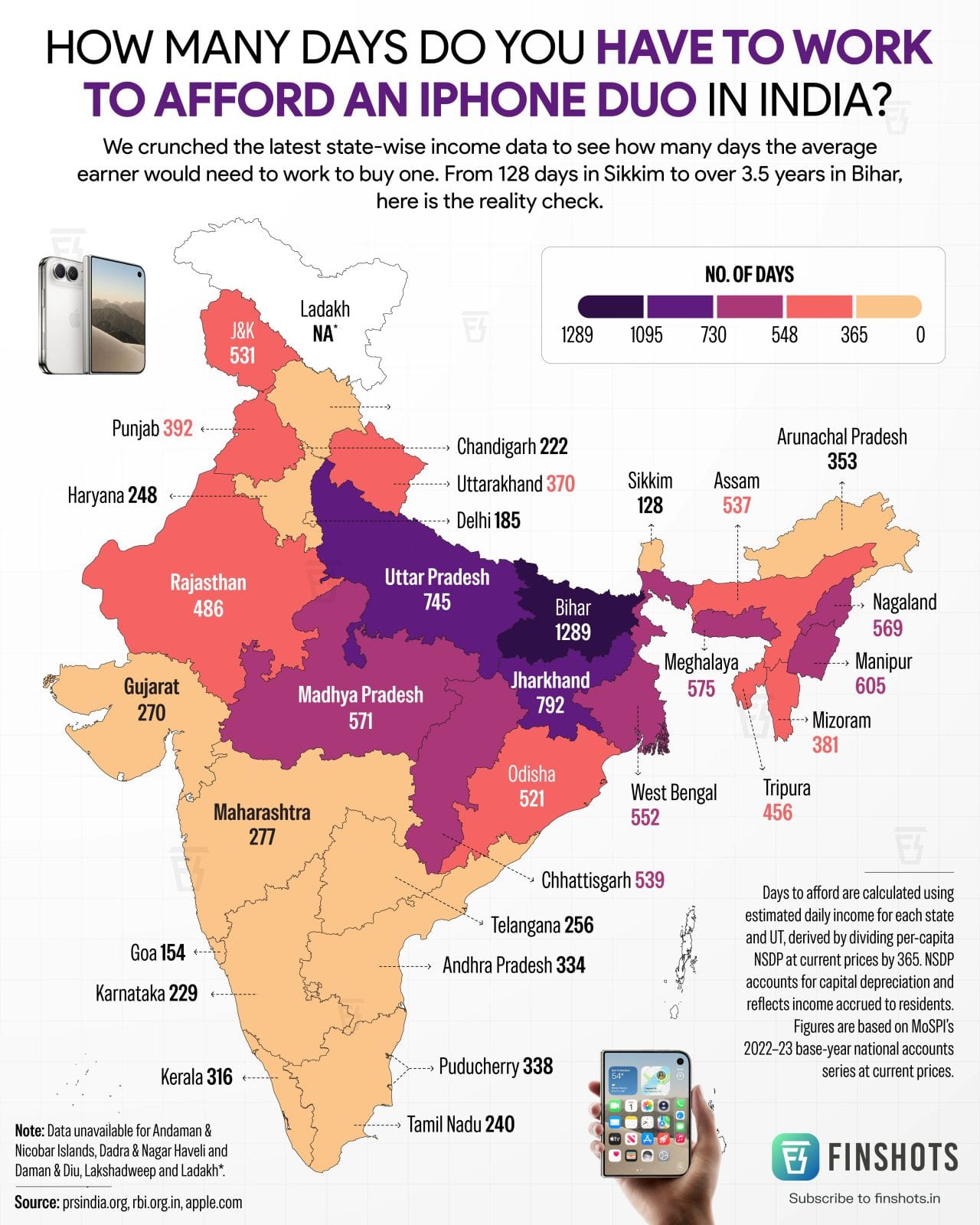
The one thing everyone seems to be talking about right now is the shiny new Burgundy iPhone. And, of course, the foldable one that has become the centre of memes about needing to sell your kidneys to afford it.
But that should make you observe something interesting. As smartphones have become fancier, they’ve also become more expensive. And you’d think that if you were spending a fortune on a phone, it should at least last five or six years.
Except there’s a problem. The more expensive smartphones have become, the harder they’ve become to repair.
Nathan Proctor, who leads the US Public Interest Research Group’s Right to Repair campaign, made a similar point in an interview with Wired. He said, “...if companies wanted to make eminently fixable modular products, they could. There’s no technological reason why they can’t do it; it really is what they’ve decided to produce. It does raise the question: Why isn’t more of our technology easy to fix? People are going to start thinking about smartphones as longer-term investments, especially as prices have gone up for these phones.”
And that’s a fair point, right?
Technology has advanced tremendously. So why can’t expensive phones have tougher screens, easily replaceable batteries and components that can be swapped out easily?
Instead, modern phones are often tightly glued together, making repairs difficult. And even when a repair is possible, you may have to send the phone to an authorised service centre, wait a few days and pay quite a hefty bill.
That’s where something often referred to as the “50% rule” comes in. If repairing an old device costs around half as much as buying a new one, consumers may simply decide to replace it instead. After all, a new phone comes with a fresh battery, newer features and, importantly, more years of software support.
But there’s a much bigger consequence to all this: electronic waste. To put that in perspective the UN’s 2024 Global E-waste Monitor found that the world generated 62 million tonnes of e-waste in 2022. That’s 82% more than in 2010 and enough to fill roughly 1.55 million 40 tonne trucks. By 2030, the figure could reach 82 million tonnes.
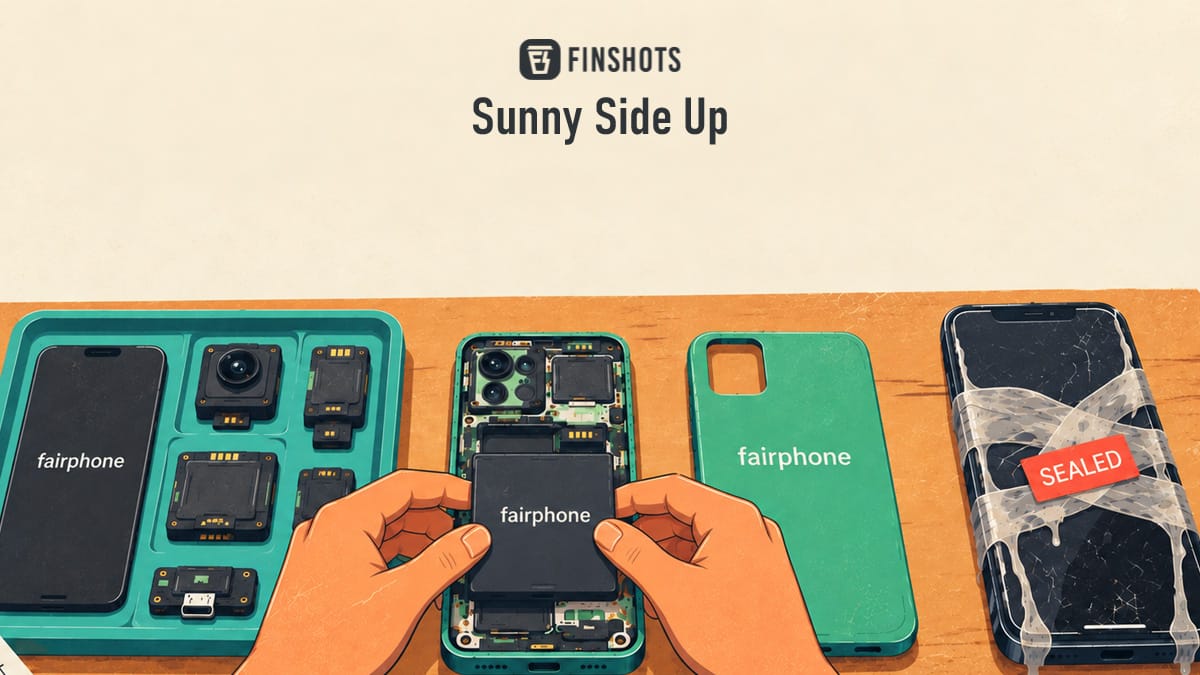
Which brings us to an interesting experiment from Europe. A Dutch company called Fairphone, that has been building repairable smartphones for nearly a decade, has just launched its latest version in the US.
Its phones are designed almost like the old smartphones. Instead of gluing everything together, Fairphone uses screws and modular components. The company even ships a screwdriver with the phone.
So if your battery dies, you don’t necessarily have to hand your phone over to a service centre. You can open the back, remove the old battery and replace it yourself using spare parts sold by Fairphone.
And the replacement battery costs roughly 30% of what an iPhone battery repair would.
The latest Fairphone also promises software support until 2033, giving buyers several years of use without having to worry about their phone becoming obsolete because of software updates. That’s like the standard Android phone.
For American households, that would mean saving around $330 a year while reducing e-waste.
And as great as that may sound, there’s something you have to think about here. If Fairphone eventually grabs meaningful market share and succeeds, how will it continue to make money?
Sure, it can sell spare parts and replacement components. But that’s unlikely to be as lucrative as selling an entirely new phone every few years.
The answer could lie in something the broader smartphone industry already knows well: recurring revenue from software, cloud storage and subscriptions, which typically carries much higher margins than hardware.
Fairphone isn’t doing that right now. But if the company grows, it could eventually face the same economic incentives as the smartphone giants it is trying to challenge. And that kind of brings us back to square one, and makes you ask: Can you really build a profitable smartphone business around making phones that people don’t need to replace?
That reminds us, we actually wrote about something very similar recently, when OnePlus exited North America and parts of Europe. So if you liked this story, you might want to give that one a read too: How OnePlus Settled
Infographic
Readers Recommend
This week, our reader Annamalai recommends reading Desi Disruptors, a book by Vikrant Pande and Vispy Doctor. It’s a collection of stories about how iconic brands such as Maggi, Vicks, Whisper, Frooti and Tanishq understood Indian consumers and created new markets.
Thank you for the rec, Annamalai!
That’s it from us this week. We’ll see you next Sunday.
Until then, send us your book, music, business movies, documentaries, or podcast recommendations. We’ll feature them in this newsletter! Also, don’t forget to tell us what you thought of today’s edition. Just hit reply to this email (or if you’re reading this on the web, drop us a message at morning@finshots.in).
Don’t forget to share this edition on WhatsApp, LinkedIn and X.