
How OnePlus Settled
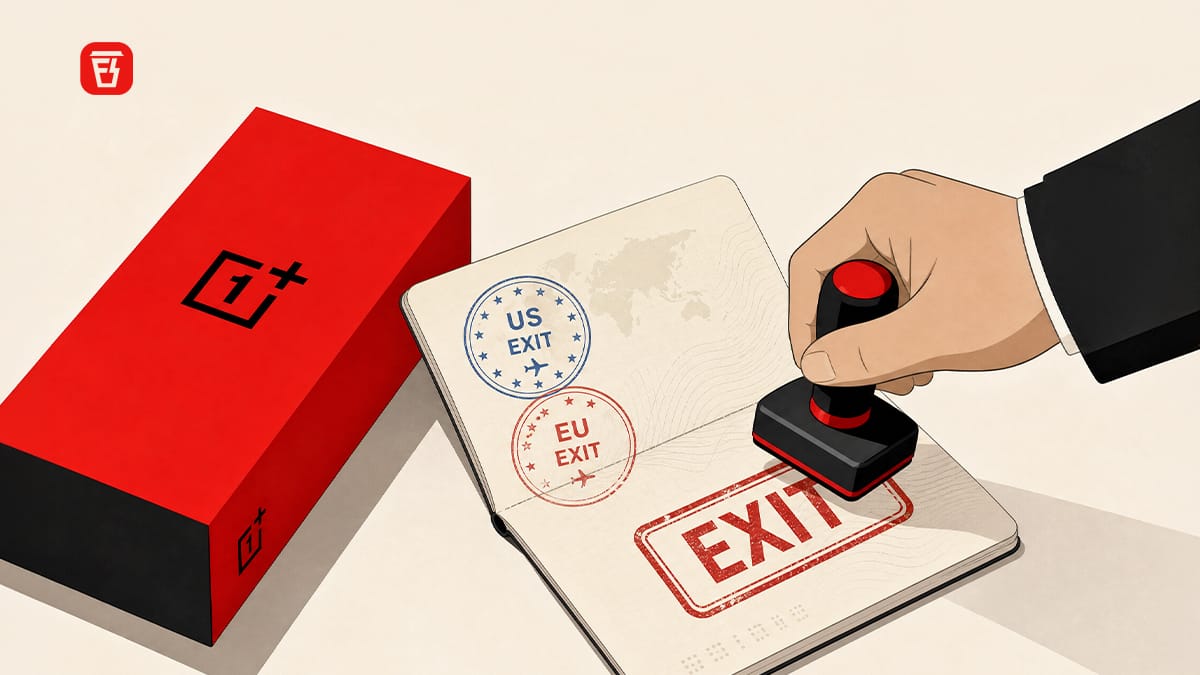
In today’s Finshots, we explain how OnePlus went from being the ultimate flagship killer to fighting questions about its own identity.
But here’s a quick sidenote before we begin. If you’re someone who loves to keep tabs on what’s happening in the world of business and finance, then hit subscribe if you haven’t already. We strip stories off the jargon and deliver crisp financial insights straight to your inbox. Just one mail every morning. Promise!
If you’re already a subscriber or you’re reading this on the app, you can just go ahead and read the story.
The Story
If you were shopping for an Android phone anywhere between 2015 and 2019, chances are someone in your circle told you to “just buy a OnePlus”.
Back then, the brand possessed an almost cult-like status among tech enthusiasts. It launched devices through an exclusive, invite-only system that made owning one feel like joining a secret club.
It also promised top-tier flagship hardware at nearly half the price of Apple and Samsung. Its bold Never Settle slogan resonated deeply with power users. And OxygenOS was celebrated as the cleanest, fastest, and most refined version of Android available. For millions of consumers, OnePlus was the ultimate underdog that dared to challenge the status quo.
Fast forward to today, and the picture looks remarkably different.
OnePlus' parent company, Oppo Guangdong Mobile Telecommunications Ltd, better known simply as Oppo, has embarked on a massive global restructuring. As part of this, the company decided to wind down OnePlus operations in North America and parts of Europe. While media reports have even speculated about a potential long-term exit from India, OnePlus has pushed back on those claims, asserting that local operations continue as usual.
Yet, whether those exit rumours prove true or not, they raise an interesting question: how does a brand that once inspired cult-like loyalty end up struggling to defend its own relevance?
It is tempting to blame the situation strictly on fierce market competition. Samsung aggressively fortified its premium lineup with foldable devices and polished flagships. Apple continued to tighten its grip on the high-end market. Meanwhile, Google entered the hardware arena with its Pixel series, putting artificial intelligence right at the centre of the Android experience.
However, OnePlus's biggest challenge may have actually begun long before rival phones caught up.
You see, unlike a global smartphone corporation seeking massive scale, a niche brand can easily survive by delighting a small, passionate group of loyalists.
But there was a catch. The enthusiast market was only so big. If OnePlus wanted to become a global smartphone brand, it couldn't rely on a single flagship phone and a loyal online community forever. It had to reach a much larger audience, which meant offering more phones across more price points, expanding its retail presence, and gradually becoming a full-fledged consumer electronics brand.
And because OnePlus is part of the broader Oppo family, it also means sharing technology, manufacturing facilities, and eventually, software development.
On paper, every single one of these strategic decisions made perfect business sense.
Yet, when you combine all these logical choices together, they gradually erode the very qualities that made OnePlus unique in the first place.
The clean, near-stock OxygenOS experience became increasingly intertwined with Oppo's feature-heavy ColorOS. The carefully curated, lean product lineup expanded into a confusing maze of Nord models, regional variants, foldables, and accessories. The scrappy underdog challenging Samsung slowly transformed into just another large smartphone corporation chasing scale and market share.
Ironically, this trajectory is not unique to OnePlus. It is a fundamental pattern that economists and business strategists observe across almost every mature industry.
Harvard professor Clayton Christensen famously highlighted this phenomenon through his theory of disruptive innovation. He argued that disruptors usually start by serving overlooked customers with simpler, cheaper alternatives. They succeed precisely because they reject the conventional wisdom and high-cost structures of industry incumbents.
However, once a disruptor tastes success, a powerful gravity pulls it toward the very business model it set out to disrupt.
Why does this happen?
Because large companies require predictable revenue, broader customer adoption, supply chain efficiencies, distribution partnerships, and higher profit margins. Investors and parent conglomerates demand continuous financial growth. And over time, the economic realities of operating a massive global enterprise begin to outweigh the founding ideals that built the brand.
You can see this pattern repeated throughout modern business.
Low-cost airlines that built their reputation on cheap fares eventually introduce premium seats, loyalty programmes, and a maze of add-on fees. Streaming platforms that promised an escape from cable television now sell ad-supported plans, bundle subscriptions, and compete for live sports rights. Even independent, artisanal coffee shops often evolve into standardised corporate franchises once they scale globally.
Across industries, competition eventually forces companies toward similar operational models because those models prove economically sustainable over the long run.
The same economic shift played out in the smartphone market. A decade ago, OnePlus disrupted the status quo with simplicity and unmatched value. Slowly, the company began adopting many of the same strategies as its larger rivals.
Apart from this, Chinese smartphone brands now operate in an environment where international governments scrutinise supply chains, data privacy, and software integrations just as closely as consumers evaluate the battery life or camera quality.
In the end, whether or not OnePlus eventually exits specific regional markets is almost secondary. The recent developments simply serve as a reminder of a universal business truth, that markets are always cyclical.
Today's bold disruptor eventually becomes tomorrow's establishment. In doing so, it creates a fresh vacuum for a new challenger to emerge and capture enthusiasts' imaginations. In the smartphone industry, that new challenger might very well be Nothing.
Whether Nothing will eventually succumb to the same economic pressures remains to be seen. But if history is any guide, it is about a recurring cycle in which every successful disruptor must face the same fundamental question: Can you truly scale globally without becoming the very thing you once set out to disrupt?
Until then…
If you liked this story about OnePlus losing its ground, feel free to share it with your friends, family or even strangers on WhatsApp, LinkedIn, or X.
🚨 ATTENTION: FINSHOTS FAMILY
This weekend, we’re hosting a free 2-day Insurance Masterclass that helps you build real financial security by understanding health and life insurance the right way.
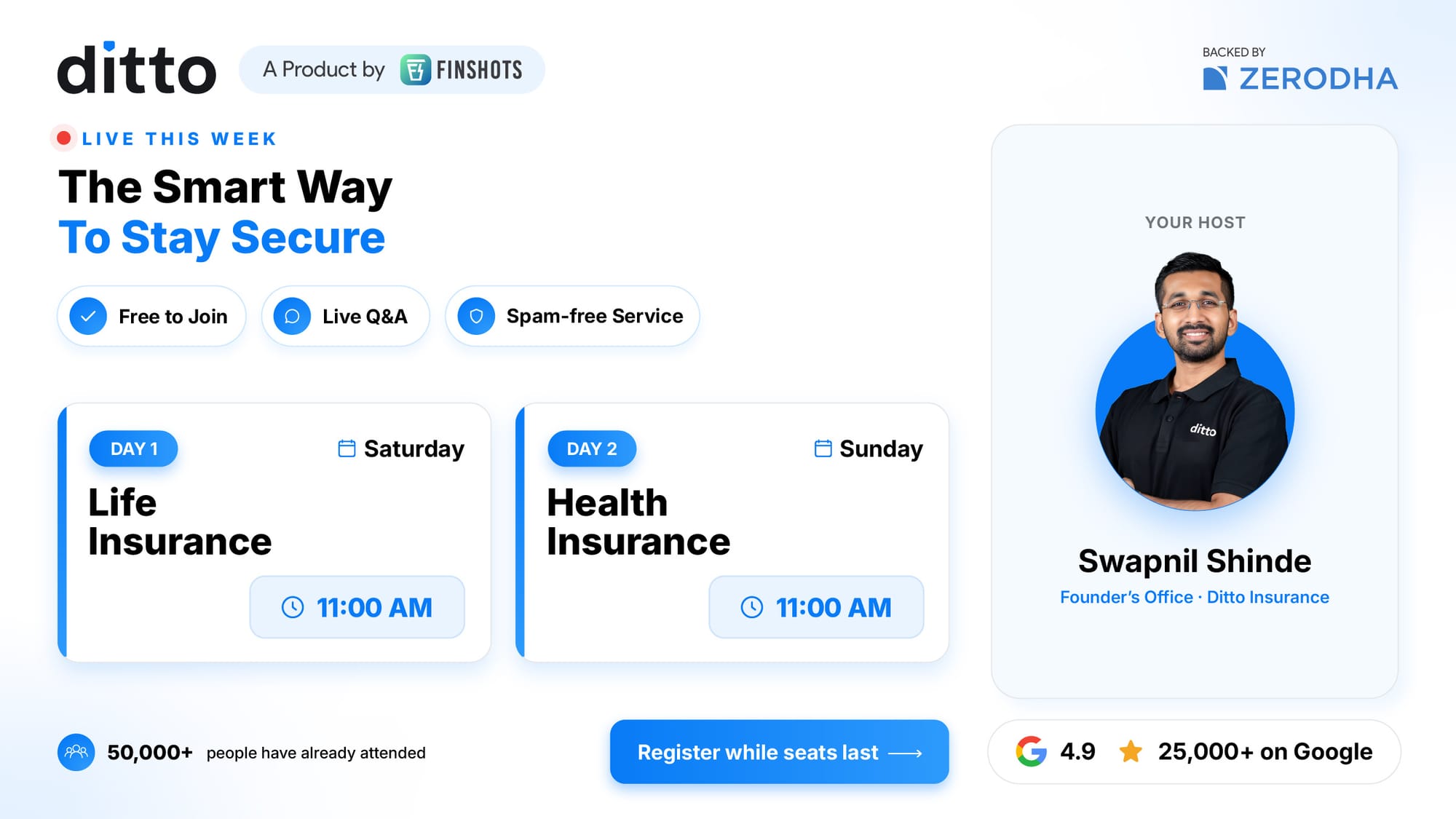
📅 Saturday, 25th July at 11:00 AM: Life Insurance: How to protect your family, choose the right cover amount, and understand what truly matters during a claim.
📅 Sunday, 26th July at 11:00 AM: Health Insurance: How hospitals process claims, common deductions, the mistakes buyers usually make, and how to choose a policy that won’t disappoint you when you need it most.