
SEBI’s buyback overhaul explained
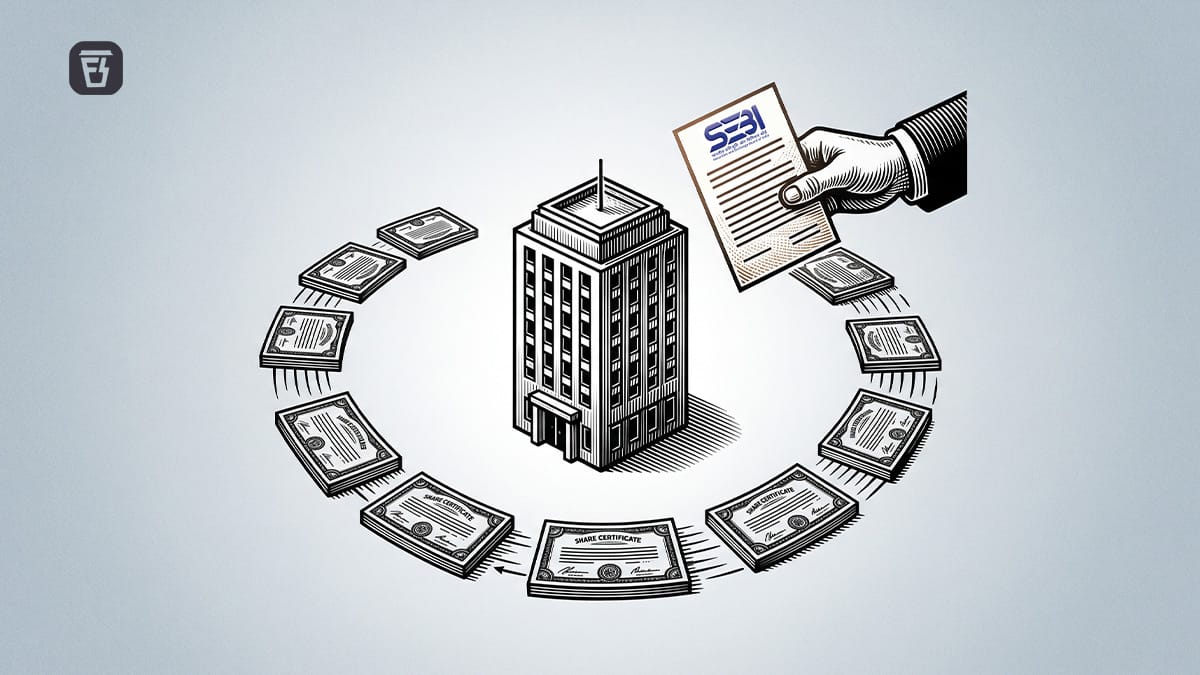
In today’s Finshots, we explain why SEBI is overhauling India’s share buyback rules.
But here’s a quick sidenote before we begin. This week, we’re hosting a free 2-day Claims Webinar Series, where we break down how claims are processed in the real world, why delays and rejections happen, and what truly makes a difference when it matters most.
📅 Tuesday (tomorrow), 12th May at 6:30 PM: Life Insurance
How to protect your family, choose the right cover amount, and understand what truly matters during a claim.
📅 Wednesday, 13th May at 6:30 PM: Health Insurance
How hospitals process claims, common deductions, the mistakes buyers usually make, and how to choose a policy that won’t disappoint you when you need it most.
👉🏽 Click here to register while seats last.
Now on to today’s story.
The Story
Back in 2018, the Securities and Exchange Board of India (SEBI) was worried about buybacks. Now that seems a little strange because buybacks seem very straightforward.
Listed companies sit with extra cash and they want to reward shareholders so they offer to buy it back at a pre-decided price.
But their worry wasn’t about the textbook definition of share buybacks. They were more concerned about the companies announcing them ― the ones that announce massive buybacks and create excitement around their stocks even before buying back a single share.
“Okay… but why would just announcing a buyback move stock prices?”
Well it’s because buybacks are one of the ways used to signal confidence. That is, if a company wants to spend its own cash buying back shares, then investors take it up as a sign that the company is doing very well and the board thinks the stock price is undervalued. It also tells investors that the company is sitting on a pile of cash it doesn’t immediately need.
That’s exactly what worried SEBI. Because under the old rules, companies weren’t forced to buy back all the shares they said they would. That makes the announcement even more important since investors were happy, the stock price went up and most importantly, companies could hold onto most of their cash if they later bought only a small part of the total shares.
And SEBI’s concerns weren’t hypothetical either. In 2018, PC Jeweller announced a ₹424 crore buyback that shot the share price up. But the company later withdrew the proposal altogether, which brought sharp backlash from investors.
In other words, buybacks were slowly starting to look less like shareholder rewards and more like signalling tools.
That’s why SEBI tightened the rules through the SEBI (Buy Back of Securities) Regulations, 2018. The companies using the open-market route (buying directly from the stock exchange) now had to complete at least 50% of the announced buyback size. They also had to set aside the entire buyback amount upfront in a separate special account called an escrow account. And the buyback window itself could remain open for as long as six months.
This was also when merchant bankers became mandatory. Now that may sound a little excessive for something as simple as a buyback. But from SEBI’s perspective, merchant bankers were like independent overseers. They helped manage disclosures, worked with stock exchanges and made sure companies actually followed through on the buyback rules. In theory, that added another layer of accountability. But in practice, it also meant more paperwork, more costs and another intermediary sitting in the middle of what was meant to be a straightforward process.
Over the next few years, SEBI tightened things even further. And eventually decided to phase out the stock-exchange route for open-market buybacks altogether and push companies toward the tender offer route instead.
And while that may have solved one problem, it may have created another.
What was once a quick way for genuine companies to return extra cash to shareholders slowly started becoming a long heavy process. Which is ironic because flexibility is exactly why companies like buybacks in the first place.
And now, SEBI itself seems to agree because last week it issued a new consultation paper for buybacks, which proposes to re-introduce open market buybacks through stock exchanges!
So what's actually changing?
Let's start with what SEBI is bringing back. Companies can now once again buy back their own shares directly on the stock exchange, the same way any regular investor would buy or sell a stock.
But this time around, it has rethought several of the guardrails that come with it.
When the Primary Market Advisory Committee (PMAC) was asked how long companies should be allowed to keep a buyback window open, they said six months. That was the original limit back in the day, so bring it back, they said.
SEBI disagreed and their reason makes sense in today’s markets. Six months is a long time. A lot can change in a company's fundamentals, in the market, and even in investor sentiment. Keeping a buyback open for that long risks making the whole exercise feel stale and irrelevant by the time it wraps up.
It also puts shareholders like you and me in an awkward position of having to track a corporate action that's been dragging on for half a year.
So SEBI landed on 66 working days instead. That's roughly three calendar months. Sweet enough to give companies time but also short enough to keep the process meaningful. And the old requirement of using at least 40% of the buyback amount in the first half of the offer period is here to stay.
Next up is the separate trading window for buybacks. Before, stock exchanges had to create a special, separate trading window just for buyback transactions. The idea was to figure out which investors were selling into the buyback so they could get favourable tax treatment.
For context, earlier, buybacks were taxed through something called a buy-back distribution tax, where companies themselves paid the tax on the money distributed to shareholders. But the system had issues. Foreign investors couldn’t claim tax credits in their home countries, while Indian promoters often ended up saving more tax through buybacks than dividends since dividends were added to their personal income and taxed at slab rates, which for wealthy promoters could go as high as 30% plus surcharge and cess. That’s why many companies started preferring buybacks over dividends to distribute profits, because their promoters could tender their shares in a buyback and receive money without paying the same high personal tax they would have paid on dividends.
But now that loophole no longer exists. Everyone selling into a buyback now gets taxed the same way as anyone else selling in the market. So the whole reason for the separate window has disappeared. Which is why SEBI is proposing to scrap it. Companies will now simply buy back shares through the normal trading route with no special window required.
This next one is new. Under the existing rules, promoters and their associates are already barred from buying or selling the company's shares during an ongoing buyback. But barring someone from trading and actually preventing it are two different things.
Which is why the paper is proposing to freeze promoter holdings at the ISIN (International Securities Identification Number) level during the buyback period. That means the shares get locked at the depository level itself. So promoters simply won't be able to move those shares even if they wanted to.
But there’s a catch. That condition is only for open market buybacks. If the buyback happens through the tender offer route, promoters are allowed to participate by tendering their own shares. That exemption remains, though promoters tendering shares will be subject to the additional tax introduced under the Finance Act, 2026.
And perhaps, one of the biggest changes here is the MPS problem. MPS stands for Minimum Public Shareholding. Listed companies in India are required to ensure that at least a certain percentage of their shares remain in public hands.
But here is the odd part. The buyback regulations never explicitly said that a company cannot announce a buyback if it would end up violating the MPS requirement. The rules existed elsewhere, but they weren’t cross-referenced in the buyback framework.
That’s why the paper is now proposing to close that gap. Companies will not be allowed to announce a buyback, whether through the open-market route or the tender offer route, if completing it would push their public shareholding below the MPS.
And finally, goodbye to the merchant bankers.
For the past several years, hiring a merchant banker has been mandatory for any company doing a buyback. But it is now proposed to become optional or remove the requirement altogether.
Now, that doesn’t mean that the work disappears. Companies and stock exchanges have to take over much of what merchant bankers were earlier handling. But yeah, for smaller companies doing smaller buybacks, this change could reduce the cost and complexity of the process.
And that, in simple terms, is what SEBI is trying to change with India’s buyback framework.
Of course, none of these changes are final yet. The paper is open for public comments until May 29th, after which SEBI will decide what the final buyback framework should look like. But one thing for sure seems to be that buybacks don’t mean what they used to anymore.
Until next time…
Note: An earlier version of this story incorrectly mentioned that 66 working days equalled two calendar months. We apologise for the error and have since fixed it.
If this story helped you understand what changed with buybacks, share it with a friend, family member or even strangers on WhatsApp, LinkedIn and X.
Also, if you’re someone who loves keeping tabs on the world of business and finance, hit subscribe if you haven’t already. And if you’re already a subscriber, thank you! Maybe forward this to someone who’d enjoy our stories but hasn’t discovered us yet.