
Why the Middle East is cooler than India, and more...

Hey folks!
Of late, temperatures in Bengaluru have been scorching. And this is not just here. Chennai has also been hotter than usual. Delhi and Mumbai, too.
Large parts of India have been baking under temperatures up to 40°C. Meanwhile, several cities in the Middle East, a region normally associated with scorching desert summers, have seen comparatively milder conditions, with temperatures in many places staying in the 20s or low 30s.
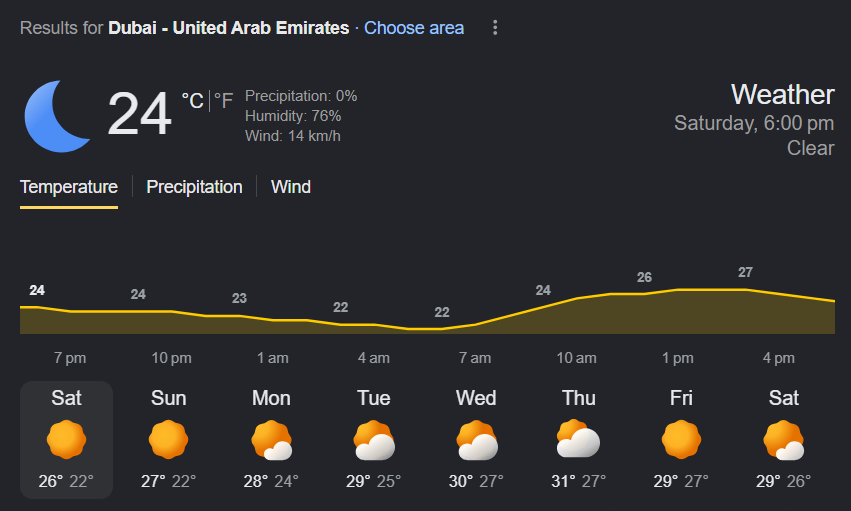
So, why is India hotter than the Middle East?
It sounds like a trick geography question, right?
Most people would instinctively think the Middle East is hotter. After all, it brings to mind endless deserts, scorching sand, shimmering highways, and the kind of heat that makes parked cars feel like ovens.
And yet, this April, parts of India were baking at 42°C, while cities such as Abu Dhabi and Cairo were recording milder temperatures in the high twenties to low thirties.
In other words, India was running hotter than places famous for being hot.
So, how does that happen?
You see, the answer begins high above our heads.
Some of the weather changes are made several kilometres up in the atmosphere by fast-moving air currents called jet streams.
Think of the jet stream as a giant river of wind circling the planet. Usually, it flows in a reasonable, orderly path. But sometimes it becomes wavy, bending north and south like a loose rope. And that appears to have happened this year.
In early April, a sharply curved, U-shaped jet stream helped steer a powerful Western Disturbance into North and West India, bringing rain, hailstorms, gusty winds, and a temporary drop in temperatures.
But once that system weakened and retreated, skies cleared rapidly across large parts of central and southern India. With clouds gone and cooler disturbances no longer arriving, a stagnant high-pressure zone took over, allowing heat to build quickly at the surface.
So the same atmospheric waviness that first brought relief was soon followed by the setup that helped intensify the heat. Meteorologists call this subsidence. But the rest of us just call it unbearable afternoons.
This also suppresses cloud formation. No clouds means more sunlight reaches the surface. Day after day, the land continues to absorb heat with little relief. This setup is often nicknamed a heat dome, and once established, it can linger stubbornly.
So yes, the desert can be cooler than the subcontinent if the atmosphere decides to rearrange the pieces.
But this also feels counterintuitive because we often confuse climate with weather.
Climate is the long-term personality of a place. The weather is the mood it wakes up with this week.
The Middle East still remains one of the world’s hottest regions climatically. India also has severe hot seasons. But on any given week, atmospheric patterns can temporarily invert expectations.
Still, there is a larger backdrop we should not ignore.
You see, a natural heat dome that may once have produced extreme heat now starts from a warmer baseline. So the same atmospheric pattern can generate more dangerous temperatures than it did decades ago.
That is why heat records keep falling more often than cold records. Then there’s also the question of humidity.
When humidity is high, sweat evaporates less efficiently. Since sweating is how the body cools itself, hot, humid conditions can become far hotter than dry heat. This is why coastal and humid regions can feel punishing even at lower temperatures.
So what should we take away from this strange April?
First, India’s heat problem is driven by dense cities, concrete jungles, and rising ambient temperatures.
And second, the future of heat resilience will be decided less by thermometers and more by how much cities are designed to withstand heat. This can include more trees, heat-reflective paint on roofs, better ventilation, etc., all of which will shape how well a city adapts to climate and weather change.
Here’s a soundtrack to put you in the mood…
Thenkizhakku by Dhee
You can thank our reader Vikash Mantri for this melodious rec!
And if you’d like your music recommendation featured too, send them our way, especially hidden gems from underrated Indian artists many of us haven’t discovered yet. We can’t wait to hear them!
What caught our eye this week:
Can you really start your own country on unclaimed land?
Most of us grow up assuming that the world map is complete. Every mountain, river, island, and desert already belongs to some country. So, the world, for all practical purposes, has been fully divided.
So when a 20-year-old recently declared himself the first president of a brand new country, it naturally raised eyebrows.
His name is Daniel Jackson. His “nation” is called Verdis or “officially” The Free Republic of Verdis. And he claims it sits on a tiny patch of land near the Danube River between Croatia and Serbia.
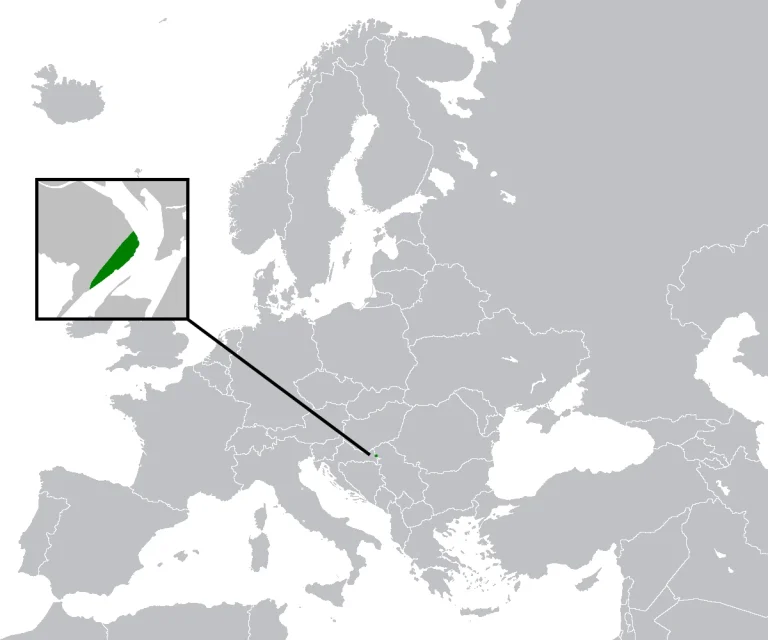
However, there is just one small complication. He cannot enter the country he claims to run.
You see, Croatian authorities removed him and issued him a lifetime ban after he tried to settle there.
Which got us thinking, can land really be “unclaimed” in 2026? And if yes, could someone simply start a country there?
Well, the answer is more complicated than internet fantasy would suggest.
The legal phrase often used in these stories is terra nullius, Latin for “nobody’s land.” Historically, it referred to territory not under the sovereignty of any recognised state.
And in theory, such land could be claimed. However, in practice, it is incredibly rare.
Because most of Earth is already spoken for. And this includes remote deserts, frozen islands, and barren rock formations, which usually fall under some nation’s jurisdiction. But sometimes two nations claim the same territory, and borders are disputed. However, disputes do not automatically mean that land is not owned by anyone.
And this is exactly what the Verdis argument rests on — a border disagreement. Croatia and Serbia interpret the Danube boundary differently. And as rivers shift over time, small pockets of land have ended up in awkward legal limbo. Verdis supporters argue that one such pocket belongs to neither side.
And that tells you everything you need to know.
Because modern sovereignty is less about clever map-reading and more about recognition.
You can design passports in your bedroom, appoint a Foreign Minister on Discord, and print a flag in one day.
But if border police remove you the next day, nothing really changes.
That is why many so-called micronations remain social experiments rather than actual countries. They can have symbols, communities, even functioning online systems. But international recognition is another mountain entirely.
And to be fair, some micronations are not trying to conquer geopolitics. They are making a statement about governance, bureaucracy, and national identity itself. And we feel that Verdis sits somewhere in between.
What do you think? Let us know by replying to this email.
Readers Recommend
This week, our reader Anuradha Rao recommends reading The Code Breaker by Walter Isaacson.
It’s a biography book that tells the story of Jennifer Doudna and the race to harness CRISPR, a gene-editing tool that could reshape the future of humanity.
Thank you for the recommendation, Anuradha!
That’s it from us this week. We’ll see you next Sunday!
Until then, send us your book, music, business movies, documentaries, or podcast recommendations. We’ll feature them in the newsletter! Also, don’t forget to tell us what you thought of today's edition. Just hit reply to this email (or if you’re reading this on the web, drop us a message at morning@finshots.in).
Don’t forget to share this edition on WhatsApp, LinkedIn and X.