
The Persistent Systems-Nagarro deal explained
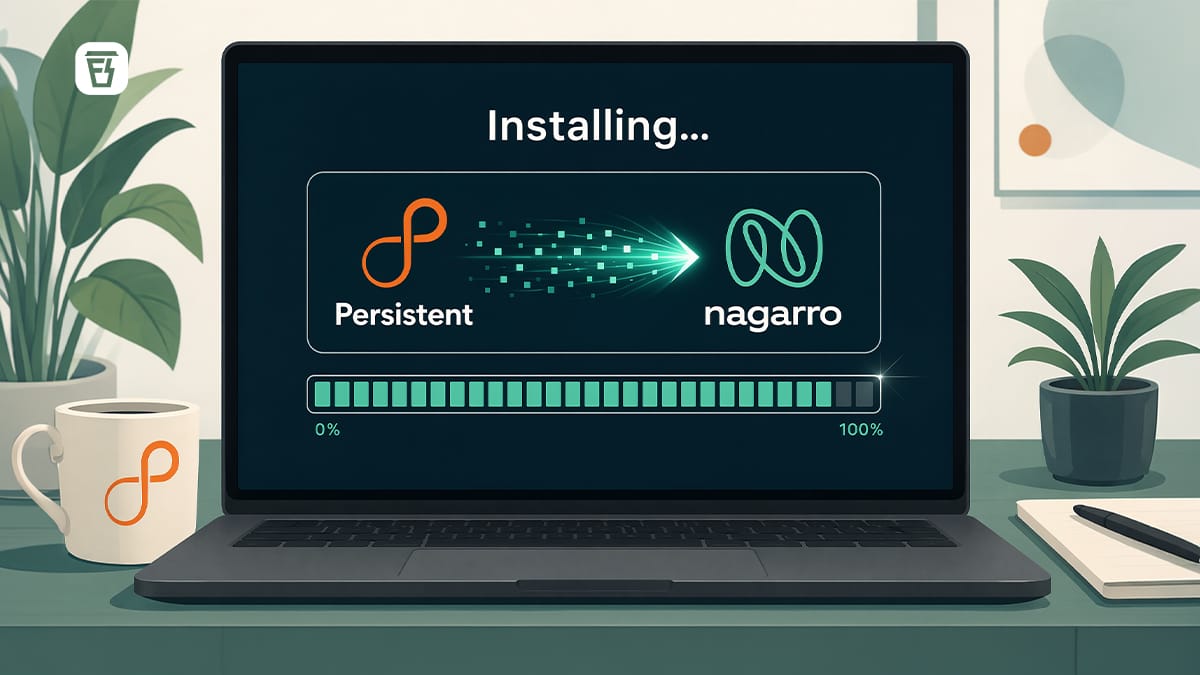
In today’s Finshots, we break down Persistent Systems’ acquisition of Germany-based Nagarro, a deal that could make it India’s seventh-largest IT services firm.
But here’s a quick sidenote before we begin. We’re looking for a business writer to join Finshots’ newsletter team. If you’re someone who can tell compelling stories and explain financial concepts in plain English without drowning readers in jargon, do consider applying through the link here. Or share this with someone who might be a good fit for the role.
With that out of the way, let’s dive into today’s story.
The Story
When Persistent Systems announced that it would acquire Germany-based Nagarro for about €1.3 billion, it wasn’t just another IT acquisition.
That’s because if the deal goes through, Persistent says it will become the world’s second-largest digital engineering company by revenue and India’s seventh-largest IT services firm.
So investors should’ve loved it, right?
But that’s not what happened. Persistent’s stock instead has fallen by nearly 11% since the announcement because investors think the company paid far too much.
To put things in perspective, Persistent is offering €81 for each share of Nagarro or almost 140% higher than where Nagarro’s stock was trading before the deal was announced.
And at first glance, those concerns seem fair because Persistent has been growing much faster than Nagarro. In FY26, for instance, Persistent’s revenue grew about 17%, while Nagarro managed only around 3% in CY25. Even if you look at the last three years, Persistent’s revenue has compounded at roughly 17% annually, compared to just 5% for Nagarro. Profitability tells a similar story. Persistent earns operating margins of nearly 16%, while Nagarro sits closer to 12%.
So investors are probably thinking, “Why pay such a massive premium for a slower-growing, less profitable company?”
Well, to answer that, we need to first understand who these companies are and what they do.
During the 1990s, when the country’s IT industry was taking off, Western companies realised that India had a huge English-speaking talent pool that it could hire at a fraction of Western salaries. That was valuable because it could save them billions of dollars in costs. So they started outsourcing customer support, maintenance work and back-office IT operations to Indian firms.
But a couple of Indian companies believed that India could do much more than just provide cheap manpower.
One of them was Persistent Systems. Founded in Pune by Dr. Anand Deshpande, a former Hewlett-Packard Laboratories employee, Persistent pioneered outsourced product development. Instead of simply supplying engineers, it helped global technology companies build and test software, create specialised infrastructure and develop products from the ground up.
One of its earliest customers was Microsoft, giving the company both credibility and the confidence to approach other leading technology companies.
Today, Persistent operates across 21 countries and earns roughly $1.6 billion (₹14,700 crore) in annual revenue.
The other company is Nagarro. Founded in Delhi in 1996 by Dr. Manas Human (formerly Manas Fuloria), it started from a modest office above a shop in Delhi after two small engineering firms merged. In 2011, it merged with German technology holding company Allgeier, which is how it eventually came to be headquartered in Munich. It was then spun off and listed independently on the Frankfurt Stock Exchange in 2020 with just over $500 million in revenue, a figure that has roughly doubled since.
Today, Nagarro builds custom software, AI solutions, ERP (Enterprise Resource Planning) platforms and IoT (Internet of Things) systems across 40 countries.
So while these companies took different paths, they both have quite a bit in common. Both started in India, specialised in software engineering, and both eventually went global in their own ways.
Which brings us back to the acquisition because there’s another way to look at the price Persistent is paying to acquire Nagarro.
Most people compare the €81 offer with Nagarro’s stock price of around €33-40 before the announcement. But what if that €40 wasn’t Nagarro’s fair value in the first place?
To put things in perspective, last year, Matthew Earl, the same activist short seller known for raising early warnings about the Wirecard fraud, published a report questioning Nagarro’s acquisitions, financial reporting and corporate governance.
For the uninitiated, short sellers profit when a company’s stock price falls. So they often publish reports outlining why they believe a company’s stock is overvalued or could decline, which can hurt investor confidence and weigh on the share price.
And although Nagarro commissioned an independent investigation, including a forensic review, which found no evidence of fraud or misconduct and concluded that the allegations were unsubstantiated, the damage had already been done. The stock, which had traded around €70, crashed into the €33-40 range. Add weak revenue growth and that meant it never really recovered.
So, if you look at it from this lens, you could argue that Persistent may not be paying as hefty a premium as it seems. After all, Nagarro’s stock traded much higher before the short seller’s unproven allegations and had even touched €200 a share at its peak in 2021.
And beyond that, there are at least two strategic reasons why Persistent may believe the acquisition is worth it.
The first one being geography. For context, nearly 80% of Persistent’s revenue today comes from North America, while Europe contributes only around 8%.
But Europe’s importance is rising. According to Kotak Institutional Equities, Indian IT companies grew their European revenue by 8.5% year-on-year during the January-March quarter, compared with just 4.5% growth from the Americas. So buying Nagarro can instantly change Persistent’s footprint as Europe’s contribution to the combined business could jump to around 22%, giving Persistent much stronger access to Europe and the Middle East.
It also reduces another growing risk. The US has been tightening immigration rules, adding to the uncertainty for Indian IT firms that have historically relied on sending engineers there. The H-1B lottery is being replaced by a wage-based selection system, where higher-paying applications have better odds of being selected, and a new $100,000 application fee has also been introduced. In a situation like this, owning a Europe-headquartered company with a large local workforce helps Persistent reduce some of that dependence on the US.
The second reason is capability. Nagarro is a formally designated implementation partner for OpenAI and already has a meaningful presence in markets like Japan and the Middle East. These are partnerships that Persistent would’ve likely spent years trying to build on its own.
Put all of that together and the deal starts looking less like a simple acquisition and more like an attempt to buy multiple strategic capabilities in one shot.
Or at least Persistent certainly seems to think so.
The combined company is expected to generate around $2.9 billion in annual revenue, and management believes that the acquisition will increase earnings per share (EPS) for investors in its very first year, excluding one-time transaction costs.
That said, not everything will be easy. Perhaps the biggest challenge isn’t the numbers at all, but culture.
You see, Persistent follows a fairly traditional corporate hierarchy. Nagarro doesn’t.
Instead, it runs on what’s known as “two-pizza teams”. This is something that Amazon founder Jeff Bezos popularised and it simply means that employees work in small autonomous groups of around five to ten people ― small enough that two pizzas could feed everyone. The idea is that smaller teams make faster decisions and avoid bureaucratic bottlenecks.
So yeah, blending that startup-like culture with Persistent’s more conventional structure might not be easy.
To be fair, Persistent isn’t trying to rush the merger. It has said Nagarro will continue operating largely independently for at least two years, with its existing management and operating model remaining intact before any deeper integration or planning to delist it from the Frankfurt Stock Exchange.
Whether that gradual approach works is something only time will tell.
For now, investors believe Persistent has overpaid. Persistent believes it has bought itself a stronger future.
We’ll eventually find out who’s right.
Until then…
If this story helped you understand why Persistent Systems’ stock price has been nosediving after announcing its acquisition of Nagarro, share it with someone who may have the same question on WhatsApp, LinkedIn, or X.
And subscribe to Finshots, if you haven’t already. Plis!
🚨 ATTENTION: FINSHOTS FAMILY
This weekend, we’re hosting a free 2-day Insurance Masterclass that helps you build real financial security by understanding health and life insurance the right way.

📅 Friday, 3rd July at 6:30 PM: Life Insurance: How to protect your family, choose the right cover amount, and understand what truly matters during a claim.
📅 Saturday, 4th July at 10:00 AM: Health Insurance: How hospitals process claims, common deductions, the mistakes buyers usually make, and how to choose a policy that won’t disappoint you when you need it most.