
The missing piece in quantum computing
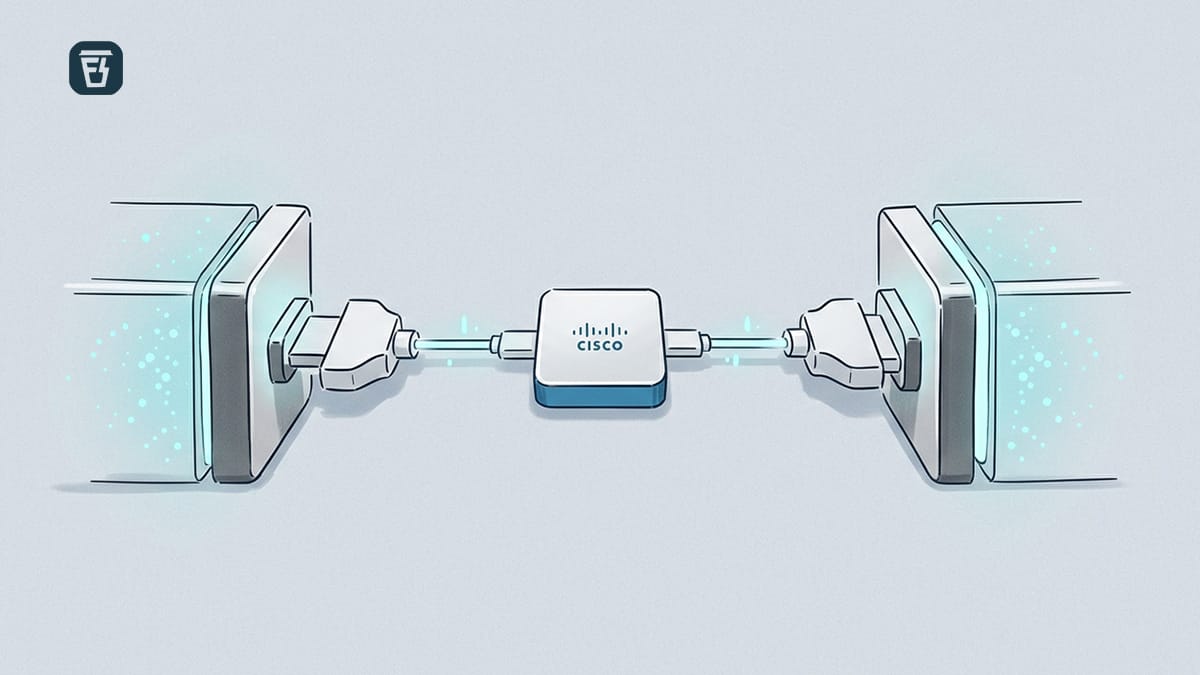
In today’s Finshots, we talk about Cisco’s breakthrough that might change quantum computing completely.
But here's a quick sidenote before we begin.
We’re hosting a free 2-day Insurance Masterclass that helps you build real financial security by understanding health and life insurance the right way.
📅 Wednesday, 29th April at 6:30 PM: Life Insurance
How to protect your family, choose the right cover amount, and understand what truly matters during a claim.
📅 Thursday, 30th April at 6:30 PM: Health Insurance
How hospitals process claims, common deductions, the mistakes buyers usually make, and how to choose a policy that won’t disappoint you when you need it most.
👉🏽 Click here to register while seats last.
Now on to today’s story.
The Story
For all the progress made in quantum computing, there’s one problem that no one has solved yet: quantum computers still can’t talk to each other.
And that might be about to change.
Last week, Cisco introduced something unusual and unheard of: a “universal quantum switch.”
Now, we’ve already covered what quantum computers are here, but the gist of it is simple. At a basic level, unlike regular computers that process information as simple zeros and ones, quantum computers work with probabilities, letting them explore many possibilities at once.
That’s what gives them their edge.
But here’s what matters: even today, most quantum machines work alone. They run experiments, solve problems, and stop there. There’s no real way for them to share what they’ve learned or work together.
And that’s the gap this quantum switch is trying to fill. So let’s try to understand this better.
You see, connecting quantum systems isn’t as simple as plugging in a cable. Quantum information behaves very differently from normal data. It’s fragile and short-lived. Even tiny disturbances can destroy it. And unlike regular data, you can’t just copy it or resend it if something goes wrong.
Think of it like trying to send a soap bubble across a crowded room. It might reach the other side, but the slightest disturbance can pop it instantly.
That makes communication incredibly difficult.
Then there’s another issue. Not all quantum computers are built the same way. Some use light, others use electrical circuits, and some rely on trapped atoms. Each system follows its own rules, which makes getting them to “talk” to each other even harder.
And even if you solve all of that, there’s one more layer to deal with. These systems don’t exist in isolation. Any quantum network has to work alongside today’s internet, which is built for a completely different kind of data.
And that’s exactly why this hasn’t been the focus so far.
For years, companies like Google and IBM have been busy just trying to make a single quantum computer work reliably. Keeping quantum information stable for even a few seconds is hard enough.
But connecting them? That was always a step further down the road.
And that’s the missing piece that Cisco is trying to solve.
Its “universal quantum switch” is designed to route quantum information between different systems—much like how a regular network switch directs data between computers today. But instead of handling normal bits, this switch works with quantum signals, which behave very differently.
So what exactly did Cisco build?
At its core, the Universal Quantum Switch does something quite simple: it acts as a translator.
This matters because quantum systems aren’t built the same way. Many use light to carry information, but each encodes it differently, whether through the direction of light waves, timing, color, or even the path the light takes.
These approaches work on their own, but not with each other.
That’s what Cisco’s switch is trying to fix. It acts as the bridge between them.
At the heart of the switch is a conversion engine developed by Cisco. When quantum information arrives at the switch, it accepts the signal in whatever encoding the sender is using, translates it into a common format for routing, and delivers it in the format the receiving system needs — without losing the information in the process.
Think of it like a power adapter for international travel. The electricity is the same. The plug is different. The adapter lets you connect them without changing what's actually flowing through the wire.
But pulling that off with quantum information is genuinely hard. Normally, even measuring a quantum signal to figure out what it contains destroys it. So any system that tries to read, convert, and re-send quantum information risks wiping it clean before it ever arrives.
Cisco's tests showed that their switch avoids this. In proof-of-concept experiments, the switch preserved quantum information with an average degradation of 4% or less in fidelity. In simple words, it means that the information arriving at the other end was essentially the same as what went in. That’s a big deal for such a fragile system.
Then there's the speed. The switch can reconfigure connections in as little as one nanosecond — that's one billionth of a second. That’s essential too since quantum information doesn't sit around waiting and the network has to keep up with it.
But apart from these, two other things make this switch unusually practical.
First: it works at room temperature. Most quantum hardware is notoriously fragile. Quantum processors typically need to be cooled to temperatures colder than outer space. We're talking fractions of a degree above absolute zero. That requires expensive, bulky refrigeration systems. Cisco's switch operates at room temperature, removing the need for any of that specialized cooling infrastructure.
Second: it runs on the same fiber optic cables that already carry today's internet. It operates at standard telecom frequencies, meaning it requires no specialized equipment and no new infrastructure. The cables are already in the ground. The switch just has to plug into them.
Put those things together and you start to see why this is being called a milestone. It's not just that the switch works. It's that it can be deployed in the real world, without building everything from scratch.
If this works, quantum computers would no longer be limited by their own boundaries.
Instead of trying to build one perfect machine, smaller systems could work together — sharing information and splitting tasks in ways that weren't possible before. It shifts the focus from scale to coordination. In simple terms: connect a hundred thousand-qubit machines through a quantum network, and you effectively have a hundred-thousand-qubit system without having to build it.
That could unlock problems that are currently out of reach.
Take drug discovery or materials science. These fields require simulating how thousands of particles interact simultaneously. Even today's best quantum machines struggle with that alone. But a network of quantum systems could start to divide and conquer in a way no single machine can. The U.S. National Science Foundation is already funding research into distributed quantum systems, pointing to their potential in scaling applications like materials science and drug discovery.
Or consider astronomy. Researchers have explored linking distant telescopes using advanced networking techniques, building on ideas similar to Very Long Baseline Interferometry. Quantum networks could take this a step further by synchronising systems over long distances. And more recently, researchers at the University of Oxford demonstrated that quantum computations can be distributed between separate, interconnected modules. Small scale, yes. But tried and tested.
There’s another effect that’s easy to miss.
Once quantum systems can reliably exchange information, you open the door to a fundamentally different kind of communication. One where security isn't built on encryption keys or software, but on the laws of physics themselves. Any attempt to intercept the signal would disturb it, and that disturbance would be immediately visible. Banks and financial institutions, which move trillions of dollars in transactions every day secured by classical encryption, are already paying close attention to this.
For the first time, you could see a hybrid model take shape where classical systems handle the coordination, routing, and logistics, and quantum systems are brought in precisely where their strengths matter most.
But let’s be clear about what this isn’t.
Cisco's switch is still a research prototype. Quantum networks don't exist yet at any meaningful scale. The problems being described are still years, possibly decades away.
But what makes this moment interesting isn't the switch itself but the thinking behind it.
For years, the assumption was that quantum computing would be solved by building bigger and better machines. Cisco is betting on a different idea: that the answer isn't one perfect machine, but many imperfect ones that can finally talk to each other.
And come to think of it, it's the same idea that built the internet.
Until next time…
If this story helped you make sense of quantum computers, share it with a friend, family member or even strangers on WhatsApp, LinkedIn and X.
Also, if you’re someone who loves keeping tabs on the world of business and finance, hit subscribe if you haven’t already. And if you’re already a subscriber, thank you! Maybe forward this to someone who’d enjoy our stories but hasn’t discovered us yet.
A leading insurer is revising its health insurance premiums!

Policies issued after April 28th, 2026 (midnight) will reflect the updated premiums. If you've already generated a quote, the premium may change once the revision comes into effect.
So, book a free call with Ditto to understand your options.