
The Jio IPO Explained
In today’s Finshots, we break down what could be the largest IPOs in Indian history and explain why Jio is far more than just a telecom company.
But before we dive in, if you’re someone who loves keeping tabs on the world of business and finance, hit subscribe if you haven’t already. And if you’re already a subscriber, thank you! Maybe forward this to someone who’d enjoy our stories but hasn’t discovered us yet.
Now onto today’s story.
The Story
I still remember the time I was in school, and Jio had just launched.
Back then, India's telecom market was fiercely competitive, with Vodafone, Airtel, Aircel, and others. But Jio arrived with a strategy that nobody quite expected. Instead of trying to win customers gradually, it practically gave away mobile connectivity for free.
I still remember asking my parents if I could get my own phone number. But the answer was an immediate no, and that I had to wait until I was older. Not that I really needed a phone number anyway. I just wanted one because everyone around me seemed to be getting a free SIM card.
And that's still the first memory that comes to mind whenever someone mentions Jio.
A company that once handed out free SIM cards by the millions has somehow transformed into one of India's most valuable digital businesses, dare I say tech company.
Today, Jio isn't just a telecom operator. It spans broadband, enterprise connectivity, cloud services, streaming, payments, data centres, and increasingly, AI.
Which is why the latest development feels so significant.
After disrupting India's telecom industry and emerging as the country's dominant mobile network, Jio is now reportedly preparing for what could be India's biggest IPO ever ($4 billion or roughly ₹37,700 crore).
But that also raises an interesting question:
Why does a company backed by Reliance, Meta, Google, and some of the world's largest investors need to raise money from the public markets at all, especially when none of the existing investors want to sell (at least not right away)?
You see, when a company goes public, there’s something called an Offer for Sale (OFS). This is essentially an escape hatch for early investors to sell their shares and cash out. But the proposed Jio IPO is expected to be a pure fresh issue. There is no OFS. That means every single rupee raised from the public will flow directly into Jio’s bank account, rather than into the pockets of its existing shareholders.
And it might make sense.
Right now, the overwhelming majority of Jio's revenue is still tied directly to its traditional telecom business. Mobile subscriptions bring in the largest share of revenue, followed by broadband connections via JioFiber and connectivity solutions tailored for businesses. The company currently does make money from its digital services, such as content subscriptions and cloud offerings, but those are still just a drop in the ocean compared to the core telecom business, which brings in 77% of its consolidated revenue from operations.
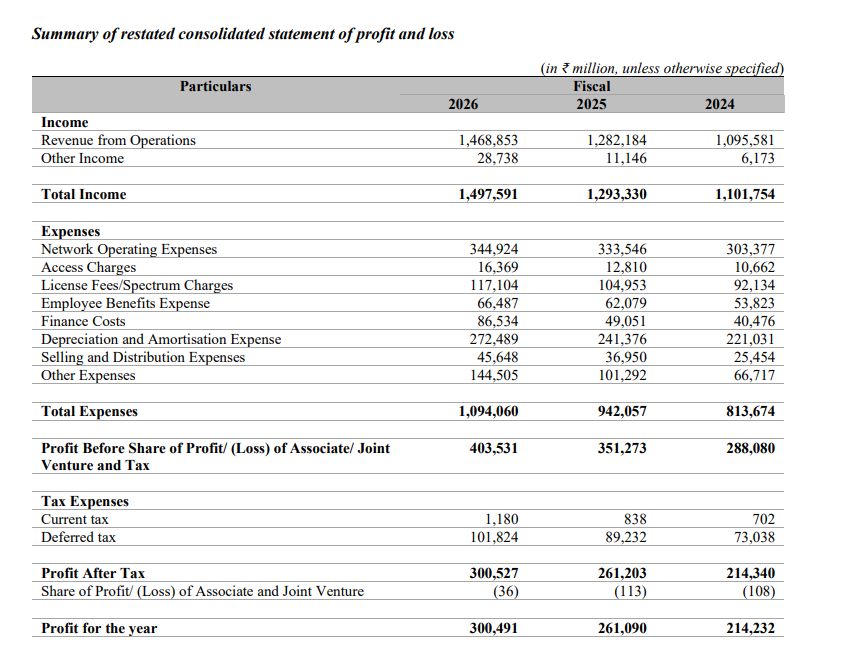
And this creates an interesting dilemma for the company.
While telecom is an incredibly powerful business when you have scale, the stock market rarely hands out massive, jaw-dropping valuations for it. Investors generally view telecom operators almost like utility companies. They require a bottomless pit of capital expenditure, constantly need to buy expensive spectrum from the government, and demand never-ending network upgrades. Even the most successful telecom operators in the world struggle to command the premium price tags that software and technology firms enjoy.
So, Jio's management desperately wants the market to see them through that lucrative tech lens.
The company's long-term plan is to build a digital infrastructure giant, not just a dominant telecom operator. Look at where they are placing their bets: AI infrastructure, cloud computing, enterprise software, data centres, and connected devices. All of these investments point toward a future in which providing your internet connection is just the entry point for selling you a much wider digital ecosystem.
That is exactly what the IPO money is meant to fuel.
A massive fresh issue of shares gives Jio a multi-billion-dollar war chest. Because building hyperscale data centres and state-of-the-art AI infrastructure is astonishingly expensive, and tapping into the public capital markets is the cleanest way to fund that massive transition.
But there's a twist here. According to the draft filings, the single biggest use of the IPO proceeds isn't AI at all. It's debt repayment.
Jio plans to use up to ₹27,500 crore of the money raised to prepay or repay borrowings taken by Reliance Jio Infocomm, its telecom subsidiary. These include dollar- and yen-denominated loans from international lenders that were originally raised to fund the company's network expansion.
In fact, the targeted loans add up to over ₹30,000 crore in outstanding principal. By retiring a large chunk of this debt, Jio is effectively creating room on its balance sheet for the next phase of growth.
Think of it this way. Instead of borrowing heavily, part of the IPO money will first be used to clean up existing debt, creating the financial flexibility needed to fund its next phase of growth without piling even more leverage onto the balance sheet. A cleaner balance sheet means lower leverage, lower financing costs, and greater flexibility to invest aggressively in future opportunities such as AI infrastructure and data centres.
So you could say that the IPO isn't just a fundraising exercise. It's also a balance-sheet repair exercise to first strengthen its financial position. And that may be one of the smartest things about it.
What makes this even more compelling is the stance of Jio’s current backers. Heavyweights like Meta, Google, Silver Lake, KKR, and several sovereign wealth funds poured money into Jio when it was still largely just a telecom story. Today, they effectively hold front-row tickets to India's digital transformation. By choosing not to sell their shares in the IPO, they are sending a clear signal that they believe Jio’s transformation into a broader technology platform will unlock massive value, and cashing out now would mean missing the most lucrative chapter of the company's journey.
Of course, no business operates in a vacuum, and we have to talk about the downsides.
First being competition. On paper, Jio has a few rivals. In reality, only one truly matters: Airtel.
Vodafone Idea remains bogged down by severe financial constraints and continues to lose market share. BSNL is trying to stage a comeback, but it remains miles behind in network quality and subscriber economics.
Airtel, on the other hand, has played a very different game. While Jio aggressively chased sheer scale and affordability to capture hundreds of millions of users, Airtel focused heavily on premium customers, higher average revenue per user, enterprise services, and incredibly disciplined capital allocation. Because of this strategy, Airtel boasts stronger profitability metrics despite having a smaller subscriber base.
This dynamic sets up the ultimate debate for anyone looking to invest in the upcoming IPO.
Do you view Jio as a traditional telecom company locked in a perpetual battle with Airtel? Or do you see it as an emerging tech platform that simply uses its telecom network as a customer acquisition engine? How you answer that question will likely determine how you value the company.
Ultimately, the Jio IPO is about bankrolling the next era of India's largest digital ecosystem, not about raising survival cash for a telecom operator.
For retail investors like you and me looking at the prospectus, the burning question isn't whether Jio can convince another million people to buy a SIM card. That part of the story is already mature.
The real test is whether Jio can successfully morph into India's premier digital infrastructure platform. If it actually pulls off that pivot, the market will eventually stop comparing it to Airtel and start benchmarking it against the world's tech companies. And that could make this IPO one of the most defining moments in Indian market history.
Until then…
Liked this story? Share it with a friend, family member or even strangers on WhatsApp, LinkedIn and X.
🚨 ATTENTION: FINSHOTS FAMILY
This week, we’re hosting a free 2-day Insurance Masterclass that helps you build real financial security by understanding health and life insurance the right way.
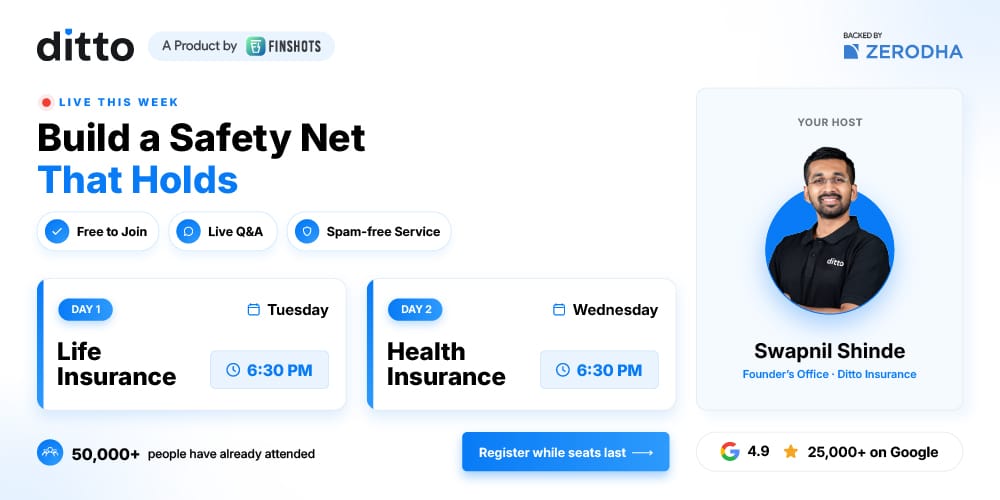
📅 Tuesday (tomorrow), 23rd June at 6:30 PM: Life Insurance
How to protect your family, choose the right cover amount, and understand what truly matters during a claim.
📅 Wednesday, 24th June at 06:30 PM: Health Insurance
How hospitals process claims, common deductions, the mistakes buyers usually make, and how to choose a policy that won’t disappoint you when you need it most.