
Cola has a new player, battery pranks, and more…
Hey folks!
A strange trend has been doing the rounds on social media over the past few days.
Someone walks up to an unsuspecting e-rickshaw, opens an app on their phone, taps a few buttons, and the vehicle suddenly comes to a halt. The prankster laughs. The camera keeps rolling. The internet gets another viral video.
For about five seconds, it almost looks funny.
Then you remember that the person sitting in that e-rickshaw probably earns a living with it.
As it turns out, the app isn’t some sophisticated hacking tool. It’s called BAT-BMS, a legitimate battery management application that monitors Bluetooth-enabled lithium batteries. It lets owners check metrics such as battery health, temperature, and charging cycles. Unfortunately, some low-cost battery packs left those Bluetooth controls unsecured, allowing anyone nearby to connect and disable the battery.
That’s certainly a cybersecurity story. But it also got us thinking about something much bigger.
A freshly painted wall stays spotless for exactly as long as it takes someone to paste an advertisement on it. Even when the first Vande Bharats entered service, several were damaged in repeated stone-pelting incidents, forcing Indian Railways to replace cracked windshields and install additional protective measures.
Now, don’t get us wrong. These incidents don’t represent how most people behave. But it only takes a handful of people to create a problem.
Economists have a neat way of thinking about situations like this. They call it ‘externality’, where the enjoyment remains private, but the cost becomes public.
The prankster stopping an e-rickshaw gets a viral reel. But the consequences are that drivers lose valuable working hours, customers don’t reach their destinations, and the people driving behind that rickshaw must worry about another source of uncertainty.
And this isn’t unique to e-rickshaws.
Take Uber, for instance. In several countries, you can simply get into the cab. In India and a handful of other countries, however, entering a cab without first sharing an OTP with the driver would feel unimaginable.
And that extra step was introduced because, over time, companies realised they needed an additional layer of verification to prevent misuse. Convenience gave way to security because human behaviour forced it to.
The same thing is likely to happen here.
Battery manufacturers will almost certainly encrypt Bluetooth connections, introduce passwords, or remove certain features altogether. The app will become less convenient for genuine owners and batteries could even become slightly more expensive.
And perhaps that’s the lesson behind this whole episode. Every time we misuse something that was built to make life easier, we don’t just inconvenience the immediate victim, but a whole lot of other people.
So yes, the BAT-BMS videos may disappear from our feeds in a few weeks.
But somewhere in the process, a perfectly useful feature will become a little more complicated than it needed to be. And that’s often the hidden price we pay when a few people decide to treat someone else’s livelihood as entertainment.
Here’s a soundtrack to put you in the mood…
When It Lands by Rainbow Kitten Surprise
We usually like to feature music by lesser-known Indian artists who may not get the attention they deserve. But this one’s an exception. Thanks for the recommendation, Sanchay Vandish!
What caught our eye this week
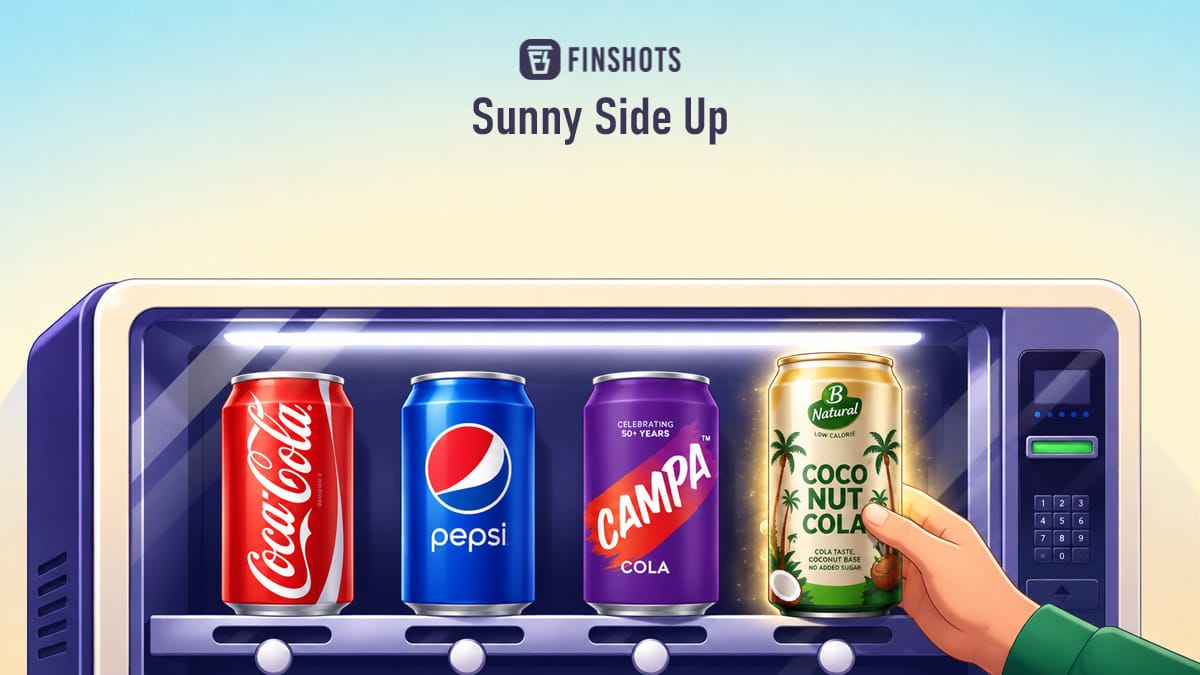
Cola wars just got a new twist
For years, if someone asked for a cola, only two names probably came to mind — Pepsi or Coca-Cola.
That changed a few years ago when Reliance entered the market with Campa, triggering a price war. While Coke and Pepsi sold a 200 ml bottle for ₹20, Campa priced the same bottle at just ₹10. It was one of the biggest shake-ups the Indian cola market had seen in years.
But this week brought another twist. ITC has decided to test the waters or should we say dip its toes into the cola business. Only, it isn’t competing on price or following the same playbook as every other cola brand before it.
Instead, it has launched a cola that’s priced nearly 1.5–2 times higher than existing brands because it’s pitching it as a healthier alternative, made with tender coconut water instead of the usual water-and-sugar base.
And that makes you wonder. Cola is one of those products people instinctively reach for during India’s scorching summers. It’s a category that sells quickly. Reliance spotted that opportunity almost as soon as it entered the FMCG business. But ITC has been in FMCG for more than twice as long. So why did it never try to shake up the cola market before?
Well, making something as easy to grab as a bottle or can of cola isn’t actually that easy.
For decades, entering the carbonated soft drinks (CSD) business meant building an expensive ecosystem before you could sell even a single bottle. You needed bottling plants to manufacture and package the drink, a cold chain to keep it chilled, and a massive retail distribution network to get it onto store shelves. That’s a capital-intensive business with relatively thin margins.
That’s also why Coca-Cola and Pepsi built their global empires the way they did. They kept the profitable parts — making the concentrate and building the brand in-house, while outsourcing the capital-heavy work of bottling, distribution and cold storage to franchise bottlers.
And while that part of the equation hasn’t changed much, distribution has.
Quick commerce has made it possible to soft-launch products in urban markets without first investing in a nationwide bottling and distribution network. It gives companies a much lower-risk way to test a category that once demanded huge upfront investments, which also helps explain why it’s entering the segment now.
There’s another reason too. Launching just another cola at a cheaper price might win market share, but it usually comes with lower profits. A better strategy is to make the product different enough that people are willing to pay a premium for it. And that’s exactly what ITC is doing.
So yeah, this new entry changes how the cola wars are fought. Until now, a cola usually meant Pepsi or Coke. Then Reliance came and disrupted the market by slashing prices. And now, ITC is taking a completely different approach by trying to redefine what a cola can be.
If more differentiated products begin filling store shelves, the long-standing Pepsi-Coke duopoly that’s dominated the market for decades may have to rethink how it holds on to its share.
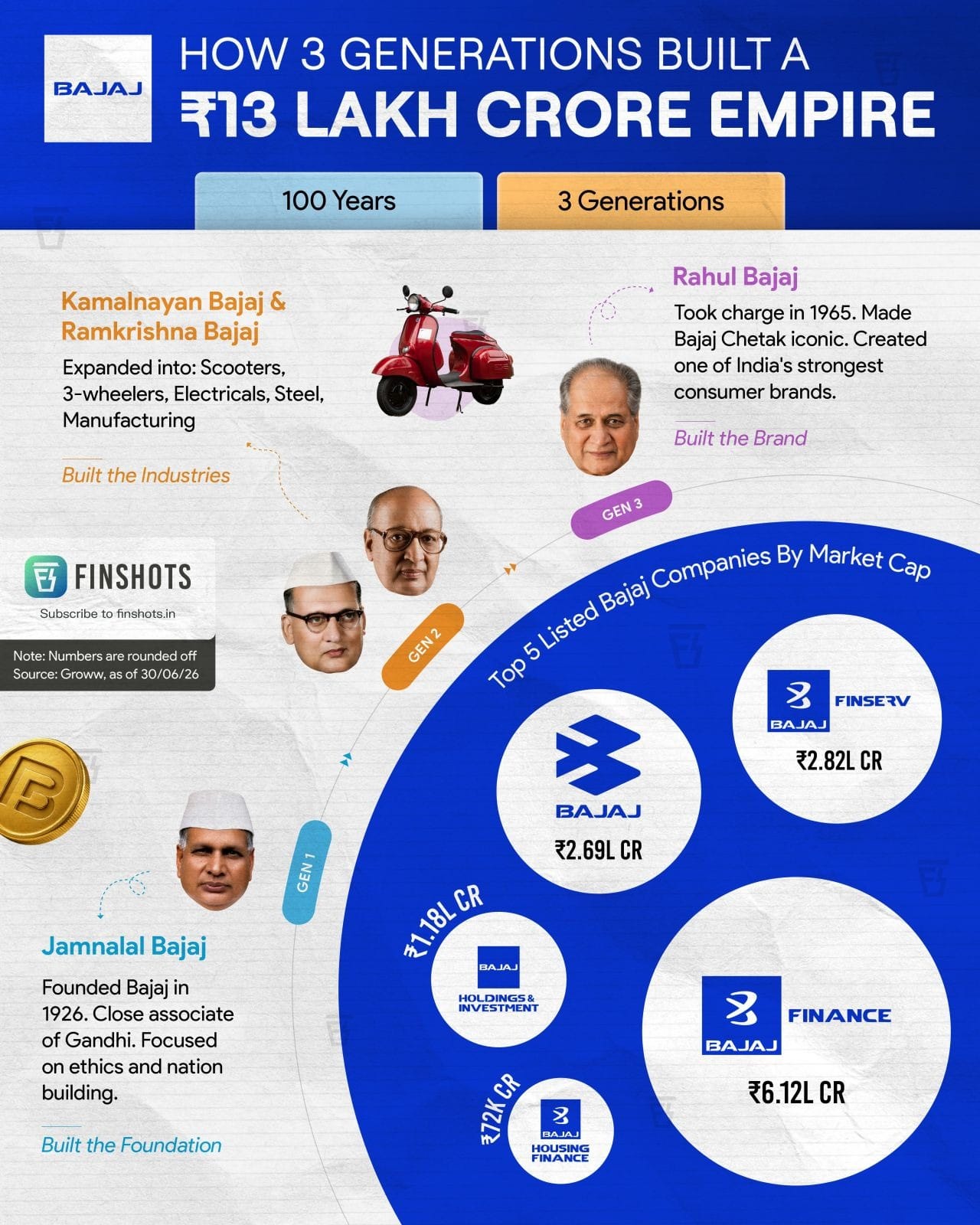
Infographic
Readers Recommend
This week, our reader Lokesh Puri Goswami recommends reading The Almanack of Naval Ravikant by Eric Jorgenson.
It’s about how to build wealth without relying solely on your time, make better decisions, and live a happier, more peaceful life by thinking clearly and learning continuously.
Thanks for the rec, Lokesh!
That’s it from us this week. We’ll see you next Sunday.
Until then, send us your book, music, business movies, documentaries, or podcast recommendations. We’ll feature them in the newsletter! Also, don’t forget to tell us what you thought of today’s edition. Just hit reply to this email (or if you’re reading this on the web, drop us a message at morning@finshots.in).
Don’t forget to share this edition on WhatsApp, LinkedIn and X.