
Can a new CEO solve HDFC Bank's problems?
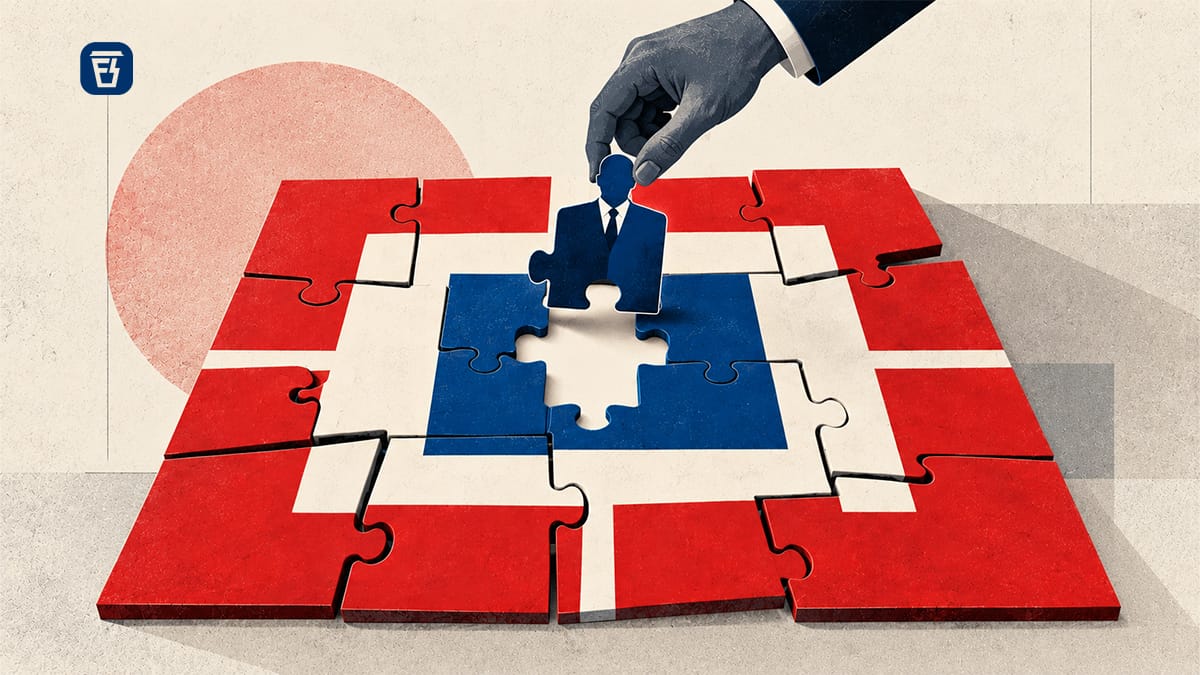
In today's Finshots, we look at the challenges HDFC Bank has been facing after its merger and whether a new CEO can get it back on track.
But before we begin, if you love keeping up with the buzz in business and finance, make sure to subscribe and join the Finshots club, loved by over 5 lakh readers.
Already a subscriber or reading this on the app? You’re all set. Go ahead and enjoy the story!
The Story
HDFC Bank was once synonymous with reliability. It had a reputation for good loan growth, high-quality assets, a powerful retail franchise and, perhaps most importantly, a large pool of deposits.
For years, that combination let the bank grow into India's largest private-sector bank while consistently delivering good returns to shareholders.
But ever since its merger with its promoter group, HDFC Ltd, in 2023, the bank has started to look rather unremarkable, for lack of a better word.
Sure, the balance sheet is much larger. The bank inherited HDFC Ltd’s huge housing loan franchise, giving it a much stronger position in home loans. It also gained access to a much wider financial-services ecosystem, spanning businesses such as HDFC Life, HDFC AMC, HDFC ERGO and HDFC Securities.
This, at least theoretically, should have given the bank more opportunities to cross-sell everything from home loans and insurance to mutual funds and broking services to the same customer. But the problem is that this scale hasn't translated into the kind of economics that once made HDFC Bank special.
And the most obvious sign is profitability.
HDFC Bank's net interest margin (profit a bank makes from borrowing and lending) fell to a record-low 3.26% in Q1 FY27 (April-June 2026), while its CASA ratio, which stood at 48.2% in FY22, had fallen to about 32%. The CASA ratio, which measures the percentage of deposits that come from a bank’s current account and savings account deposits, is a useful way to gauge how a bank is performing because these deposits are generally cheaper than term deposits. Banks don’t have to pay as much interest on them.
So while HDFC Bank continues to grow its loans and deposits, an increasing portion of its funding is coming from relatively ‘expensive’ sources. The problem is the merger itself. It was supposed to help it grow, but it has turned out to be too expensive to fund.
Next, as mentioned earlier, the merger brought HDFC’s home-loan business into the bank, taking HDFC Bank’s market capitalisation from about ₹9.5 lakh crore to nearly ₹14.6 lakh crore.
But this scale also brought a higher loan-to-deposit ratio and the challenge of integrating two very different businesses. HDFC Bank had to simultaneously absorb the home loan business, rebuild its deposit base and maintain the growth engine that had worked so well before the merger.
That transition has taken longer than we initially expected. And the issue isn't only financial.
HDFC Bank has also had to deal with leadership changes, including chairman Atanu Chakraborty's resignation.
None of these necessarily threatens the bank's existence. But the problem is that HDFC Bank's premium valuation was built partly on the perception that it was exceptionally well managed.
So you could say that HDFC Bank's problems boil down to three things:
- Its funding advantage has weakened,
- The post-merger business hasn't worked as efficiently as expected, and
- Confidence in the institution has taken a hit.
That is where Anup Bagchi enters the picture.
HDFC Bank had been looking for a successor after its incumbent MD and CEO, Sashidhar Jagdishan, decided not to seek reappointment when his term ends. The bank subsequently appointed Anup Bagchi as its next MD and CEO after the RBI’s approval. In fact, he’ll also be the first outsider to lead HDFC Bank, breaking from its tradition of promoting leaders from within the HDFC Group.
And he seems to be an interesting choice.
He joined the ICICI Group in 1992 and spent more than two decades working across retail banking, corporate and investment banking and treasury. Back at ICICI Bank, he oversaw retail, business and rural banking before moving to wholesale banking. That gives him something particularly relevant to HDFC: much of his career has involved moving across the different parts of financial services that HDFC now has to bring together.
Besides, his record at ICICI Prudential Life is probably the strongest evidence that he can run a large financial business and deliver growth. Bagchi became managing director and CEO of the insurer in 2023. And in FY25, annualised premium equivalent crossed ₹10,000 crore for the first time, while profit after tax rose by 39% to ₹1,189 crore.
There is even a potentially useful lesson from his recent experience at ICICI Prudential Life. When its agency distribution channel came under pressure, the insurer began focusing more closely on individual micro-markets instead of simply trying to expand everywhere. The idea was to use granular data to identify higher-potential markets and improve productivity.
HDFC could potentially apply a similar philosophy to its deposit problem. Rather than treating CASA growth as a nationwide volume target, the bank could identify the customer segments, branches and geographies where it has the greatest opportunity to build primary banking relationships and attract low-cost deposits.
Bagchi also has experience working at the intersection of technology and finance. For context, during his time at ICICI Securities, he helped develop ICICI Direct and worked on retail broking, financial-product distribution and wealth management. ICICI has also credited him with helping develop its internet banking platform.
That experience could become particularly relevant to the wider HDFC ecosystem. Because HDFC Securities has already launched HDFC Sky as its discount-broking platform, but the business has not yet gained much traction.
In fact, ICRA suggests that discount broking still represented a negligible share of HDFC Securities' overall revenue and volumes, even though the platform was attracting a younger customer base. So the opportunity here may be about turning existing banking customers into its brokerage customers.
This is why Bagchi's background across banking, insurance, broking, and wealth management may be exactly what HDFC needs. HDFC already has many of these businesses, but after the merger, it hasn’t really figured out how to make that scale work together.
Now this doesn't mean HDFC Bank has suddenly found a magic solution to its problems. A CEO cannot immediately lower deposit costs or instantly erase the structural pressures facing HDFC Bank.
What Bagchi can influence is everything around those constraints. More importantly, he can try to restore a culture of execution and accountability at a bank where the institution's sheer size can make it easier for problems to get buried (iykyk).
So the real test is whether he can turn his experience into something the bank has struggled to achieve since the merger, which is making the different pieces of the puzzle work together.
Bagchi has three years to show that he can do exactly that.
Until then...
If you liked this story about HDFC Bank's leadership transition, feel free to share it with your friends, family, or even strangers on WhatsApp, LinkedIn, or X.
🚨 ATTENTION: FINSHOTS FAMILY
This weekend, we’re hosting a free 2-day Insurance Masterclass that helps you build real financial security by understanding health and life insurance the right way.
📅 Thursday, 8th October at 6:30 PM: Life Insurance: How to protect your family, choose the right cover amount, and understand what truly matters during a claim.
📅 Friday, 9th October at 6:30 PM: Health Insurance: How hospitals process claims, common deductions, the mistakes buyers usually make, and how to choose a policy that won’t disappoint you when you need it most.