
The 86-year carbon debt in your cooking oil
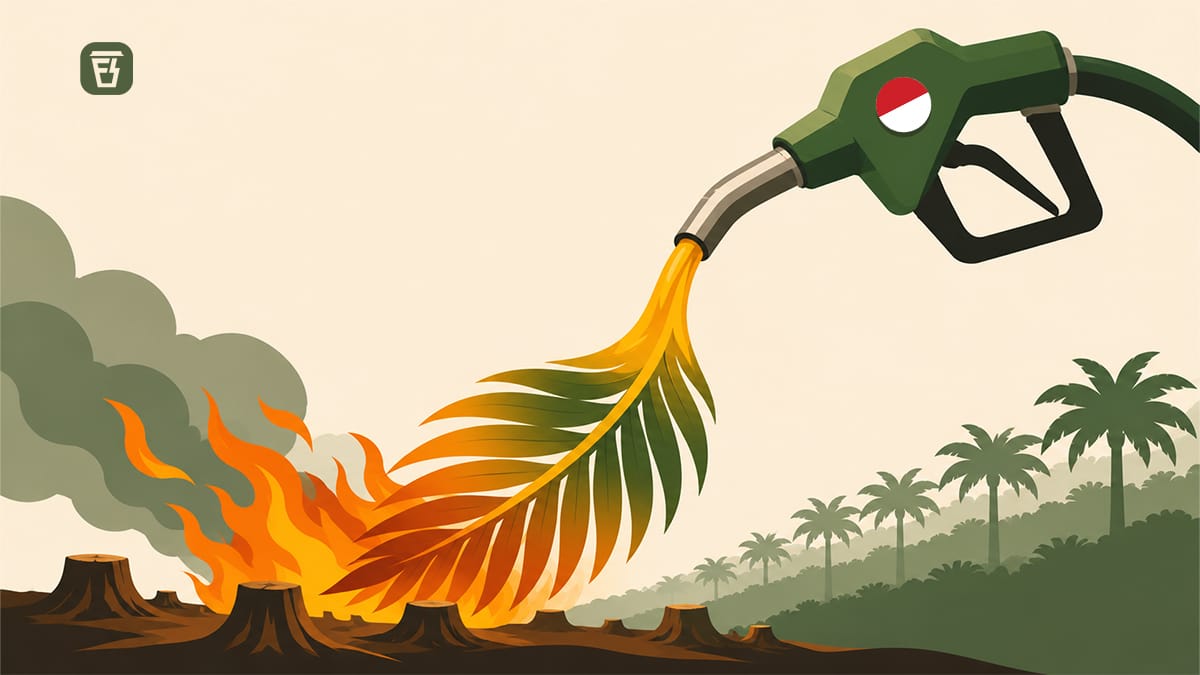
In today’s Finshots, we look at how a country can win a reward for saving its rainforests while those same forests burn.
But before we begin, if you’re someone who loves to keep tabs on what’s happening in the world of business and finance, then hit subscribe if you haven’t already. We strip stories off the jargon and deliver crisp financial insights straight to your inbox. Just one mail every morning. Promise!
If you’re already a subscriber or you’re reading this on the app, you can just go ahead and read the story.
 Love our insights? Add Finshots as a Preferred Source on Google ⭐
The Story
In 2022, Norway and Indonesia entered into a deal under which Norway would pay Indonesia up to $1 billion for cutting emissions from deforestation and forest degradation. There was a specific rate card too. Norway would pay $5 for each tonne of deforestation emissions Indonesia cut.
And just last week, the time for paying up actually arrived. Norway announced that it would give Indonesia roughly $90 million because between 2020 and 2023, Indonesia reduced emissions from deforestation and forest degradation by around 270 million tonnes of carbon dioxide.
Now simultaneously, there was a sort of contradiction playing out at the COP31 climate summit that also kicked off last week in Turkey.
Indonesia was looking for international funding to protect its national forests. Ironically though, over 70,000 hectares of land inside 47 national parks in the country had already burned by September this year owing to forest fires.
Which makes you wonder, how can a country be rewarded for saving its trees while its forests continue to burn?
Well, part of the answer lies in its growing appetite for palm oil. You see, Indonesia is the world’s largest producer of palm oil. And to grow palm trees you need more land. Which is why when palm oil prices fall, plantation owners have less incentive to burn and clear additional land to grow more of it. A 2022 study found that a 1% fall in palm oil prices was associated with a 0.68% decline in forest loss.
But there’s another culprit here: Indonesia’s latest energy policy. Last year the country began implementing its B50 biodiesel mandate. This means diesel sold in the country must contain 50% biodiesel, which is largely made from palm oil. The idea is to reduce dependence on imported fossil fuels and strengthen energy security.
But here’s the thing. Indonesia already consumes a large share of its own palm oil. In 2024, it used 53% of its total palm oil production domestically. And this was when the country was following the older B35 mandate, which required a 35% biodiesel blend. Now, B50 could push domestic demand even higher, leaving less palm oil available for exports.
And if demand for palm oil only increases, it could also support prices. Which means plantation owners could find it more attractive to expand production. That’s where the trouble begins.
Indonesia has already doubled its oil palm plantation area between 2001 and 2019 to touch about 16 million hectares. And a recent study estimates that meeting the country’s B50 target by 2030 could require converting up to another 8.5 million hectares of land.
And one such target is peatland, as Indonesia is home to nearly one-third of the world’s peatlands. Peat is essentially waterlogged soil containing partially decomposed plants that accumulated over thousands of years. But because there’s very little oxygen here, plants don’t fully decompose. This allows peatlands to store enormous amounts of carbon as natural carbon sinks.
But oil palms don’t grow well in waterlogged conditions as their roots will rot. So plantation owners dig canals to drain the water. This exposes the buried organic matter to oxygen, allowing microbes to break it down and release carbon dioxide. The ground also gradually sinks, a process called peat subsidence.
Besides, drained peatland also becomes much drier and more vulnerable to fires. Estimates suggest that peat subsidence alone released around 148 million tonnes of carbon dioxide equivalent or greenhouse gases in Indonesia in 2024. Together with peat fires, it accounted for nearly 85% of the palm oil sector’s assessed emissions. And with El Niño conditions making these landscapes drier, the risk of fires increases.
This is where the climate promise of biodiesel starts to fall apart.
Biodiesel is supposed to reduce emissions by replacing fossil diesel. But clearing a lowland tropical rainforest in Indonesia to grow oil palms creates what scientists call a carbon debt. A 2008 study published in Science estimated that it would take around 86 years of using palm biodiesel to repay this debt. Until then, it could actually release more greenhouse gases than an equivalent amount of fossil diesel. And if the plantation replaces tropical peatland rainforest, the same study estimated that the payback period could stretch to around 420 years.
So while Norway rewarded Indonesia for meeting its past targets, the country now faces a much tougher challenge, thanks to rising demand for palm oil.
Now this could sound very similar to the problem that India is facing with a different biofuel. For a while now, it has been pushing its ethanol blending programme to reduce dependence on imported crude oil.
As demand for ethanol grew, rising from 1.7 billion litres in 2019-20 to a projected 12 billion litres in 2025-26, manufacturers needed more raw materials to produce it. And a few crops that increasingly found their way into distilleries were sugarcane and corn. Corn’s contribution to India’s ethanol blending for instance, rose from virtually nothing in 2021-22 to around 37% in 2025-26.
This created competition for corn, which is also a crucial ingredient in poultry feed. As ethanol producers competed with poultry farmers for the crop, feed costs increased, putting pressure on egg and chicken prices. But the implications go beyond poultry. Farmers also have an incentive to grow crops that offer better returns. And the Economic Survey 2025-26 flagged an emerging shift towards corn and away from pulses and oilseeds.
That could create another problem for India. Lower domestic oilseed production could deepen its dependence on edible oil imports.
The government has already started adjusting its ethanol policy. For 2026-27, it has asked oil companies to stop procuring ethanol made from sugarcane juice, sugar syrup or raw sugar. It has also reduced the additional incentive for corn-based ethanol from ₹5.79 to ₹2.79 per litre.
But this doesn’t necessarily solve the underlying problem as reducing the use of one crop could simply increase demand for another.
And this is where India’s story meets Indonesia’s.
India is the largest export market for Indonesian palm oil. If Indian farmers increasingly favour corn over oilseeds, the country could become more dependent on imported edible oils, including palm oil. At the same time, Indonesia’s growing domestic biodiesel demand could leave less palm oil available for export.
In other words, both countries are trying to reduce their dependence on imported crude oil. But their policies could create unintended consequences elsewhere. In India, the pressure could show up in food prices and edible oil imports, while in Indonesia, as we’ve already seen, it could show up in forests, peatlands and carbon emissions.
So, what’s the way out, you ask?
One option is to produce more from land that’s already under cultivation instead of constantly expanding plantations. Smallholders manage about a third of Indonesia’s oil palm plantation area. Better-quality seedlings could help them improve yields without requiring more land. Unfortunately, Indonesia’s replanting programme has consistently fallen short of its targets.
Another option is to make biofuel blending targets more flexible. Instead of insisting on fixed blending targets regardless of crop availability and prices, governments could temporarily adjust blending requirements when food crops become scarce or expensive. India’s decision to drop sugar from ethanol production this year is a version of the same idea.
Finally, countries could look beyond food crops for biofuel. Used cooking oil, agricultural waste and crop residues can offer alternatives without creating the same pressure to clear additional farmland.
So the bottom line is that energy security and food security cannot be treated as separate goals. A policy that reduces dependence on imported oil but makes food more expensive or destroys forests could end up creating another problem while solving the primary one.
Sure, a plantation earns money from every harvest, and land goes to whoever pays the most for it. But a standing forest gets very little financial reward for the carbon it stores, the water it holds or the fires it helps prevent.
Until those benefits carry a price too, forests will continue to compete with more profitable uses of land.
If you liked this story, feel free to share it with your friends, family, or even strangers on WhatsApp, LinkedIn, or X.
How Strong Is Your Financial Plan?
You've likely ticked off mutual funds, savings, and maybe even a side hustle. But if Life Insurance isn't a part of it, your financial pyramid isn't as secure as you think.
Life insurance is the crucial base that holds all your wealth together. It ensures that your family stays financially protected when something unpredictable happens.
If you’re unsure where to begin, Ditto's IRDAI-Certified insurance advisors can help. Book a FREE 30-minute consultation and get honest, unbiased advice. No spam, no pressure.