
Is it time to write the petrodollar’s obituary?
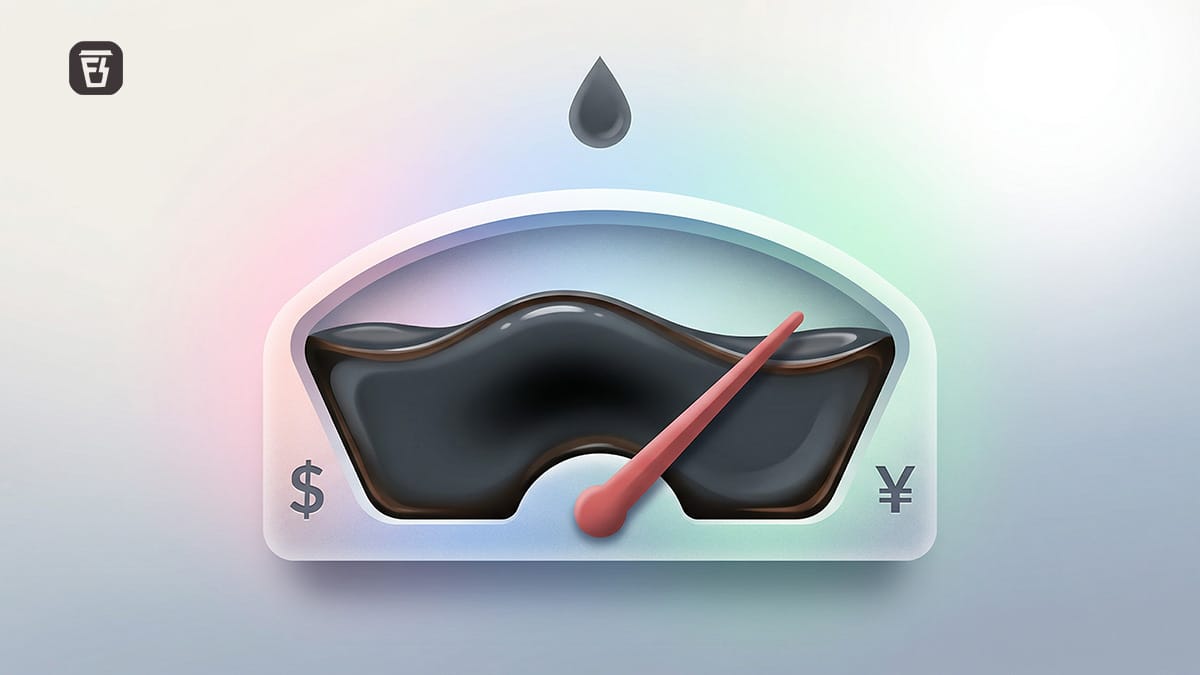
In today’s Finshots, we talk about the petroyuan and whether it wields the power to replace the petrodollar. But just a heads up before we dive in. This is one of those stories that’s going to be a bit longer than usual.
Also, here’s a quick sidenote before we begin. This weekend, we’re hosting a free 2-day Insurance Masterclass that helps you build real financial security by understanding health and life insurance the right way.
📅 Tuesday, 31st March at 6:30 PM: Life Insurance
How to protect your family, choose the right cover amount, and understand what truly matters during a claim.
📅 Wednesday, 1st April at 6:30 PM: Health Insurance
How hospitals process claims, common deductions, the mistakes buyers usually make, and how to choose a policy that won’t disappoint you when you need it most.
👉🏽 Click here to register while seats last.
Now, on to today’s story.
The Story
In the early 1970s, Saudi Arabia signed a series of informal agreements with the US. At the time, these were either secret or what you’d call an “open secret” (they were only fully revealed in 2016). Saudi agreed to sell its oil to the US in return for military equipment and protection against regional threats that could destabilise the Saudi monarchy in an already volatile region.
But here’s the key part. The payment for this oil wouldn’t be in Saudi Arabia’s local currency. It would be in US dollars. And that’s what came to be known as petrodollar recycling or what you now know as the petrodollar system.
And it wasn’t just Saudi Arabia. Other Gulf countries slowly followed suit. Partly because Saudi pressured its neighbours to match its dollar pricing, and partly because they too received similar benefits from the US.
Now, this arrangement did two important things.
First, it effectively pegged most Gulf or GCC (Gulf Cooperation Council) currencies like the UAE dirham, Qatari riyal, Bahraini dinar, and Omani rial to the US dollar. That meant oil revenues became more stable. It removed the risk of sudden fluctuations between their local currencies and the dollar, which most international trade and foreign assets were already denominated in, thanks to the sheer size of the US economy.
Second, all the US dollars these countries earned were used to buy what these countries needed. And the surplus was invested back into US assets, especially US government bonds. In simple terms, the US was borrowing this money at relatively low cost to run its economy, promising to pay it back later with interest.
And while this story begins with oil, the idea didn’t stop there.
Across global trade, countries increasingly accepted payments in US dollars and routed surplus funds into US assets. It made trade easier and offered a place to park money in assets widely seen as safe.
For years, this system stayed in place and largely went untouched. But since 2022, with the Russia-Ukraine war, it seems to have come under pressure.
As Russia invaded Ukraine, Western countries, including the US, imposed sanctions to cripple its economy. They restricted trade, froze a significant portion of Russia’s foreign exchange reserves including dollar assets, and cut it off from SWIFT (Society for Worldwide Interbank Financial Telecommunication), the global payments system overseen by major central banks like the US Fed.
This created a serious problem for Russia. Its economy depends heavily on oil and gas exports, and its financial system relied on SWIFT to process these transactions.
So Russia adapted by turning to alternative systems like SPFS (System for Transfer of Financial Messages), developed by its own central bank, and began linking it with China’s CIPS (Cross-Border Interbank Payment System), which processes payments in yuan. It also started selling oil and gas to countries like China and India by accepting yuan and rubles instead of dollars.
And that marked the beginning of a shift away from the petrodollar system.
But now, a deeper shift may be underway. A Deutsche Bank research suggests that the ongoing US-Israel war with Iran could mark a more serious turning point, possibly accelerating the move away from the petrodollar system and towards a “petroyuan” world, where oil is increasingly traded in Chinese yuan.
Why’s that, you ask?
It’s pretty simple. Remember, we told you that most Gulf countries were willing to sell oil while accepting dollar payments in return for the military security the US promised? Well, that promise now seems to be fading.
Amidst the attacks happening across the Middle East, the US hasn’t done much to protect Gulf oil assets and territories from being targeted or destroyed. And that naturally raises a question for these countries. If the US isn’t holding up its end of the informal agreement, why should they feel obligated to hold up theirs?
But that’s only a small part of this shift. The bigger and more economically grounded argument is that when your currency is the world’s reserve currency, you hold immense power. The US has shown that it can use this power when needed as we’ve seen when it froze Russia’s reserves. And if you’ve been following the news, you might recall how the US has also tried to assert control over Venezuelan oil-linked assets to compensate for alleged damages.
Now, countries around the world are watching all of this closely. And they’re probably thinking, “If this can happen to others, it could happen to us too.”
So the obvious response is to diversify and reduce dependence on a system controlled by one country.
There’s also a monetary angle. Because many currencies are pegged to or influenced by the dollar, they’re indirectly tied to US policy. For example, when the US faces a crisis, it can print more money, as it did after the 2008 financial crisis and during COVID-19. But when supply rises, the value of the dollar can fall. That, in turn, can drag down the value of other currencies linked to it and even reduce the real value of US assets that countries hold.
So from the perspective of these countries, it’s not just about geopolitics anymore. It’s also about protecting the value of their reserves and reducing dependence on a system they don’t fully control.
Which brings us to the next question. Why diversify specifically into the Chinese yuan and not something else?
The simplest answer is that China is now the world’s largest buyer of energy. Until around 2016, that position belonged to the US. But then the US went through something called the shale boom. Breakthroughs in hydraulic fracturing (fracking) and horizontal drilling unlocked vast, hard-to-extract oil reserves trapped in shale rock formations in places like Texas and North Dakota. And that transformed it into a major producer, reducing its reliance on imports.
Soon, China took its place. And when you’re the largest buyer, you gain negotiating power.
It’s also using that leverage through something called the Belt and Road Initiative (BRI), a massive China-led infrastructure push launched in 2013 to improve trade connectivity across Asia, Europe, Africa, and beyond, without relying on the US.
This move didn’t come out of nowhere. Earlier, China had an informal economic arrangement with the US, often referred to as “Chimerica”. Under this setup, China received American investments and access to technology to build its manufacturing base. In return, it accepted payments in US dollars and recycled the surplus into US assets, much like the petrodollar system.
At one point, China was one of the largest holders of US assets. But over time, it realised that this dependence gave the US significant leverage. So it began to shift strategy.
Instead of parking excess dollars in US bonds, China started deploying that money through the BRI — building roads, ports, and bridges across regions. It looped in 150 countries into this network and extended large loans to many of them, including oil-producing nations like Saudi Arabia, Iraq, Oman, and the UAE.
And this creates a different kind of influence. Which means, in theory, it can nudge these oil-producing nations to accept yuan for oil sales.
That changes the equation as countries that depend on Chinese financing may be more open to accepting yuan in trade. And if oil exporters begin accepting yuan, other countries that want to buy oil would either have to acquire it directly or start accepting yuan in trade themselves. And slowly, demand for the yuan rises.
China has also taken steps to support this shift. In 2018, it launched crude oil futures contracts (contracts to buy oil at specific prices even if they change later) priced in yuan. It allowed these yuan to be converted into gold through Chinese exchanges. This gave sellers an alternative. If they didn’t want to hold yuan, they could convert it into gold. That makes the currency slightly more acceptable, even for those who don’t fully trust it. That made the yuan slightly more acceptable in global trade.
And with more oil trade shifting towards Asia, some producers appear increasingly open to this idea.
There’s also chatter that countries paying Iran in yuan are being allowed smoother passage for their shipments through the now-jeopardised Strait of Hormuz — a narrow but critical route through which nearly 20% of the world’s traded oil and natural gas flows.
Now, this might make it seem like the rise of the petroyuan could slowly kill the petrodollar. But that’s not something that’s likely to happen anytime soon. In fact, for now, it’s still a bit of a far-fetched idea.
That’s because while some countries may have agreed to trade in yuan, not all of them necessarily trust it. And there are reasons for that. China is known to be fairly rigid with its policies and exercises significant control over its currency. It doesn’t fully disclose the extent of its gold reserves, tightly manages data on strategic industries, and often controls the narrative around its economy, sometimes underreporting slowdowns to project stability.
What this means is that the yuan countries receive isn’t as freely usable as the dollar. In many cases, it either has to be spent on Chinese goods and services or converted into gold through mechanisms like Chinese crude oil futures.
But even that has limits. You can’t rely endlessly on converting currency into gold. After all, the US dollar itself was once backed by gold under the Bretton Woods system in 1944, with other global currencies pegged to it. That system eventually collapsed because gold has a limited supply.
If a currency is tied too closely to gold, its supply can only grow as fast as gold production. And gold output can’t suddenly expand to match economic growth. So if economies grow but the money supply doesn’t keep up, you risk deflation, where there’s more goods and services, but not enough money to buy them. And that can hurt economies over time.
So if countries end up converting large amounts of yuan into gold, they could run into similar constraints.
Which brings us back to the bigger picture. Countries may experiment with alternatives like the yuan, but in times of uncertainty, they often return to what feels more stable and widely accepted. And for now, that’s still the US dollar.
In that sense, the petroyuan may not outright replace the petrodollar. Instead, it could lead to something else — fragmentation.
This could mean that different countries settling oil trades in two different currencies could increase transaction costs, create pricing inefficiencies, and add volatility to global markets.
And as currencies become tools of geopolitical strategy, this shift could also heighten tensions, reflecting a broader reshaping of global economic power.
Until next time…
Liked this story? Share it with a friend, family member or even strangers on WhatsApp, LinkedIn and X.
Also, if you’re someone who loves keeping tabs on the world of business and finance, hit subscribe if you haven’t already. And if you’re already a subscriber, thank you! Maybe forward this to someone who’d enjoy our stories but hasn’t discovered us yet.