
The iPhone Duo Crackgate, who came up with the weekend, and more...
Hey folks,
If you’re reading this the day it drops, it’s Sunday. You’re probably lounging in bed with a cup of coffee (or chai), scrolling at a leisurely pace, and revelling in the fact that you don’t have to look at a spreadsheet today.
We tend to treat the two-day weekend as a natural law of the universe. But here's the thing. Nature didn't give us Saturdays and Sundays off. Unlike the 24-hour day, which comes from the Earth's rotation, or the 365-day year, which comes from its orbit around the Sun, the weekend is entirely a human invention.
To understand how we got here, we need to go back to 19th-century Britain.
Back then, Sunday was a day of rest for Christian workers. But many factory and mill workers had a habit of not showing up on Mondays either.
It was called Saint Monday. And despite the religious-sounding name, it had little to do with religion. Skilled artisans often took Mondays off after a long week of work and a Sunday spent drinking, socialising or simply recovering from the previous day's activities (iykyk).
This became such a familiar practice that employers began treating Monday absenteeism as a productivity problem. So they tried a compromise. What if workers could have Saturday afternoons off, provided they turned up on Monday morning?
The idea caught on. By the middle of the 19th century, the Saturday half-holiday had become increasingly common in Britain. Workers got more leisure time, while factory owners got a more predictable workforce. And just like that, the modern weekend had its first building block.
But there was still a problem. Christians rested on Sundays, while Jewish workers observed the Sabbath from Friday evening to Saturday evening. A Sunday-only holiday meant they couldn't properly observe their own day of rest.
That began to change in 1908, when a cotton mill in New England introduced a two-day weekend so Jewish workers could observe the Sabbath alongside their Christian colleagues.
Then came a rather influential carmaker. In 1926, Henry Ford introduced a five-day, 40-hour workweek across his automobile factories, giving workers Saturdays and Sundays off without cutting their weekly pay. He believed employees needed more time for rest and family. But he also had a rather clever business reason.
You see, Ford sold cars. And what better way to encourage people to buy cars than to give them more time to drive around in them? A two-day weekend meant more opportunities for road trips, shopping and leisure. In other words, Ford wanted his workers to have enough money and free time to become his customers.
And that idea gradually spread across American industries.
So the next time you spend a Sunday afternoon doing absolutely nothing, remember that the weekend was shaped by workers who wanted a break and businesses that realised leisure could be good for sales.
Here’s a soundtrack to put you in the mood… 🎵
Maati by MC Square, Farak and others
You can once again thank our reader Prateek Senapati for this rec.
What caught our eye this week
The curious case of the cracking iPhone
Foldable phones have one particularly tricky engineering problem. If you haven’t guessed it yet, well, it needs a screen that can bend thousands of times without breaking. The display has to fold around a hinge, while a series of cables and other components have to fit into an extremely tight space.
And unlike other smartphone brands such as Samsung or Huawei, Apple entered this industry quite late.
Samsung launched its first Galaxy Fold in 2019, while Huawei introduced its first Mate X around the same time. Both companies have since released several generations of foldable phones, experimenting with different hinge mechanisms, screen materials and designs.
Apple, meanwhile, spent years working on its own ‘perfect’ version. The company had filed patents for folding devices as far back as 2011 (with John Ternus being one of the six original inventors), but it took until 2026 for the iPhone Duo to finally ship, being one of Ternus’ first product launches after becoming CEO.
And this is something you expect from Apple, right?
The company has a habit of entering markets years after its competitors, and then presenting its version as a more polished experience. It wants to be the company that gets it right. Or, as they like to put it, makes technology feel magical.
Except, this time, the magic seems to have faded rather quickly.
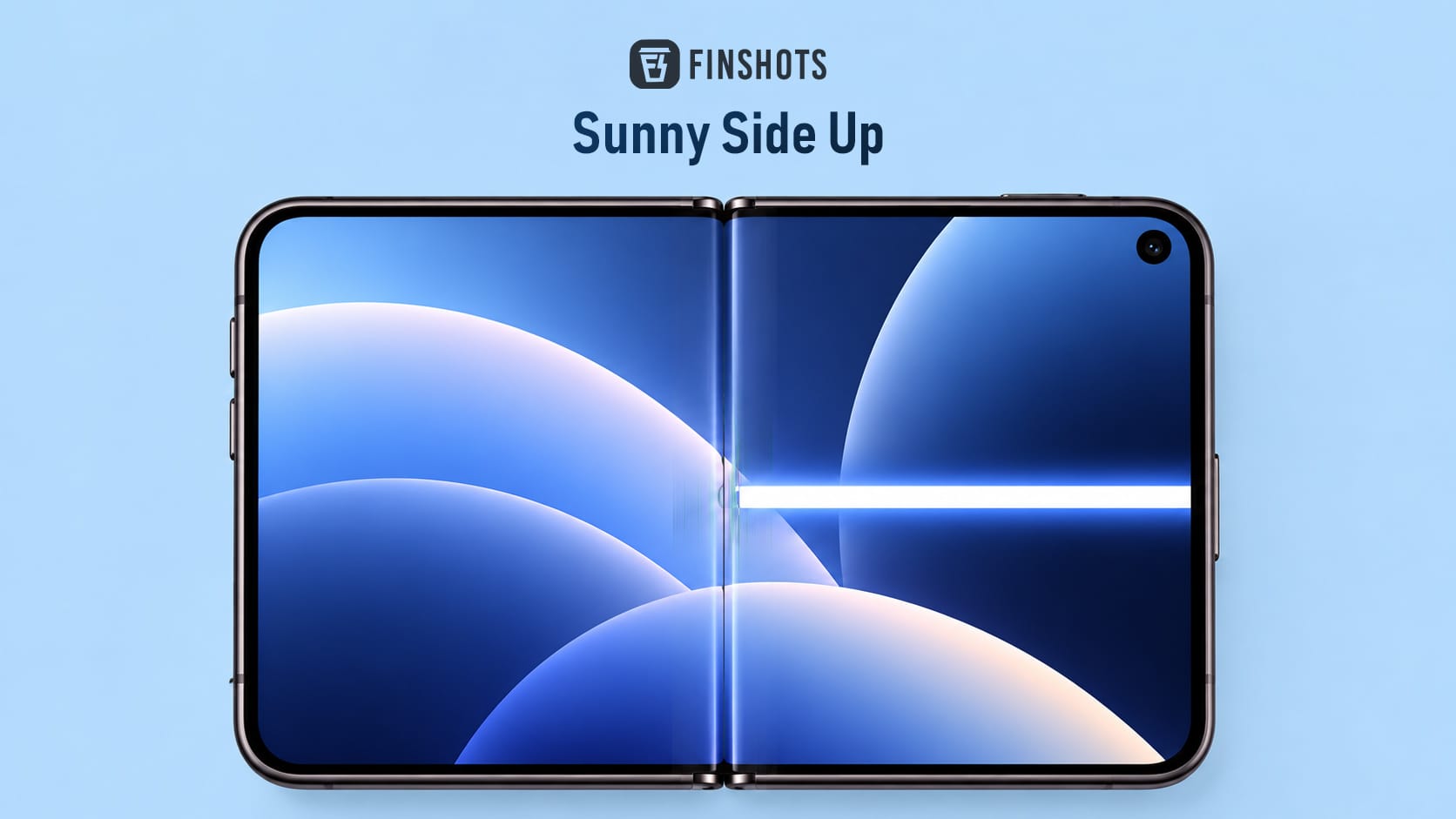
Within hours of customers buying it, some iPhone Duos developed bright lines and cracks across their inner displays. A few users even claimed that their screens began showing problems after just a handful of folds, with some hearing a crunching noise when opening the device.
So, what went wrong?
Well, Apple acknowledged this issue and offered replacements, but it hasn't explained what caused the problem. One theory is that a support bar inside the hinge isn't retracting properly when the phone folds shut, putting pressure on the flexible display.
In other words, Apple may have spent years designing and testing the Duo, but some problems only became visible once the device reached customers and was used in the real world. Because getting a design to work in a laboratory is one thing, but getting it to survive the real world is quite another.
And this isn't unusual in consumer technology. In fact, some of the most recognisable products we use today have had rather messy beginnings.
Take Google Glass, for instance. When Google first unveiled it in 2013, the idea was fascinating. It was a pair of spectacles with a tiny display that could show notifications, directions and other information right in front of your eyes. You could even take pictures and record videos without reaching for your phone.
But the product struggled to find its place in everyday life.
It was expensive, raised privacy concerns because people could record others without them noticing, and didn't offer enough practical reasons for most consumers to wear a computer on their face.
But in a way, you could say it paved the way for a whole new industry. Once companies knew it was possible in theory, they invested in R&D to make it better, and the product eventually found several use cases.
So, sometimes, the first version of a product doesn't need to be perfect to succeed. It usually serves as a starting point. Companies learn how people actually use their devices, discover problems they hadn't anticipated and make changes in subsequent generations.
And those changes turn an experiment into a flagship product, or the experiment reveals that consumers simply don't want what the company built.
And perhaps that's what makes the iPhone Duo interesting. Apple may have spent years trying to get its first foldable just right, but the real test begins only when millions of people start using it.
Infographic

Readers Recommend
This week, our reader Akshita Goyal recommends watching the movie CODA.
She writes
This drama is unique as it is centred around a family living in a small fishing town. They own a boat and make a living by selling their catch to a trader, who then sells it to the public. Their lifestyle is humble and rooted in love for each other.
What makes them particularly unique is that the parents and the elder son are deaf, and the younger daughter is the only one who can speak. She helps her father and brother fish early in the morning so that they are safe in case of any natural risk at sea. From there, she rushes to school and ends up getting alienated as the 'one with a deaf family who smell like fish'. This story traces her journey from finding her passion in music and strength from her loving family. It is ironic since music is the one treasure her family cannot experience, even if she is extraordinary at it.
P.S. I enjoyed writing this email without using any AI.
Thanks for the rec, Akshita!
That’s it from us this week. We’ll see you next Sunday.
Until then, send us your book, music (preferably from underrated Indian artists), business movies, documentaries, or podcast recommendations. We’ll feature them in this newsletter! Also, don’t forget to tell us what you thought of today's edition. Just hit reply to this email (or if you’re reading this on the web, drop us a message at morning@finshots.in).
Don’t forget to share this edition on WhatsApp, LinkedIn, and X.