
EU wants better phones. But at what cost?
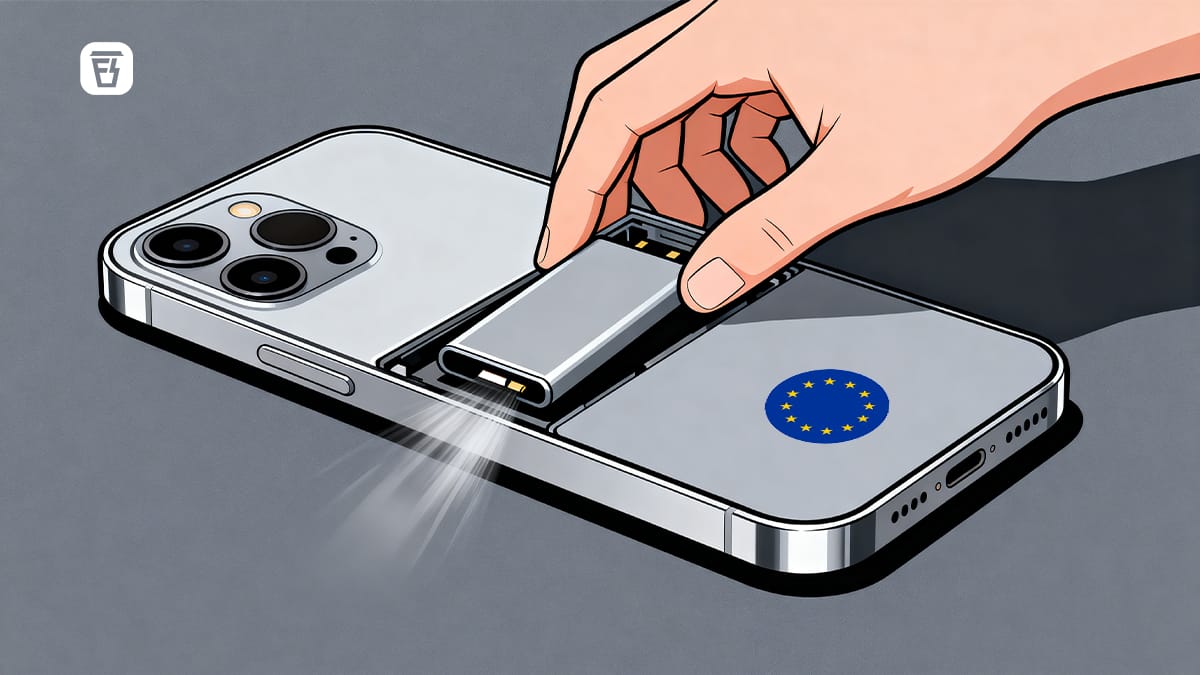
In today’s Finshots, we explore how the EU’s new phone battery rules could shape the future of technology.
But here's a quick sidenote before we begin.
We’re hosting a free 2-day Insurance Masterclass that helps you build real financial security by understanding health and life insurance the right way.
📅 Saturday, 25th April at 11:00 AM: Life Insurance
How to protect your family, choose the right cover amount, and understand what truly matters during a claim.
📅 Sunday, 26th April at 11:00 AM: Health Insurance
How hospitals process claims, common deductions, the mistakes buyers usually make, and how to choose a policy that won’t disappoint you when you need it most.
👉🏽 Click here to register while seats last.
Now on to today’s story.
The Story
Back in 2011–12, a small bootstrapped startup reached out to Google with a radical idea: what if a smartphone could be swapped like a Lego set?
Instead of replacing the entire device, what if you could upgrade just the individual parts? A better camera? Swap it. A dying battery? Replace it in seconds. The idea eventually evolved into Project Ara. It was an ambitious attempt to build a truly modular smartphone.
It sounded like the future but it never took off. In fact, the industry went in the exact opposite direction. And phones became harder to repair. Batteries were glued in, components were packed together, and replacing even a single part became difficult. And now, years later, the European Union is trying to bring back a piece of that original vision by mandating things like user-removable batteries.
From February 18 next year, the regulation says that devices like smartphones and tablets must come with removable and replaceable batteries. Not just that, they must be designed in such a way that replacing the battery doesn’t damage the device.
Now, at first glance, the rules clearly look consumer-centric. Because even the process of removal and replacement is expected to be simple and tool-free. However, this misses one simple point: good regulation solves today's problems, while great regulation is designed to withstand tomorrow’s.
Which raises a bigger question: what happens when regulation starts shaping how technology evolves?
Because by design, the regulation is built around what exists today i.e. what works, what’s widely adopted, what seems like the best standard right now.
Take the EU’s push for USB-C. Today, it makes perfect sense because that’s the latest standard. But what happens if something better comes along tomorrow? A faster, more efficient port. Or maybe no port at all. Suddenly, the same rule that once pushed the industry forward could start holding it back and force companies to stick to yesterday’s standard just to stay compliant.
And this isn’t just about ports and batteries. It’s about who gets to decide what the next version of technology looks like, whether it is a regulator writing rules for today, or companies already building for tomorrow.
And the gap between those two timelines is already visible.
The EU’s USB-C mandate kicked in on December 28, 2024, covering smartphones, tablets, cameras, and most other portable electronics. Laptops follow in 2026. The stated goal here was to reduce the roughly 11,000 tonnes of e-waste generated every year in Europe from discarded chargers, while saving consumers an estimated €250 million annually. And by those measures, it’s working.
Apple, which spent years defending its proprietary Lightning connector, redesigned the iPhone to comply, and the industry largely fell in line.
But now Apple is already exploring a portless iPhone — a device that does away with the charging port entirely in favour of wireless charging. And when asked directly, the European Commission confirmed that a fully portless phone would still be compliant, because the USB-C directive only applies to devices that support “wired” charging.
So that’s the paradox. The tighter the rule, the easier it becomes to design around it.
That’s not a loophole someone snuck in. It’s what happens when you regulate a specific technology rather than the outcome you’re trying to achieve. The moment something better comes along, the regulation becomes a map for a road that no longer exists.
And it goes beyond charging cables.
Global e-waste hit a record 62 million tonnes in 2022 (up 82% from 2010) and is on track to reach 82 million tonnes by 2030. Less than a quarter of it is properly collected and recycled, leaving an estimated $62 billion worth of recoverable materials unaccounted for.
And the forces driving this aren’t just consumer habits. Products are designed to be replaced rather than repaired. Software updates are withdrawn to make older hardware feel slower. Batteries are sealed so tightly that replacing them often isn’t worth the effort.
The EU’s removable battery mandate is a direct response to that logic. So is the growing wave of “right to repair” laws spreading beyond Europe.
In the US, too, all 50 states have now considered such legislation, and states like California, Colorado and Minnesota have already passed laws requiring manufacturers to provide the parts, tools, and documentation needed to fix devices.
India has moved in a similar direction too, mandating USB-C across electronic devices from 2025.
The direction is clear, but the question is whether the rules being written today are built to survive what comes next.
Because we’ve seen this pattern before. Spectrum rules written for analogue broadcasting slowed down digital networks. Early internet regulations designed around telephone systems nearly strangled broadband. In each case, the regulation wasn’t wrong about the problem, but it was just too tightly tied to the solution of its time.
Tech regulation has a tendency to do this. By the time a rule moves through consultation, drafting, lobbying, and enforcement, the frontier has already shifted. You end up with a law that perfectly describes 2022 but ends up being enforced in 2026.
So what’s the fix, you ask?
Well, it sure isn’t less regulation. The intent behind these rules is right. Rapid technological progress has shortened product life cycles, and falling prices have made replacing things easier than repairing them. That’s a market failure and markets don’t fix e-waste on their own.
However, there's a difference between regulating the outcome and regulating the technology used to achieve it.
When you regulate the method, you freeze a moment in time. When you regulate the outcome, you leave room for improvement.
For example, the line "Devices must support open, interoperable charging" ages better than "devices must have USB-C." One defines the goal and the other locks in a specific solution.
"Users must be able to replace a battery without professional assistance" survives whatever battery technology comes next. It doesn’t matter whether batteries are glued, slotted, or something we haven’t invented yet, as the user still retains control.
And "devices must be repairable" outlasts mandating any specific component such as USB-C, because it only sets the expectation and not the specific component.
At the end of the day, what we’re saying is, one approach tells companies how to build, and the other tells them what the end result should be. And in a fast-moving industry, that distinction decides whether regulation keeps up or gets left behind.
When written that way, regulation doesn’t become a ceiling. It becomes a floor — one that holds, no matter what the hardware looks like ten years from now.
That said, the EU did get something important right: consumers deserve products that last, that can be fixed, and that don’t generate mountains of waste simply because it’s more profitable for companies. That principle is worth protecting.
So, the real lesson of Project Ara isn’t just that modular phones were ahead of their time. It’s that the industry is always moving. And any rule designed to keep up with it has to move with it too. Otherwise, the risk isn’t just bad technology. It’s better technology that never gets built.
Until next time…
If you liked this story, feel free to share it with your friends. family or even strangers on WhatsApp, LinkedIn, or X.
Also, if you’re someone who loves keeping tabs on the world of business and finance, hit subscribe if you haven’t already. And if you’re already a subscriber, thank you! Maybe forward this to someone who’d enjoy our stories but hasn’t discovered us yet.
A leading insurer is revising its health insurance premiums!
Policies issued after April 28th, 2026 (midnight) will reflect the updated premiums.
If you've already generated a quote, the premium may change once the revision comes into effect.
So, book a free call with Ditto to understand your options.