
The Arcil IPO explained
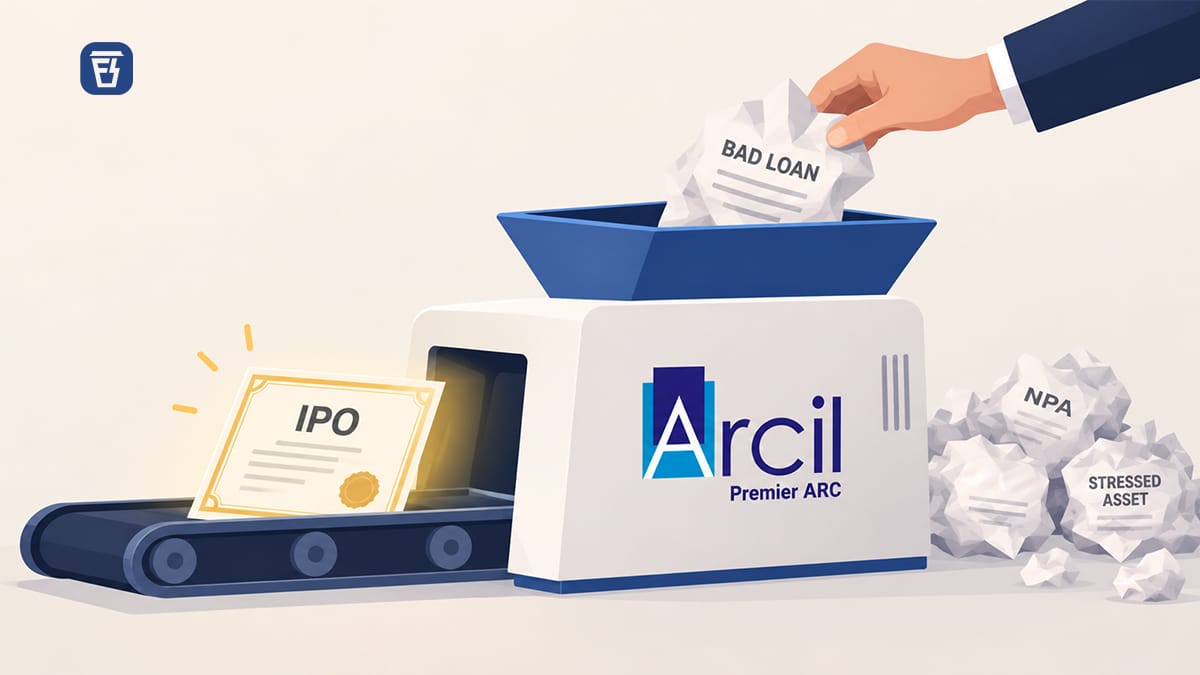
In today's Finshots, we take a look at the Arcil IPO and how an asset reconstruction company makes money from unpaid loans.
But before we begin, if you’re someone who loves to keep tabs on what’s happening in the world of business and finance, then hit subscribe if you haven’t already. We strip stories off the jargon and deliver crisp financial insights straight to your inbox. Just one mail every morning. Promise!
If you’re already a subscriber or you’re reading this on the app, you can just go ahead and read the story.
The Story
A decade ago, bad loans were one of the biggest problems in Indian banking. Banks were sitting on loans that borrowers weren't repaying, and recovering that money could take years. But things have changed dramatically since then.
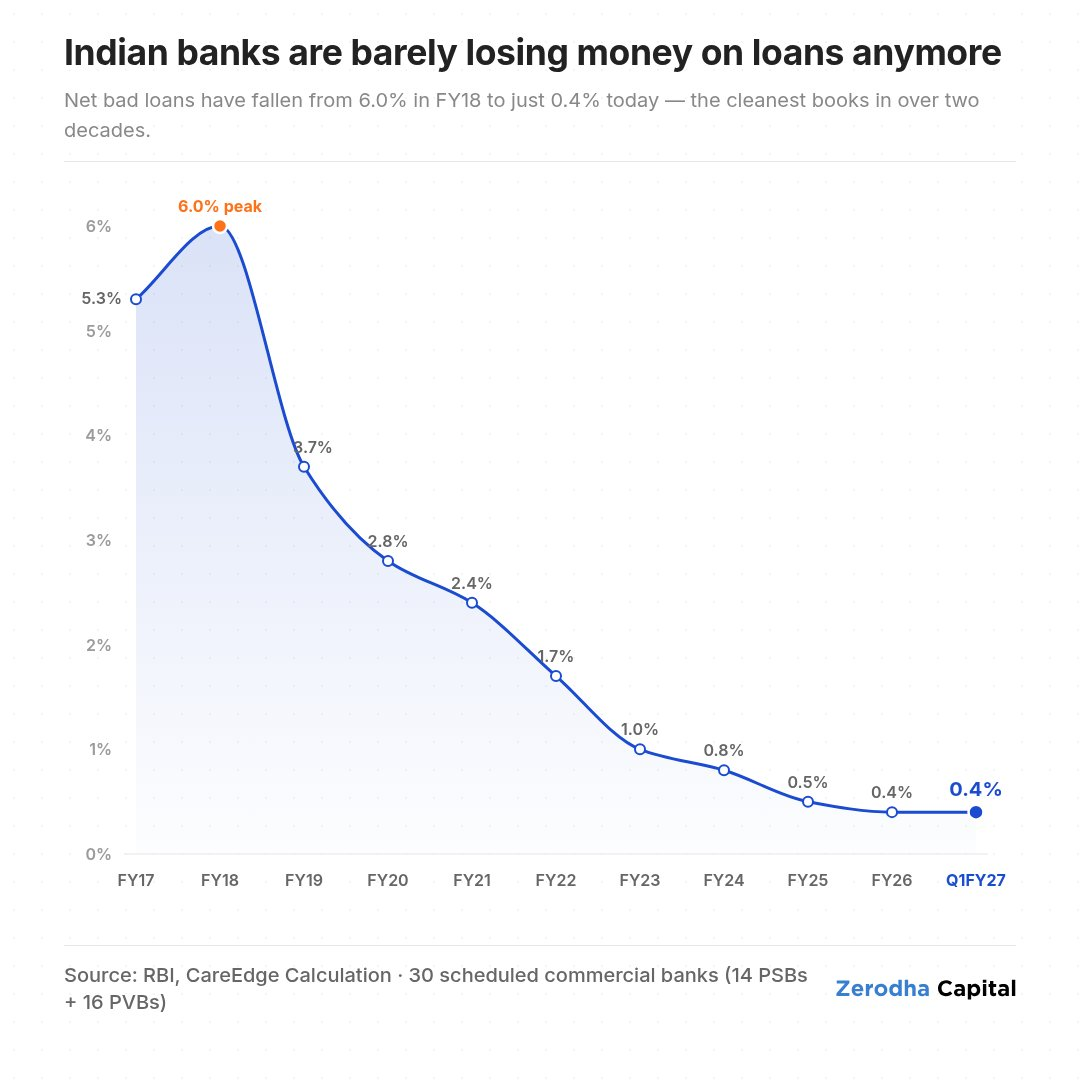
Net bad loans at scheduled commercial banks have fallen from 6% in FY18 to just 0.4% in Q1 FY27. That's a huge improvement for banks. It means their balance sheets are much healthier, and far less of the money they’ve lent is stuck in loans that aren't being repaid.
But 0.4% doesn't mean that there are no bad loans left. Even a small percentage of bad loans in a banking system as large as India still translates into thousands of crores worth of loans that need to be recovered.
And once a loan goes bad, someone still has to figure out what to do with it. Banks can try to recover the money themselves, but chasing borrowers, restructuring loans, and going through legal or insolvency proceedings can take years to settle and tie up resources the bank could have used to expand its core business.
That's where companies like Arcil come in. Arcil, short for Asset Reconstruction Company (India) Limited, is one of India's oldest and largest asset reconstruction companies. It was the first ARC incorporated in India and is now among the country’s largest ARCs, with assets under management (AUM) of ₹20,150 crore as of March 2026.
But what exactly does an asset reconstruction company do?
Arcil steps in when a bank or financial institution feels that recovering a bad loan itself may take too much time, money or effort. It buys these stressed loans, usually at a discount, and then tries to recover as much money as possible from borrowers.
Once Arcil buys the loans, it puts them into separate trusts. These trusts issue security receipts (SRs) to investors, banks and financial institutions. These SRs represent their share in the pool of stressed loans.
Arcil manages these trusts and handles the recovery, restructuring and resolution of the loans. In return, it earns management fees.
This makes Arcil fundamentally different from pretty much any other company. That’s because:
- It does not make money by earning interest on healthy loans, and
- Its revenue depends on buying distressed assets at the right price, managing the recovery process and ultimately generating more value from those assets than what it paid to acquire them.
The business has become increasingly important as India's credit market has expanded. Because while banks have significantly improved their asset quality ratios over the last decade, the pool of stressed credit has not disappeared.
Instead, the nature of stress has shifted towards newer segments. For instance, retail credit stress in banks and NBFCs increased from ₹3.47 lakh crore in FY20 to ₹6.96 lakh crore in FY25. MSME credit stress reached ₹9.2 lakh crore by FY26, while corporate stress stood at ₹5.92 lakh crore.
This is why Arcil’s stressed asset acquisitions increased from ₹2,069 crore in FY24 to ₹5,959 crore in FY26, while its total AUM increased from ₹15,230 crore to ₹20,150 crore during the same period.
But there is an important detail about the IPO itself. Unlike most companies that issue new shares to raise capital, Arcil's IPO is entirely an Offer for Sale. There is no fresh issue, which means Arcil will not receive any money from the IPO. Instead, existing shareholders such as Avenue India Resurgence, SBI, Lathe Investment and Federal Bank are selling shares to public investors.
That means the IPO is primarily a way for existing shareholders to partially monetise their investments while giving public investors access to India's stressed asset recovery market.
And the interesting bit is that if Arcil buys bad loans cheaply enough, even partial recovery can generate attractive returns.
But the problem is that recovery is rarely quick or predictable. This is why the valuation Arcil pays for a bad loan becomes important.
Apart from this, sourcing these assets is also becoming increasingly competitive. Arcil does not automatically receive distressed loans from banks. It has to compete with other ARCs and investors through processes such as auctions and Swiss challenges. A Swiss challenge is a method of selling bad loans where the bank receives an unsolicited project bid from an ARC and invites other ARCs to submit better counter-proposals. This makes accurately valuing stressed assets one of the most important parts of the business.
At the same time, the opportunity itself is changing. A decade ago, India's stressed asset problem was largely associated with large corporate borrowers, and Arcil's portfolio reflects this history. Corporate loans accounted for 79% of its AUM in FY24. By FY26, that share had reduced to 69% as Arcil increased its exposure to retail and SME loans.
This shift changes how Arcil operates. Corporate recoveries involve fewer but larger cases, often through insolvency proceedings. But retail recovery requires managing thousands of smaller accounts, better collection infrastructure and different operational capabilities. So, as Arcil diversifies its portfolio, it must build capabilities suited to a much broader set of borrowers, where the average ticket size may be lower than for corporate borrowers.
Another complication we need to understand comes from how Arcil's business is accounted for.
When Arcil creates trusts to acquire stressed assets, it has to treat them like subsidiaries in its financial statements if it holds more than 25% of their security receipts under Ind AS 110 (an accounting standard). But these trusts do not function like conventional subsidiaries. Their assets and liabilities exist primarily for the benefit of security receipt holders. Once these trusts are consolidated, fees it earns for managing them are treated as internal transactions and eliminated from its consolidated revenue.
However, the expenses and valuation changes from these receipts must be brought into Arcil’s own consolidated accounts. This can result in its consolidated profit being lower than the standalone profit.
That is exactly what has been happening for the last few years.
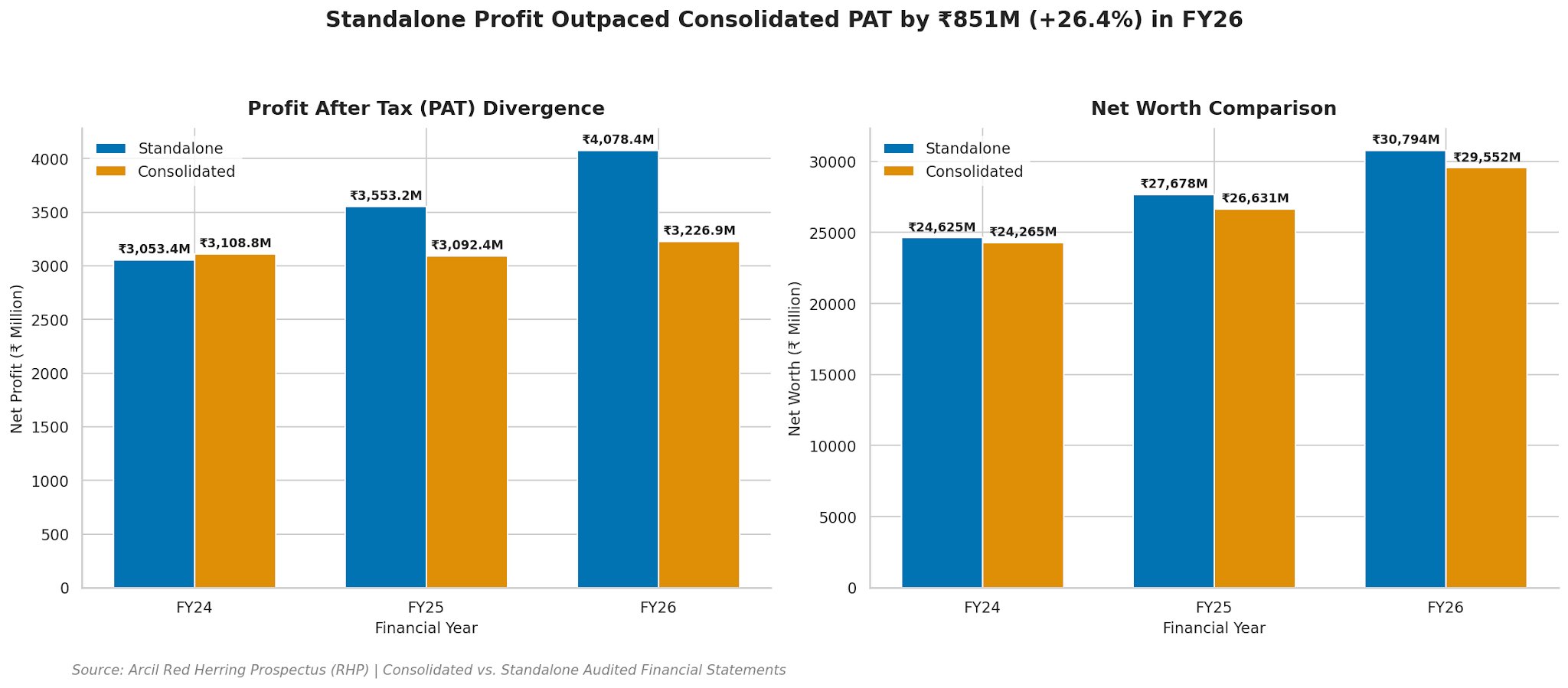
So investors evaluating Arcil need to look at both sets of financial statements and understand how the trust structure affects the company’s profits.
Apart from this, we should also look at the quality of earnings.
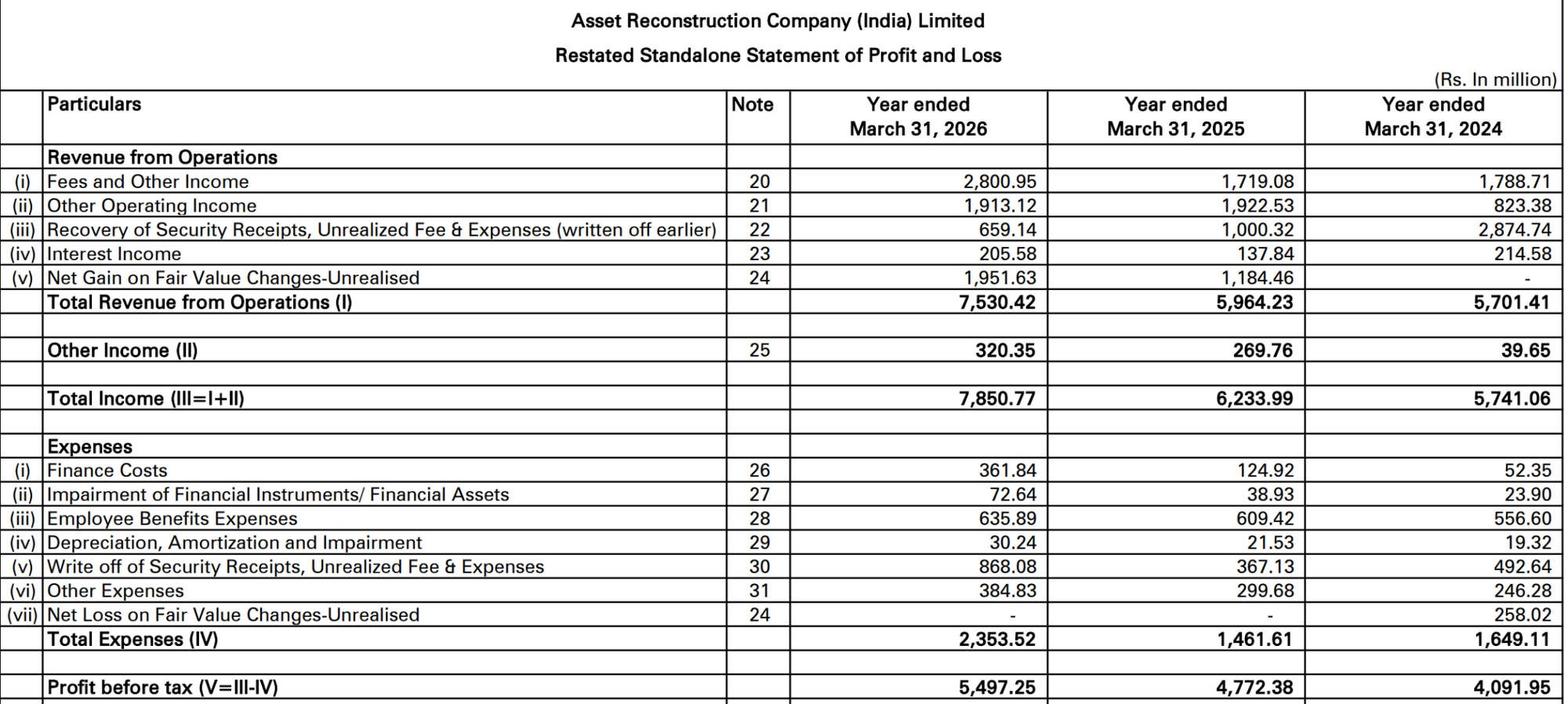
Historically, a significant portion of Arcil's income came from recovering SRs previously written off. The amount Arcil receives from these declined from ₹288 crore in FY24 to ₹66 crore in FY26. At the same time, their management and trusteeship fees increased from ₹126 crore to ₹200 crore, indicating a gradual shift towards more predictable fee-based income. This is definitely a green flag, as it has improved earnings quality compared to previous years.
And that brings us to the central question for investors. Will the assets Arcil is acquiring today generate attractive recoveries in the future?
Well, the short answer is, we don’t know.
But what we do know is that the Arcil IPO gives public investors like you and me an unusual way to participate in India's credit boom. Arcil can be a powerful business when it buys assets at the right price and recovers them efficiently.
But that outcome depends on valuations, recovery efficiency, and most importantly, a good legal team. Its future growth will also depend on whether it can successfully expand into retail and SME recoveries while continuing to convert its growing AUM into actual cash.
Ultimately, the Arcil IPO is a bet on India's distressed credit ecosystem becoming more organised and efficient, and on Arcil's ability to create value from the assets it acquires consistently.
Now, the real question is whether the company can recover more from these troubled loans than the price it pays to acquire them. If it can, a pool of stressed credit could become a meaningful opportunity. If not, the same pool of bad loans alone will not necessarily translate into better returns for shareholders.
Until then...
If you liked this story about the Arcil IPO, feel free to share this with your friends, family or even strangers on WhatsApp, LinkedIn or X.
🚨 ATTENTION: FINSHOTS FAMILY
This weekend, we’re hosting a free 2-day Insurance Masterclass that helps you build real financial security by understanding health and life insurance the right way.

📅 Saturday, 12th September at 11:00 AM: Life Insurance: How to protect your family, choose the right cover amount, and understand what truly matters during a claim.
📅 Sunday, 13th September at 11:00 AM: Health Insurance: How hospitals process claims, common deductions, the mistakes buyers usually make, and how to choose a policy that won’t disappoint you when you need it most.