
Why doesn't India have copper ETFs?
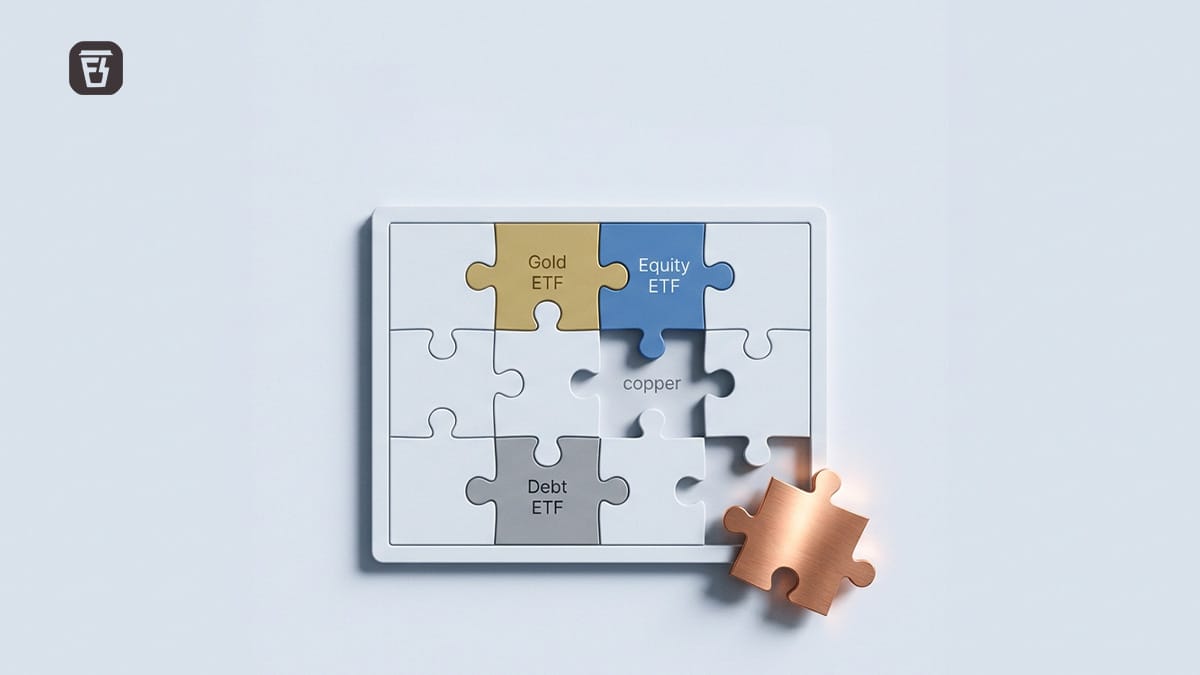
In today’s Finshots, we talk about copper ETFs and why India doesn’t have them, even though they exist globally.
But here’s a quick disclaimer before we begin. Companies, stocks or other investment products mentioned in this edition are only examples and not investment advice. Please do your own research or consult a registered financial advisor before investing.
Now onto today’s story.
The Story
Copper is nicknamed Dr. Copper for a reason. It’s known to be a very good barometer of the world’s overall economic health because it’s used across so many sectors — construction, manufacturing, automobiles, electrical equipment, and now even AI data centres.
So when copper prices go up, it usually means demand is strong, and you can tell that people are optimistic about future economic growth. But when prices fall, it can signal a slowdown in the economy. This ability to reflect economic growth or downturns is what gives copper its so-called PhD in economics. Hence, Dr. Copper.
But here’s the thing. Copper may be a good economist, but it’s also a moody one.
Because while it reflects the economy, it’s also incredibly volatile. And right now, it’s behaving exactly like that.
After reaching an all-time high of $13,000 per metric tonne on the London Metal Exchange (LME) in January this year, copper has now fallen about 10% since the US-Israel war with Iran began on February 28th.
At first, this makes sense. War pushes up energy prices. Higher energy costs slow down economies. And when economies slow, industries cut back. They use less copper. So demand falls. And prices follow.
But the confusing bit is that the same conflict is also disrupting supply.
You see, copper production depends on sulphuric acid, which in turn depends on sulphur — much of which moves through the Strait of Hormuz. With disruptions in that region, this supply chain has taken a hit, which means less copper production. And that should push prices up.
So now you have two forces — demand and supply, pulling the metal in opposite directions. And Dr. Copper, caught in the middle, is doing what it does best: swinging back and forth, trying to make sense of a world that isn’t giving it clear signals.
But that isn’t stopping investors from looking at copper. Historically, gold was the asset investors rushed to in times of uncertainty. And more recently, silver has also attracted significant interest. But now, investors are looking to diversify beyond these traditional metals and are turning to alternatives like copper.
And falling copper prices may be one reason why investors want to dip into this opportunity, especially since the metal has rallied about 30% over the past year. Sure, that’s not as much as gold’s 80% rally, silver’s 155%, platinum’s 120%, or palladium’s 75% over the same period. But it’s still sparking interest.
Because going ahead, both India and the world could demand copper in quantities that mining and recycling may not be able to supply fast enough. For context, according to a recent NITI Aayog report, India’s cumulative demand for copper could exceed 20 million tonnes (MT) by 2050, up from current domestic consumption of nearly 1 MT. That’s why policymakers are pushing for more investment in domestic mining to reduce import dependence.
Put all of this together, and you’ll see why copper starts to look attractive.
So naturally, you’d expect a simple investment option to exist like a copper ETF (a fund that trades like a stock but tracks copper prices).
But here’s the catch. India doesn’t have one.
And that might seem surprising, because in global markets like the US and Europe, copper ETFs are already a thing. Some track copper prices through futures contracts, like the United States Copper Index Fund. They don’t hold physical copper. Instead, they simply mirror the price of copper traded on major global exchanges. Essentially betting on where prices will go. Others invest in copper mining companies, giving indirect exposure to the metal. For example, the Global X Copper Miners ETF.
These products work because global exchanges like the LME and the Chicago Mercantile Exchange (CME) are highly liquid, with large institutions such as banks, hedge funds, and pension funds constantly buying and selling. This makes trading smooth and prices more stable. They also benefit from strong infrastructure such as well-developed warehouses and standardised contracts with clear rules for how futures are settled. And all of this makes it easier and cheaper to design and run an ETF that tracks copper.
In India, however, it’s a very different story. Indian commodity ETFs, such as gold and silver, are largely physically backed, meaning the fund holds actual metal in regulated vaults. And since gold and silver ETFs dominate the commodity ETF space in India, a large share of assets sits in physically backed products. Such ETFs work beautifully because metals like gold are compact and valuable. A small vault can hold a massive amount of wealth.
But copper? Not so much.
It is bulky and relatively low in value per kg. This means that to create a physically backed copper ETF worth, say, ₹100 crore, you’d need hundreds of metric tonnes of metal. That translates into massive warehouses, constant quality checks, insurance, and logistics costs. Also, copper isn’t as stable as gold. It can oxidise, degrade, and needs careful handling. All of this adds to the cost. And these costs can eat into investor returns, making copper ETFs less attractive.
Not just that. Taxes also make things harder. Gold and silver attract a GST of around 3%. But for copper, it’s closer to 18%. Now, you don’t pay GST when buying an ETF. But if a copper ETF were physically backed, every purchase and movement of the metal would come with a much higher embedded cost. Over time, that can drag returns or make the ETF less efficient.
Which explains why, unlike gold, a physical copper ETF in India becomes economically unviable.
But you could argue that if physical storage is difficult, the obvious alternative is a futures-based ETF — like the ones that exist globally.
But here’s the issue.
India’s commodity futures market, especially for copper, is still dominated by short-term traders rather than long-term hedgers or large institutions. This can lead to patchy liquidity and sharper price swings driven by speculation.
And regulators don’t love that. For an ETF to work well, you need stable, reliable price discovery. Otherwise, investors could end up tracking something that doesn’t behave like the “real” copper market.
There’s also another problem. Most global copper pricing is tied to international benchmarks like the LME. But Indian regulators have traditionally been cautious about local products relying too heavily on foreign benchmarks. Their concern is that if an ETF in India depends entirely on an overseas benchmark, it could import volatility from abroad. There are also questions around control, like what happens if there’s a disruption or manipulation in that foreign market?
That’s why gold and silver ETFs in India rely on domestic benchmarks like MCX-based indices (Multi Commodity Exchange), which are clearly defined and closely monitored.
Copper, in contrast, lacks a transparent, SEBI-recognised domestic spot price that can serve as a reliable benchmark for an ETF.
So you can see why even the futures route isn’t straightforward.
This is precisely why Indian investors are trying to get exposure to copper through various workarounds.
To begin with, there are copper-mining and metal-sector stocks, whose fortunes are tied to copper prices. This gives investors equity exposure to the metal. But the drawback is that these stocks can underperform copper prices due to cost overruns, mismanagement, or other company-specific issues. Many mining companies, such as Vedanta, also produce other metals, which can dilute the impact of rising copper prices. On the flip side, they can also outperform copper if they manage to expand production during a price rally and may also offer dividend income.
Another option is trading copper futures on MCX, where investors can take direct exposure to copper prices. But this comes with significant risks. Futures involve large gains and losses, along with daily mark-to-market adjustments. This means that if copper prices fall sharply, losses are reflected in your account immediately, sometimes within a single day. You may also be required to add more margin quickly, or your broker could square off your position. Combined with copper’s high volatility, this makes futures more suitable for active traders than for casual or long-term investors.
And finally, there are global copper ETFs. Some overseas investing platforms allow Indian investors to buy global commodity ETFs, including copper, either through international brokers or via the Liberalised Remittance Scheme (LRS), which permits individuals to remit up to $250,000 per financial year including for investments abroad. But this route comes with its own challenges — exchange rate risk, additional compliance, and higher transaction costs.
But none of these are as simple as buying a domestic copper ETF. Which makes you ask, “Is India ready for one?”
Well, maybe not quite.
For a copper ETF to work in India, a few things need to fall into place.
First, the futures market needs to deepen, with more institutional participation and stable pricing. Second, regulators may need to allow smarter structures, such as building a strong domestic copper spot benchmark they trust, or formally permitting ETFs to use an international copper index as their base. Third, taxes and logistics need to become more favourable. And finally, there needs to be consistent investor demand. Because at the end of the day, no fund house will launch a product unless it believes there is enough scale.
But until that happens, copper ETFs will remain one of those things that feels like it should exist in India, but doesn’t, despite having all the makings of a compelling investment story.
If this story helped you understand copper ETFs in depth, consider sharing it with your friends, family, or even strangers on WhatsApp, LinkedIn, or X.
Message to All the Breadwinners
You work hard, you provide, and make sacrifices so your family can live comfortably. But imagine when you're not around. Would your family be okay financially? That’s the peace of mind term insurance brings. If you want to learn more, book a FREE consultation with a Ditto advisor today.