
Titan’s U-turn on lab-grown diamonds
Hey folks! As you probably know, we took a year-end break from our regular publishing routine this week. So there’s no weekly recap or the Finshots Weekly Quiz today (we’ll announce December’s winners on January 10th, 2025).
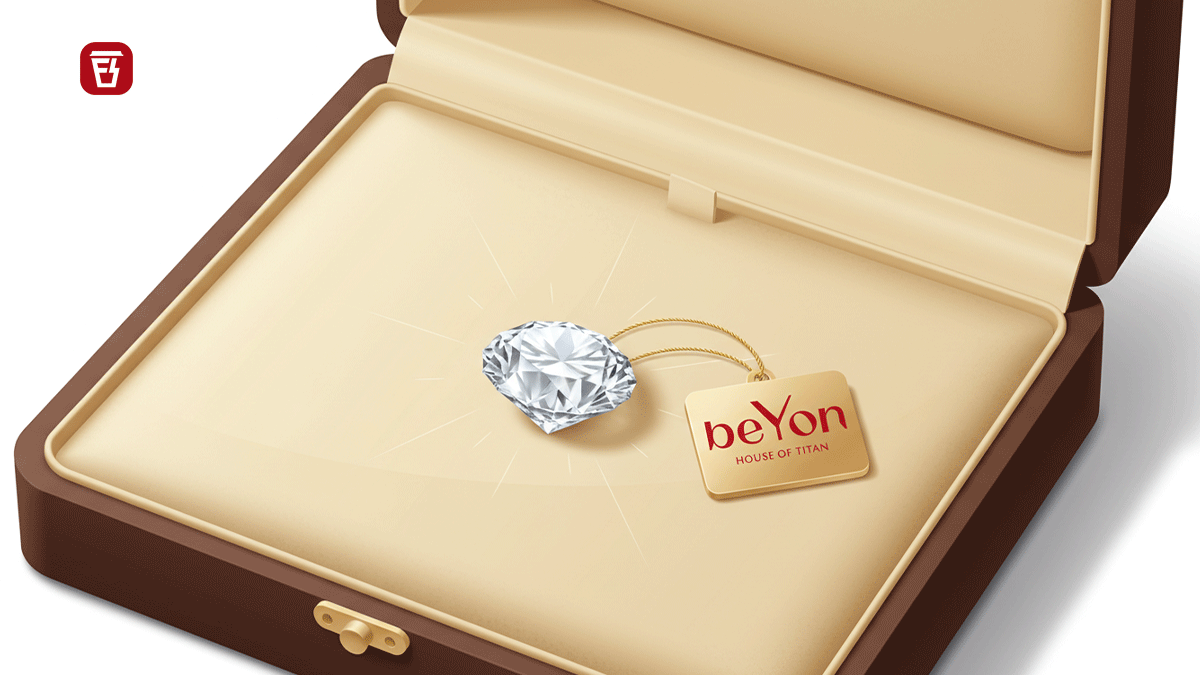
Instead, in today’s Finshots, we break down what made Titan change its mind on lab-grown diamonds (LGDs) and launch beYon.
But before we begin, here’s an interesting, quick note:
At Finshots, we’ve strived to simplify financial news for Indians. And now, the folks at Rainmatter by Zerodha (also our investors) are trying to do something similar, but with fitness.
They’ve launched Peakst8 Festival, a one-day fitness festival meant to make fitness feel less intimidating, and more approachable.
Think: HYROX mini challenges, easy runs, Yoga, Spin Sessions, Tai Chi, Aqua Pilates, and a lot more! A space to explore what works for your body and mind.
If that sounds like your vibe, do check it out by 👉🏽clicking here.
Now on to today’s story.
The Story
Titan’s stock ended the week by climbing up. And while Titan is a company of many things — watches, jewellery, eyewear, fragrances and accessories, this time, the market seemed to latch on to one unusual move.
A brand-new store called beYon, which opened in Mumbai just a few days ago.
Now, if New Year celebrations kept you distracted, here’s a quick brief. beYon is Titan’s foray into the world of lab-grown diamonds (LGDs). And this isn’t just a one-off experiment. The company plans to open more beYon stores across Mumbai, take the concept to Delhi, and eventually branch out beyond jewellery into watches, perfumes, sarees, and handbags.
In fact, it seems like a good reason why Titan’s stock popped, even hitting its 52-week high. Because for the longest time, Titan was fairly unsure about placing its bets on LGDs.
If you’ve been reading us for a while, you might remember our story on Titan’s American dream. Back then, we mentioned how, despite LGDs making up more than 20% of global diamond jewellery sales and being a popular choice for engagement rings in the US, Titan wasn’t keen on including them in its North America expansion plans. The same caution showed up in India too. None of its jewellery brands — Tanishq, Mia, Zoya, or CaratLane, offered an LGD range.
And that was likely because Titan wanted to protect its image as a premium lifestyle brand. LGDs, after all, are cheaper alternatives. And Titan didn’t want to dilute its positioning by jumping in too early.
So even as Trent or competitors like Senco and Malabar Gold & Diamonds moved in, Titan stayed calm and “not worried” about missing the bus.
But something has clearly shifted and Titan has finally said yes to lab-grown diamonds.
Which makes you wonder, “What changed its mind?”
To begin with, think about what’s happened to gold prices in 2025. They’ve gone through the roof — up nearly 77% domestically. And when gold gets that expensive, people stop seeing it purely as something to wear and start treating it more like an investment.
That shift showed up clearly in Titan’s jewellery business too. In its latest quarterly results, revenue grew 20% in Q2FY26, and EBIT (earnings before interest and tax) jumped 55% YoY. But despite that, buyer growth in the plain gold jewellery segment actually fell 11% YoY.
What changed was how people were buying. Customers leaned more towards coins, bullion, or studded jewellery. Coins and bullion make more sense if you’re buying gold as an investment. And studded jewellery works better for weddings and festivals because it helps keep the ticket size manageable.
But here’s the catch. Margins are much better on jewellery than on coins. Jewellery allows Titan to charge for design and craftsmanship, which means higher pricing power and better profits. Coins, on the other hand, are mostly about gold weight and leave little room for margins.
Now, when gold prices stay this high and you don’t offer a cheaper alternative like LGDs, overall jewellery demand starts to feel the pressure. That’s a real problem for Titan because the sub-₹50,000 price band has traditionally been its mass-market sweet spot.
So at around ₹1.3 lakh per 10 grams, a customer who once bought 10 grams of gold now ends up buying 5 grams, or maybe even less. Scale that behaviour across millions of customers, and you suddenly have a structural buyer acquisition issue.
This is exactly where LGDs come in. Because they’re at least 40% cheaper than natural diamonds, they can comfortably sit in the sub-₹1 lakh segment. That helps Titan plug the pricing gap and pull back price-sensitive buyers who’ve effectively been priced out of gold.
The other issue sits at the very top end of the market. Customers who buy large natural diamond solitaires (₹2 lakh and above) usually see them as both jewellery and an investment. But lately, natural diamond prices have been volatile, and that’s made many of these buyers uneasy. As a result, some are postponing solitaire purchases, while others are even shifting that money into gold, which feels safer and more predictable.
Now, this matters because solitaires carry very high margins. And the people who buy them are Titan’s highest lifetime-value customers. That’s one big reason why Titan stayed away from LGDs for so long. It didn’t want to risk alienating this premium, high-margin customer base.
But if demand starts weakening here, Titan doesn’t just lose sales. It risks losing its most profitable slice of business or the premium margin pool that does a lot of the heavy lifting.
So at this point, Titan can’t simply say, “We want to stay premium”, and leave it at that. Because sticking rigidly to that stance can actually become risky.
This is where LGDs are different. These aren’t sold as investments at all. They’re clearly positioned as consumption-led purchases. So when Titan diversifies into LGDs, it doesn’t carry the same risk as these buyers aren’t worried about future price swings.
In fact, this segment can help offset the slowdown among premium solitaire buyers who are currently holding back. And over time, some LGD buyers could even become occasional natural diamond buyers whenever prices cool off.
And finally, LGDs are a growing market not just because they’re cheaper, but because they’re also more sustainable. They don’t involve digging deep into the earth or causing the kind of environmental damage that comes with traditional diamond mining. And that story matters, especially to younger buyers.
Now, this is where Titan’s younger-facing jewellery brands like Mia and Zoya run into a problem. As gold prices keep climbing, it becomes harder for these brands to keep offering jewellery that feels affordable for everyday wear. Sure, Titan has started experimenting with 9-carat gold jewellery, which is just 37% gold, mixed with other metals like copper. But you can only take that route so far. You can’t keep cutting gold content endlessly, because at some point, gold jewellery stops feeling like… gold jewellery.
This is where LGDs become the escape hatch. They give Titan a completely different differentiation angle — sustainability, transparency, ethical sourcing, all of which resonate strongly with Gen Z and millennials. And they do this without forcing Titan to overhaul its brand identity or wait for gold prices to cool off just to stay relevant in daily-wear jewellery.
But you might still have one last question. Won’t this cannibalise Titan’s natural diamond sales?
Probably not.
People who buy natural diamonds do so for a very specific reason — exclusivity. That’s the whole point. And that mindset doesn’t change just because a cheaper alternative exists. So a natural diamond buyer isn’t suddenly going to switch to an LGD simply to save some money.
What LGDs really do is open up a brand-new slice of the consumer pie. A different segment, with different motivations, sitting alongside Titan’s existing customers. That helps keep sales growing and profits balanced, especially at a time when both gold and natural diamond demand are under pressure.
And that, more than anything else, explains what may have finally changed Titan’s mind about LGDs.
Until next time…
If you found this Markets edition interesting, why not share it with friends, family, or even strangers on WhatsApp, LinkedIn and X?
For the third year in a row, we present Finshots’ Current Affairs Round up 2025!
A FREE and comprehensive compilation of our most impactful financial, economic, tech and business highlights of the year is here. Get our classic 3-min reads in an easy to access PDF eBook.
Plus, we made sure to add our signature infographics too! Click here to access the PDF resource now.
And don’t forget to share this with your peers, friends, and anyone in your network who might benefit from it.
Happy Reading :)