
Has the plastic industry reached its breaking point?
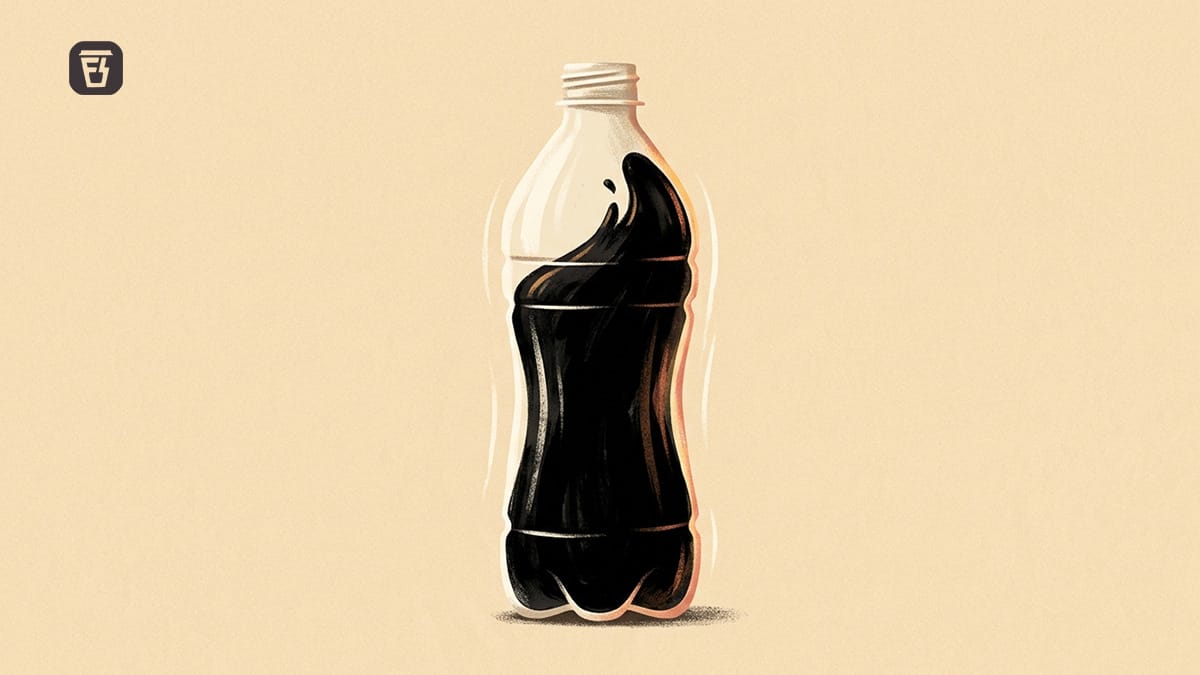
In today’s Finshots, we tell you whether the current price shocks in polymers could be a turning point for the plastic industry.
But before we begin, if you’re someone who loves keeping tabs on the world of business and finance, hit subscribe if you haven’t already. And if you’re already a subscriber, thank you! Maybe forward this to someone who’d enjoy our stories but hasn’t discovered us yet.
Now, on to today’s story.
The Story
There’s a small polybag factory in Odisha, who for years bought polymer resin, the raw material used to make plastic products, ran its machines, and shipped plastic to traders, grocery stores, and FMCG companies. The margins were thin, but steady because the business relied on volume.
Then, in just a few weeks, everything changed.
The price of that same resin jumped by around 70–80%. Orders slowed down, and suddenly the factory was staring at the risk of shutting down. So while earlier, the owner was only dealing with competition, he’s now caught in a larger storm — one driven by wars in the Middle East, rising oil prices, and global shipping routes he’s never even seen.
Now, this polybag factory may be hypothetical. But this is the new reality for India’s plastic industry.
India’s relationship with plastic has always been about convenience and cost. When the world discovered that plastics could be made from oil, and petrochemical plants began producing cheap materials like polyethylene, polypropylene, PVC (Polyvinyl Chloride), and PET (Polyethylene Terephthalate), everyone embraced them. They made bags, packaging, pipes, furniture, bottles, and FMCG wrappers lightweight, durable, and affordable.
Sidebar: We’ve also done a story on the origin of plastic here, if that’s something that interests you.
So the fact that plastic doesn’t break down easily in the environment felt like a distant problem. The immediate benefit of it being cheap, and an abundant material, was just too hard to ignore. And over time, India’s MSME-driven plastic industry, where nearly 80–90% of players are micro, small, and medium enterprises, grew quietly, meeting the rising demand for low-cost packaging and everyday goods, both in India and abroad.
Fast-forward to 2026, and the story takes an even scarier turn. The Middle East crisis has pushed crude oil and naphtha (the liquid that comes from refining crude) prices sharply higher. As you already know, the Strait of Hormuz, the narrow route through which most Gulf oil and a large share of polyethylene exports pass, has become risky for ships. Naturally, as shipping lines pull back, supplies tighten, and the cost of turning crude into polymer rises.
In India, these cost spikes flow all the way down to small plastic units in Odisha, Punjab, and Gujarat. For context, polymer prices have jumped by roughly 50–60% in just the last ten days, and in some cases by as much as ₹25,000–₹35,000 per metric tonne. Just to give you a sense of scale, if a small water bottle costs about ₹2, a price increase could push it to over ₹3. For MSMEs already running on razor-thin margins, this is like having your rent suddenly increase without any increase in income. Which means that many are cutting production, delaying orders, or even stopping operations altogether.
Listed companies in the polymer and plastics space have also become casualties in the process, though they feel the crisis in different ways. For instance, polymer-intensive firms, especially those making packaging films and other low-margin plastic products, cannot immediately raise their selling price by the same amount because customers like FMCG brands and retailers resist sudden increases. So the manufacturer earns less on each unit sold. And that eats into quarterly profits. On the flip side, some integrated major companies like Reliance Industries and other refiner‑cum‑polymer, which refine crude oil and also make petrochemicals and plastics, can sometimes benefit when prices rise. Because if crude oil prices go up, the price of products made from it like naphtha and polymers, also goes up. And as the gap between these prices, called the “spread”, becomes wider, these companies can earn more at different stages of the process.
But that said, even they cannot escape the bigger question: how long will the world keep demanding more and more plastic when the underlying raw material becomes so volatile and politically sensitive? And could this push companies to switch materials and use less plastic faster than years of empty talk about pollution and microplastics?
Because you see, for decades, environmental activists and scientists have warned that plastic does not biodegrade easily, that it chokes marine life, and that microplastics are entering our food chains. But the message, however strong, did not fundamentally change the economics. Plastic stayed cheap, convenient, and embedded in the way products are designed, shipped, and sold. The world knew that the material was a problem, but it accepted the trade‑off because the cost of ignoring the problem seemed smaller than the cost of solving it.
Only now, with repeated oil-linked price shocks, is plastic starting to look like a financial risk, apart from just an environmental one. For FMCG and retail brands, cheap plastic packaging is no longer a given. It’s a volatile input, with prices that can swing widely depending on what’s happening in the Middle East.
And for investors, plastic-intensive businesses are no longer just “ESG-risky” (basically, negative impact on a company’s financial performance owing to environmental, social, or governance factors). They’re also exposed to energy price swings tied to crude cycles, and shipping bottlenecks.
So yeah, as the pressure builds, the search for alternatives becomes more urgent.
One of the most promising developments comes from Japan, where scientists at RIKEN and the University of Tokyo have created a new kind of plastic that dissolves in seawater within 2–3 hours.
This material behaves like normal plastic during use but breaks down when saltwater enters its structure, leaving no microplastics behind. It can be coated and used in packaging, single-use items, and even medical applications.
And for India’s coastal-heavy packaging sectors such as beverages, takeaway boxes, tourist areas, and fishing products, this could be a game-changer.
The only problem is that this technology isn’t cheap yet, isn’t mass-produced, and isn’t fully supported by Indian policy. But it makes it clear that the world is slowly moving from “plastic as a problem” to “plastic as a design challenge” that can be solved with smarter materials.
For MSMEs, this opens up a tough but necessary conversation. Higher polymer prices may push them to use more recycled material, even if it costs a bit more, because it offers some protection against the volatility of virgin resin. They may also rethink the thickness and design of their products, trying to use fewer grams of plastic per unit, which is, in effect, a bottom-up demand reduction.
And for bigger companies, especially listed ones, the market is now asking sharper questions. How much of their growth depends on ever-rising volumes of cheap plastic, versus higher-quality, differentiated, or “plastic-light” products? If repeated crises keep pushing polymer prices up, will FMCG companies and retailers start building plastic reduction into long-term contracts, effectively capping how much plastic firms can sell?
That said, price shocks like this aren’t new for the polymer industry. Prices have risen before during Middle East crises, and each time the pattern was similar. Crude oil and naphtha prices went up, polymer exports from the Gulf were squeezed, and the impact flowed through to global and Indian production costs.
But this time feels different because the Strait of Hormuz has never been fully shut for months through a formal blockade, though it has often been tense, risky, and partly avoided by shipping companies. Sure, Iran has, at times, threatened to close the strait, especially around 2011–2012 and again after US strikes on its nuclear facilities in 2025. Each time, even the threat pushed up oil prices, forced some ships to reroute, and increased global uncertainty.
But a complete and lasting shutdown has never really happened.
Seen this way, the current price shock may be different from earlier ones. And India and the world may finally start treating plastic reduction and material substitution as a core strategy to manage risk and control costs, instead of just mentioning it in sustainability reports. In other words, the shift away from plastic may not be driven by awareness alone, but by necessity.
Which brings us back to that small imaginary factory in Odisha.
It can’t control oil prices or global conflicts. But its survival now depends on how well it can adapt to this new reality.
Now that we know that this may not be a one-off disruption, it could signal that the old model of cheap, oil-linked, and volume-driven plastic, isn’t as stable as it once seemed.
And if that’s true, then the entire industry, from small factories to large corporations, will have to rethink how it works with plastic in the years ahead.
Until then…
Liked this story? Share it with a friend, family member or even strangers on WhatsApp, LinkedIn, or X.
Did you know? Nearly half of Indians are unaware of term insurance and its benefits. Are you among them?
If yes, don't wait until it's too late.
Term insurance is one of the most affordable and smartest steps you can take for your family’s financial health. It ensures they do not face a financial burden if something happens to you.
Ditto's IRDAI-Certified advisors can guide you to the right plan. Book a FREE consultation and find what coverage suits your needs.
We promise: No spam, only honest advice!