
Why the world is turning back to Indian cardamom
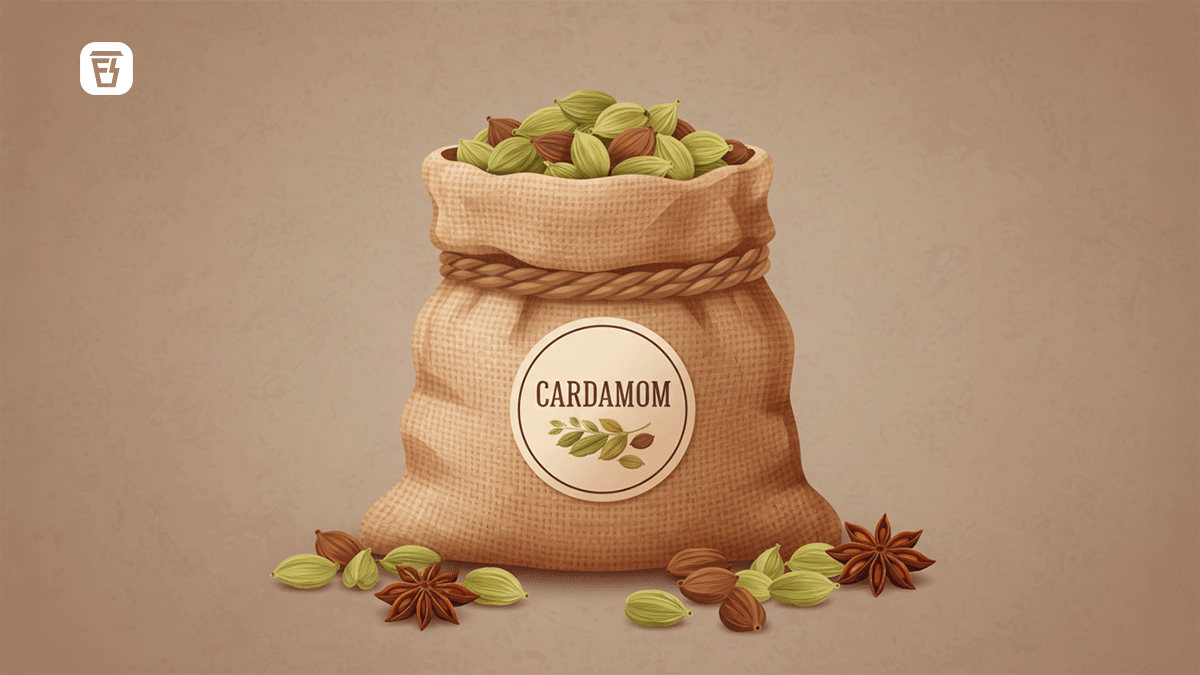
In today’s Finshots, we tell you why cardamom prices have been rising and why Indian farmers are filling the gap to meet demand.
But here’s a quick side note before we begin. Trust Finshots for Finance? You’ll love Ditto for insurance.
Built by the same four friends behind Finshots, Ditto is here to make insurance simple. No spam, only honest advice to help people make smart insurance decisions.
✅Backed by Zerodha
✅Rated 4.9 on Google (13,000+ reviews)
✅7 lakh+ customers advised
Click here to talk to an IRDAI-Certified advisor for FREE.
Now on to today’s story.
The Story
Every evening, after a long day at work, some of us like to head out for a nice hot cup of tea (sorry, coffee lovers). The routine is almost automatic. We add elaichi without a second thought. It’s just there, floating between ginger and milk, doing its job quietly, packing a punch in that small cup of tea.
But that tiny pod sits at the centre of one of the world’s most fragile spice markets. And its story stretches back thousands of years.
For much of history, many spices were indigenous and exclusive to India. Turmeric, pepper, and chilies were among them. Cardamom belonged to that list too. Long before it became a globally traded commodity, choti elaichi (literally translated as “small cardamom”) grew wild in the dense rainforests of the Western Ghats, across present-day Kerala, Karnataka, and Tamil Nadu.
This spice was so valuable that the region where it thrived came to be known as the Cardamom Hills. Dating back nearly 4,000 years, cardamom travelled from these forests through Indian ports to the Middle East and Europe, prized for its aroma, medicinal use, and rarity.
That history still shows up in its price today. Even now, cardamom remains the third most expensive spice in the world, after saffron and vanilla. India never stopped growing it. But over time, the global cardamom market shifted away from its place of origin and into the hands of another country.
And that shift set the stage for the fragile market we see today. Despite being native to India, Guatemala is now the world’s largest producer of cardamom. To understand how that happened, let’s tell you a story.
In 1914, a German coffee planter named Oscar Majus Kloffer took cardamom pods from Kerala to his coffee estate in Cobán, Guatemala. And the spice thrived because it grows best in cool, humid conditions — temperatures between 15°C and 35°C, steady rainfall, and forest cover. The Western Ghats offer this naturally. But so does Guatemala’s highland region.
Yet climate alone didn’t reshape the trade.
Cardamom isn’t the third most expensive spice in the world by accident. It retails between ₹2,400 and ₹3,150 per kilo because it demands constant care. The crop needs regular weeding, steady water supply during dry months, adequate sunlight during monsoons, and years of patience. Farmers wait two to three years before seeing a harvest. Even then, the pods are hand-picked.
That makes cardamom highly sensitive. Fungal infections and pest attacks can wipe out entire harvests.
This made large-scale expansion risky for Indian farmers. As a result, cardamom cultivation remained fragmented and largely smallholder-driven rather than plantation-led.
So where India stepped back, Guatemala stepped in largely because of one key difference.
In India, cardamom harvesting is squeezed into a short peak window between September and November. That makes the crop incredibly vulnerable. A fungal outbreak during the monsoon months can wipe out an entire year’s income in one go.
Guatemala works very differently. Harvesting happens almost all year round. So even if pests or diseases hit one cycle, farmers still have other harvests to fall back on. The risk is spread out and incomes are far more stable.
Which is how over the past century, Guatemala scaled production aggressively, emerging as the world’s largest producer of cardamom. It would produce roughly 35,000 tonnes annually — about 60% of global supply. Large plantations focused solely on cardamom, especially in regions like Alta Verapaz where around 3 lakh farmers produce nearly 70% of the country’s output. This kept costs low and made Guatemala the go-to source for price-sensitive markets.
But concentration has a cost. Because scaling a fragile crop works until conditions change.
That moment arrived with El Niño, a climate phase that warms Pacific Ocean surface temperatures and disrupts weather patterns globally. Between 2023 and 2024, El Niño altered rainfall cycles, raised heat stress, and increased disease pressure across major cardamom-growing regions.
For decades, Guatemala’s dominance looked unshakable. But cardamom doesn’t care who dominates the market. When weather patterns turned erratic, losses spread quickly across tightly packed plantations. A system built for efficiency struggled with volatility.
And that’s when the market felt it.
As supply tightened, prices rose. Buyers who had long relied on a single source were forced to reassess their dependence, especially importers in the Middle East, one of the world’s largest cardamom markets. Here, cardamom is a staple in traditional coffee, desserts, and everyday cooking. Crucially, these buyers are not particularly price-sensitive. Aroma and quality matter more than cost.
That shift played directly to India’s strengths.
Indian cardamom, known for its higher oil content and stronger aroma, began drawing renewed interest. And it wasn’t just because India is the second-largest producer. Its fragmented, shade-grown cultivation model meant lower concentration risk. When some regions were affected, others held up. Even after drought stress, India is still expected to produce around 22,000 tonnes this year.
As buyers searched for reliability, Indian farmers found themselves in an unexpected position of strength. Auction prices firmed up, with Indian cardamom now trading near ₹3,150 per kilo (around $35/kg).
That said, rising prices don’t always translate cleanly into gains for farmers, especially smaller, lesser-known growers.
One reason lies in cardamom registration, or CR. In India, cardamom must be sold through registered auctions, and growers need a CR number issued by the Spices Board of India. While the system ensures traceability and quality, it also means farmers without registration, or those producing small quantities, often have limited bargaining power and realise lower prices.
Still, the larger shift is hard to ignore.
In hindsight, what once looked like hesitation now looks like restraint. And in a world where climate shocks are becoming more frequent, restraint may turn out to be the most valuable strategy. After all, cardamom did originate from here.
So the next time you stir elaichi into your evening tea, remember that small green pod has travelled continents, reshaped markets, and survived a climate shock that rewrote the global spice trade. For the time being, India does not need to match Guatemala’s volumes to benefit. It only needs to supply the part of the market that is missing Guatemalan supply.
Until then…
If this story helped you understand why the “Queen of spices’’ is suddenly expensive, share it with a friend, family member or even strangers on WhatsApp, LinkedIn and X.
For the third year in a row, we present Finshots’ Current Affairs Round up 2025!

A FREE and comprehensive compilation of our most impactful financial, economic, tech and business highlights of the year is here. Get our classic 3-min reads in an easy to access PDF eBook.
Plus, we made sure to add our signature infographics too! Click here to access the PDF resource now.
And don’t forget to share this with your peers, friends, and anyone in your network who might benefit from it.
Happy Reading :)