
Why SEBI wants trading academies to step back from live data
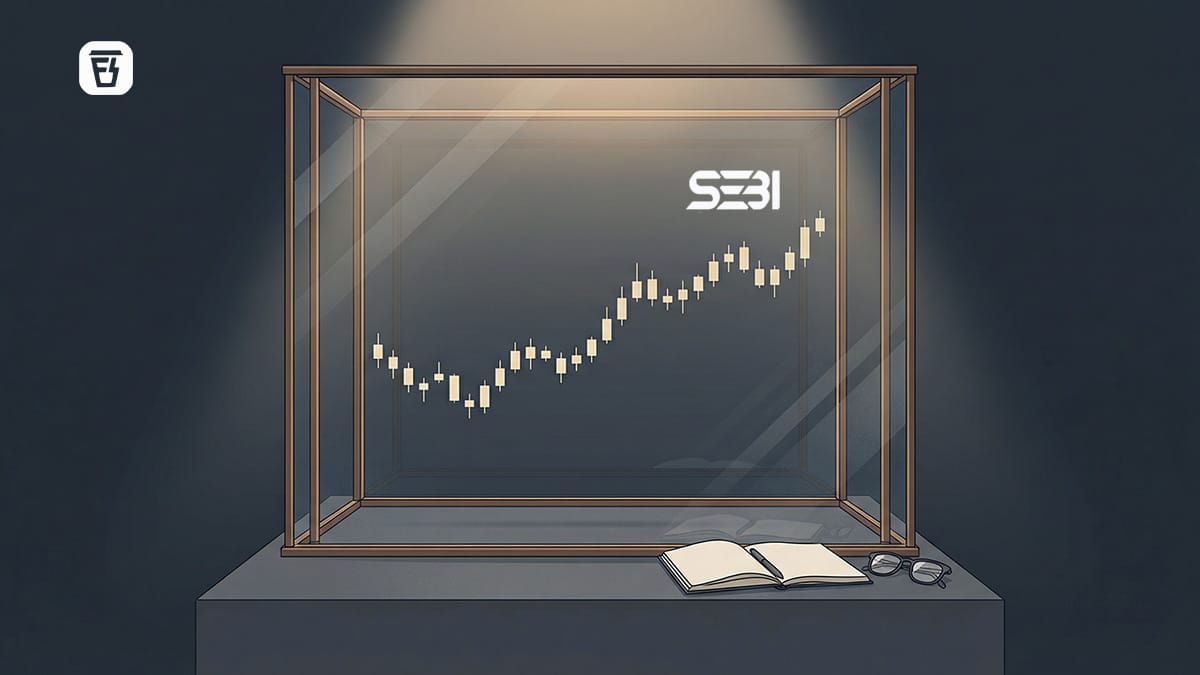
In today’s Finshots, we talk about SEBI’s paper on norms for sharing and usage of price data for educational purposes.
But before we begin, here’s a quick note from our co-founder: “When we started Finshots, our aim was to make finance simple and accessible for everyone. Soon, we realised that understanding finance is just one of the challenges. Making smart decisions, especially around insurance, is a whole different ball game. That’s why we built Ditto, a platform that makes insurance simple. No jargon, no spam, just honest advice from advisors who are only here to help you find the right plan.”
So, if you haven’t already, go get your free, personalised insurance advice by clicking here.
Now, on to today’s story.
The Story
If there’s one thing more popular than trading these days, it’s people teaching you how to trade. From the comfort of your home, armed with the internet, a smartphone, and some savings locked into a demat account, anyone can get started.
But there’s a catch. How do you know which stocks to pick? Which is the best brokerage to use? How much money do you even need to start? These are all questions every new trader asks when they first step into the market. And that’s where this story starts off as well.
A month ago, SEBI made an example out of a financial influencer who also ran a trading academy under his own name. In the process, it clawed back about ₹546 crores of illegal gains made through the firm. The irony of it was how he made profits from the academy rather than trading itself.
And this wasn’t a one-off case, nor was it the first time an individual or institute were caught operating like a trading firm all under the guise of ‘education’, ‘training’ and ‘guidance’. Just last year, the SEBI went after the Asmita Patel Global School of Trading for a similar pattern — running a so-called academy that allegedly offered “strategies,” “secret systems,” and “guaranteed returns,” while actually functioning like an unregistered advisory service. Students paid for courses but were effectively being funnelled into real-market positions, without the academy holding the licenses required to guide trades.
Put together, these cases reveal a clear pattern: individuals and institutes branding themselves as “educators,” “trainers,” or “mentors,” but operating suspiciously like trading firms — all under the loosely defined and largely unregulated umbrella of “financial education.”
And this matters because trading isn’t a casual hobby. These are real people putting their life savings on the table with every trade they take. So the stakes are quite high for everyone involved, and the numbers tell a sobering story. Despite trading volume dropping in 2025, losses kept mounting. SEBI’s latest data shows that 91% of traders active in the equity derivatives segment (EDS) lost money. Imagine making an investment where you have less than a one-in-ten chance of retaining your capital, forget profits. That’s the reality for most retail traders.
Keeping this in mind, these ‘academies’ couldn’t keep getting away with calling themselves trainers and educators while offering real-time, live data and instructions on the markets.
So SEBI’s first move came in May 2024, and it started with data. You see, there were some apps that had gamified virtual trading by using real-time prices of listed companies. Even going so far where users were rewarded for making profits on virtual platforms, even though the price movements were real.
And that’s when it stepped in and said: teach all you want, but only on the condition of using one-day-lagged data.
At first glance, it sounded like paper trading had been banned. But that wasn’t the case at all. When you’re paper trading, there’s no real risk involved - dummy orders, delayed pricing and of course no rewards. It’s purely about learning.
The real issue was something else entirely. A wave of mock-trading apps had started using real-time market prices and then layering on gamified challenges, leaderboards, and even cash prizes. So these platforms looked like paper trading, but were essentially online stock casinos built on live market movements. Users paid entry fees, competed for rewards, and made decisions based on real-time price swings. That’s essentially a stock market casino with none of the regulation.
A day’s lag sounded good enough on paper, but between May 2024 and 2025, SEBI saw finfluencers weaponise it to conduct ‘almost-live’ trading sessions. And others used day-lagged data but presented it as actionable, near-real-time charts.
And that’s when the real debate started – how much data do you actually need to teach trading?
SEBI’s logic is simple. If you're genuinely teaching concepts, strategies, or market behaviour, there is no need for real-time or near-real-time data in the classroom. You can explain candlesticks, volatility, support/resistance, or risk management just fine with data that’s a few weeks old.
But the moment fresh price data enters the classrooms alongside trading strategies, education starts looking a lot like informal investment advice. And that’s the loophole many creators and platforms have been exploiting. They present themselves as educators but use almost-live prices to guide people’s trading decisions without being regulated. SEBI’s challenge is to keep education authentic and useful, without letting this grey zone become a backdoor for unregistered advisory.
Some argue that these academies are just teaching but many of their students continue to trade based on the ‘guru’s’ signals long after the course ends. So multiply that by thousands of followers, and you’re no longer looking at education. And none of it falls under SEBI’s advisory or suitability rules.
That’s why, in January 2025, SEBI tightened the screws again. Its circular clarified that a three-month data lag would be acceptable for educational use, whether it involved stock names, price data, or even future price indicators.
But this three-month rule had problems of its own. For instance, you can’t teach certain concepts like price-action with data that’s at least a quarter old. And even SEBI agreed that the educational value from fresher data would be more useful.
So the regulator went looking for a middle ground. And that’s where the latest draft paper comes in. It proposes a uniform 30-day data lag across the board for educational use cases.
If a course genuinely focuses on teaching concepts, it can easily work with data that’s 30 days old. Because learning doesn’t depend on Reliance’s exact price today; it depends on understanding why prices move.
And even if an institute genuinely feels it needs fresher data, the pathway already exists: register as an investment advisor and play by the rules, just as everyone else.
Trading education isn’t illegal in India. Giving trading tips without being a registered investment advisor is. And that’s why so many of these outfits call themselves ‘academies’. The label lets them teach strategies, hint at entry–exit points, and walk right up to the advisory line without ever taking on the responsibilities that come with being regulated.
With this draft paper, SEBI is finally drawing that line clearly. Educators can still teach, but they must use 30-day-old data. And they must continue to steer clear of any advisory-like behaviour that the January 2025 circular already prohibited.
So yeah, that’s why SEBI has pushed out this draft.
For the time being, it is open for public comment. But the message is already clear. If you’re truly an academy, you don’t need live data to teach. And if you insist that you do, then the writing is simple—register as an RIA or face the music.
Until then…
Liked this story? Share it with a friend who thinks listening to a stock market 'guru' is the path to trading success on WhatsApp, LinkedIn and X.
For the third year in a row, we present Finshots’ Current Affairs Round up 2025!
A FREE and comprehensive compilation of our most impactful financial, economic, tech and business highlights of the year is here. Get our classic 3-min reads in an easy to access PDF eBook.
Plus, we made sure to add our signature infographics too! Click here to access the PDF resource now.
And don’t forget to share this with your peers, friends, and anyone in your network who might benefit from it.
Happy Reading :)