
🍳Unskippable ads, Netflix's new trick, and more...
Hey folks!
We bet you love binge-watching over the weekends, be it something random on YouTube or a popular series on streaming services. Even our team is always catching up on shows. And recently, what caught our attention was Stranger Things Season 5 releasing on Netflix during the holiday season. But Netflix quietly changed the way we “binged” shows with a staggered holiday rollout.
You see, Netflix was best known for releasing all episodes of a season at once. But with Stranger Things Season 5, it split the season into three distinct volumes. Volume 1 released on November 27 as the “Thanksgiving Hook”, Volume 2 dropped on Christmas as a “Christmas Retention Strategy”, and the finale released on New Year’s Eve.
So why is Netflix suddenly abandoning its all-at-once drop for this kind of rollout?
Well, the logic is simple. Netflix needs to make money. And its primary enemy is “churn rate”, where users subscribe for one month, binge a show, and then cancel.
By spreading the release from late November to December 31, Netflix ensures users stay subscribed for at least two billing cycles. In a way, it’s turning a weekend spike in viewership into a sustained six-week plateau of high engagement.
In the age of social media, conversations after a binge-drop usually last just a weekend. After 48 hours, the spoilers are out and the buzz dies. But with this strategy, Netflix ensures that each volume creates a fresh wave of theories, memes, and fan art.
This way, Netflix stays at the centre of the cultural zeitgeist for more than five weeks straight. It’s also a smart way to compete with other streaming services like Disney+ and HBO Max and steal the spotlight during the holiday season.
Circling back to the point, Netflix needs to bring in revenue in ways beyond just streaming. Its business model has now shifted towards the ad-supported tier, which means more weeks of viewership translate into more ad impressions.
Brands like Target and Doritos want sustained visibility. So a split release makes sense for phased merchandise drops. Think Volume 1 gear versus finale collectibles. This way, Netflix maximises retail value.
Splitting releases also buys more time for production. VFX teams get a few extra weeks to polish the massive two-hour-plus finale. It also signals to audiences that the content is too big to be consumed in one sitting, elevating the show’s perceived value.
When you step back and look at it, Netflix is no longer just a content library. It’s becoming a global events broadcaster. The split release of Stranger Things Season 5 proves that while the binge model worked for years, the slow-drip model might be what helps Netflix retain its crown.
Here’s a soundtrack to put you in the mood 🎵
Jab Tum Mile by Abhilasha Sinha
What caught our eye this week 👀
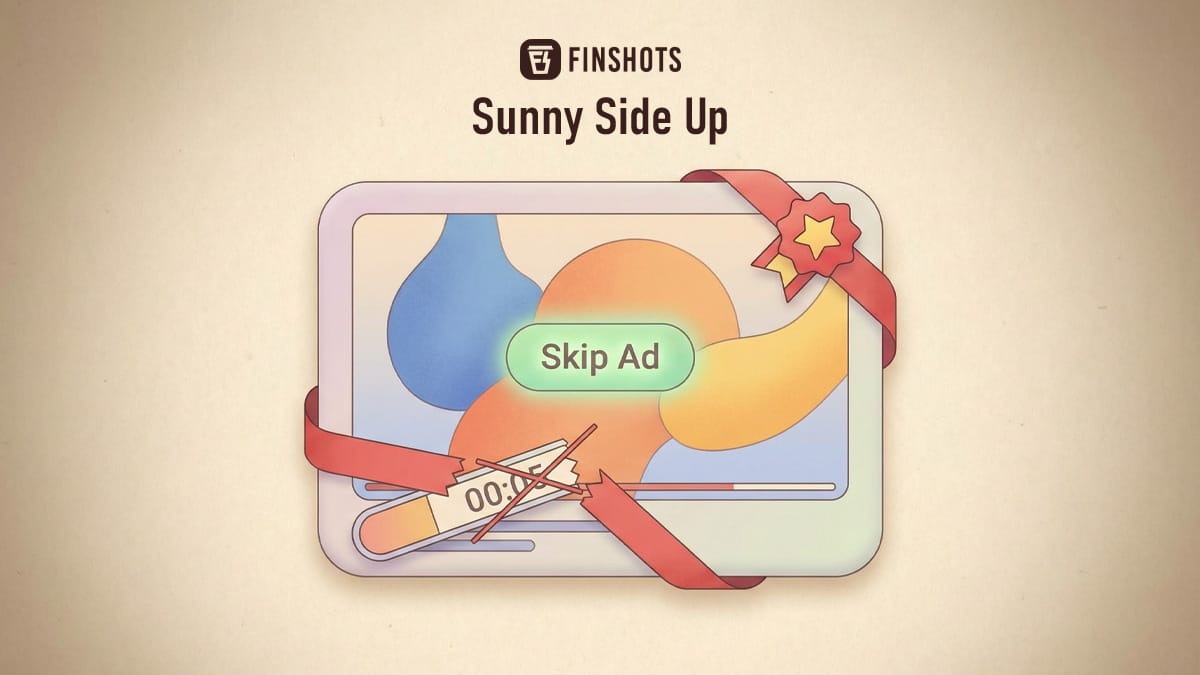
Vietnam puts a timer on unskippable ads
At some point, all of us have played that little mental game on YouTube. You click on a video expecting a quick watch, but an ad pops up, and you instinctively glance at the corner of the screen, looking for the skip button.
However, anything longer than a few seconds starts to feel like you’re being held hostage by an app you will never download or a company whose products you will never buy.
Now imagine a government looking at that experience and deciding it has gone a bit too far.
That’s exactly what the Vietnamese government thought, and it decided to ban unskippable ads. So, starting February 15, new rules will cap unskippable video ads at five seconds across all online platforms.

The regulations also go a step further and target the dark patterns of online advertising. For instance, pop-up ads must be dismissible with a single action, misleading close buttons are explicitly banned, and ads must clearly show users how to report them or opt out altogether.
In many ways, what’s surprising is not that Vietnam did this, but that others didn’t get there first. Regions like the EU, which have historically been aggressive about digital rights and consumer protection, let the ad experience deteriorate for years without drawing a clear line on unskippable formats. So, for a developing Southeast Asian country to step in first feels quite strange.
Now, to be fair, this isn’t a moral crusade against advertising.
Ads are what keep platforms like YouTube free to use and what fund the creators people actually come to watch. Strip this away, and that entire business model collapses. That reality is well understood. The issue, however, arises when monetisation quietly overwhelms everything else. Over the last few years, that’s exactly what has happened.
Unskippable ads have become longer, more frequent, and harder to escape. And we viewers have had almost no control over how many ads we see or how long they last. The only real lever left was paying for a subscription. When that starts to feel less like a premium upgrade and more like a ransom, frustration is inevitable.
So, when an entire country gets frustrated enough and lawmakers take notice, this is what we get.
What’s also interesting is what this could do to online advertising in the country. If brands only get five seconds of guaranteed attention, hooks matter a lot more. You can’t rely on brute force. You have to earn the viewer’s interest quickly or lose them just as fast.
That shift could have real consequences for the performance marketing industry, which depends heavily on repetitive exposure and forced attention. Influencer marketing, on the other hand, could surge because it works on trust. When a recommendation comes from someone you already follow and voluntarily listen to, it doesn’t need to trap you for thirty seconds to land its message. The attention is already there.
While the new law doesn’t eliminate the possibility of more five-second skippable ads replacing a single long unskippable one, it does set a precedent.
When one country decides that user experience deserves regulatory protection, others tend to pay attention. Especially as governments everywhere grapple with how much control tech platforms should have over what users see, watch, and endure.
So the next time you’re counting down an unskippable ad and wondering why this is still allowed, remember that somewhere else, the skip button appears at five seconds flat. And once that idea exists, it has a funny way of spreading.
Infographic 📊

Readers Recommend 🗒️
This week, our reader Himani Kumar recommends reading A Brief History of Intelligence by Max Solomon Bennett.
Himani says, “With AI models popping up everywhere and more people turning to tools like ChatGPT, this book offers a fascinating perspective. It traces how intelligence has evolved and explains why we’re still far from replicating the kind of thinking the human brain is capable of. It’s a thoughtful, grounded take amid all the hype around AGI [Artificial General Intelligence].”
Thanks for the recommendation, Himani!
That’s it from us this week. We’ll see you next Sunday!
Until then, send us your book, music, business movies, documentaries or podcast recommendations. We’ll feature them in the newsletter! Also, don’t forget to tell us what you thought of today's edition. Just hit reply to this email (or if you’re reading this on the web, drop us a message at morning@finshots.in).
🖖🏽
Don’t forget to share this edition on WhatsApp, LinkedIn and X.