
Unilever just stepped back from food
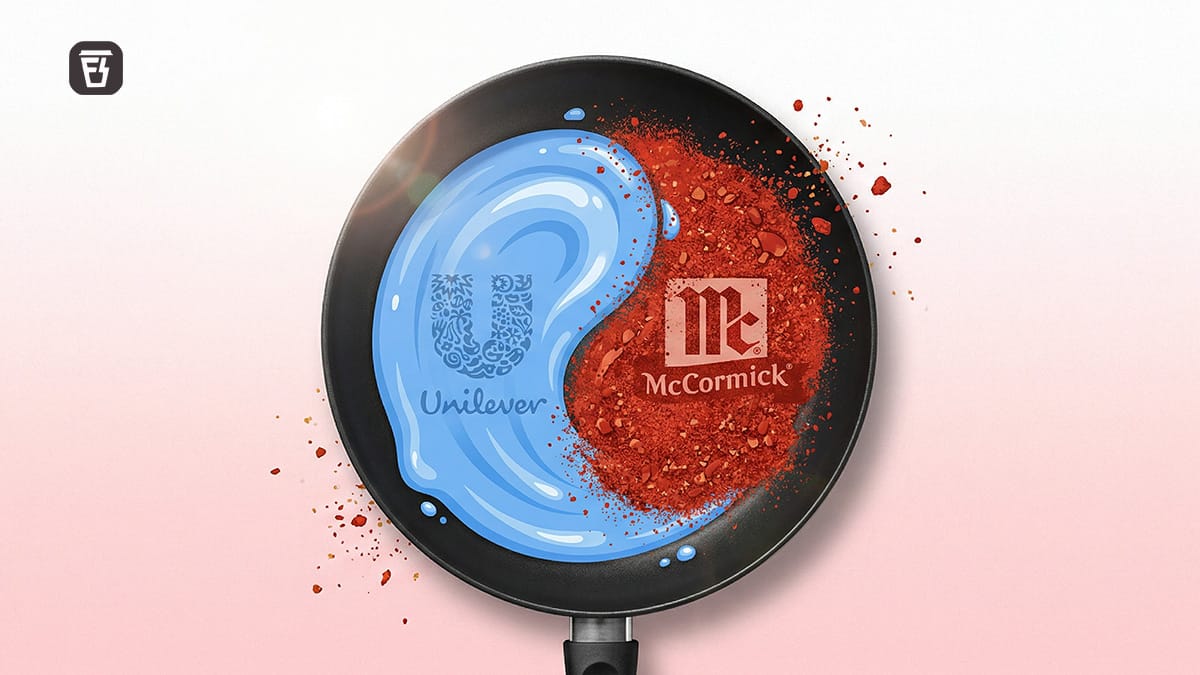
In today’s Finshots, we explain why Unilever is hiving off its food business by merging it with McCormick.
Also, here’s a quick sidenote before we begin. This weekend, we’re hosting a free 2-day Insurance Masterclass that helps you build real financial security by understanding health and life insurance the right way.
This weekend, we’re hosting a free 2-day Insurance Masterclass that helps you build real financial security by understanding health and life insurance the right way.
📅 Saturday, 4th April at 11:00 AM: Life Insurance
How to protect your family, choose the right cover amount, and understand what truly matters during a claim.
📅 Sunday, 5th April at 11:00 AM: Health Insurance
How hospitals process claims, common deductions, the mistakes buyers usually make, and how to choose a policy that won’t disappoint you when you need it most.
👉🏽 Click here to register while seats last.
The Story
Food is a very personal experience. There is something deeply satisfying about cooking from scratch. Picking fresh ingredients, putting together your own spice mix, and knowing exactly what goes into your meal.
And that is precisely why packaged food has always been a bit of a compromise. Convenient, yes. Scalable, definitely. But never quite the same. And yet, for nearly a century, companies built massive businesses around that compromise. One of them is Unilever.
Now sure, when you think of Unilever today, it’s mostly thought of as the company behind your soap, your shampoo or your detergent. Even in India, through Hindustan Unilever, the products show up in your bathroom way before it shows up in your kitchen.
But honestly that’s not how their story began.
When Unilever was created back in 1930, it was not around beauty or personal care. In fact, it was a merger between Lever Brothers, a British soap company and Margarine Unie, a Dutch margarine business. Margarine is a butter substitute made from vegetable oils. And for decades after that, food was not a side category. It was central to what Unilever was.
For nearly a century, Unilever has been one of the most powerful food companies on the planet. Its brands like Hellmann’s, Knorr and Marmite are not niche products. They are everyday staples sitting in kitchens across continents.
Which is what makes its latest move so interesting.
Unilever is now carving out its food business and merging it with McCormick & Company, in a deal worth about €56 billion ($65 billion).
And to understand why, you need to look at what this deal actually does.
For decades, packaged food companies operated on a fairly simple playbook. Build scale, push distribution and rely on brand trust to increase repeat purchases.
And when the cost of raw materials and other expenses rose, they had room to adjust. They could either raise prices gradually, shrink pack sizes, or tweak ingredients. Most consumers rarely noticed.
But that playbook is starting to break.
Today, consumers are reading labels more closely, questioning ingredients, and becoming far more price-sensitive, especially for products they see as interchangeable. Which means large FMCG (fast moving consumer goods) companies are stuck. They cannot raise prices without pushback. But they also cannot cut corners quietly without risking trust.
And while this is happening, the economics are shifting.
Consumers today are not just rethinking what they eat. They are rethinking everything they consume. From food to skincare to wellness, the shift is towards cleaner, more transparent products. But while that shift is opening up new growth opportunities in beauty and personal care, it is making food harder to operate. Because improving what goes into a face cream is very different from changing what goes into something people eat every day.
This is where the gap becomes clearer.
For Unilever, its HPC segment (Home and Personal care) is benefitting directly from this shift. The products positioned around skincare, hygiene and wellness are seeing stronger demand, faster innovation cycles and significantly higher margins, close to 48% in some cases.
Food, on the other hand, tells a very different story.
Its food business generated roughly €12.9 billion in revenue in 2025. While that looks like a large number, it lags behind on both growth and profitability. And improving that is not straightforward. Reformulating products is slow, taste expectations are rigid, and consumers are far more price-sensitive.
At the same time, these legacy brands found themselves competing with smaller, health-focused D2C brands. They could do things that older brands would take longer to initiate, such as cleaner ingredients, transparency and independence from using distributors, which in itself is a big win.
Now sure, these small brands aren’t big enough to disrupt the entire industry on their own, but what they did change was customers expectations from the food they are buying. That creates a different kind of pressure today.
So this is no longer just about managing a portfolio. It is about choosing where to focus.
And this shift hasn’t happened overnight. Even in India, Hindustan Unilever (HUL) sold off Kwality Walls, its ice cream business, last year. It didn’t seem like much back then. Now, it looks like the beginning of a strategic reset.
And that is where this deal comes into the picture.
Instead of selling its food business outright, Unilever is taking a more unusual route. It is spinning off the division and merging it with McCormick & Company, an American spice giant.
In return, Unilever walks away with some cash and its shareholders will still own close to 65% of the combined company. Which means that on paper, Unilever is stepping away from food.
But it will continue to benefit if it performs well. It just no longer has to run it.
By handing over their operations to a specialist like McCormick, Unilever is stepping away from the harder part of the business. The part where it has to constantly fight for growth, defend margins, and respond to changing consumer expectations.
Instead, it gets to do something much simpler: hold on to ownership, take cash upfront, and focus on faster-growing, higher-return segments.
And if you zoom out, the numbers make the story even clearer.
The deal values Unilever’s food business at about 3.6 times its sales and 13.8 times its profits. That might sound technical, but here’s what it really means. This isn’t a fire sale. The business isn’t being dumped. It’s being repositioned.
Then there’s the cash. Unilever will get about €14 billion ($15.7 billion) upfront. Some of that will go towards separation costs and taxes. Some will be used to bring down debt to more comfortable levels. But a big chunk, around €6 billion ($6.9 billion), is being set aside for share buybacks over the next few years. It’s Unilever telling investors that the business it is left with might actually be worth more than what the market currently thinks.
Because once food is carved out, Unilever starts to look like a very different company.
Post-separation, beauty, wellbeing and personal care would account for roughly 67% of Unilever's total revenues, up from 51% today. The US and India alone would contribute 38% of group turnover.
In simple terms, it is tilting itself toward faster-growing regions and higher-margin categories.
And the numbers back that up.
Over the past three years, this part of the business has grown at about 5.4% annually. Gross profit margins (the percentage of revenue that remains after subtracting the cost of goods sold) are close to 48% and operating profit margins (the percentage of revenue that remains after subtracting operating expenses such as wages, rent, etc.) are around 19%.
Of course, this transition isn’t free. Unilever expects €400 to 500 million in stranded costs as a result of the separation, with roughly €500 million ($576 million) in restructuring expenses spread over the next few years. There’s also a temporary overlap period, where both sides will rely on shared systems like IT and distribution before fully going their separate ways.
But despite all that, the broader plan hasn’t changed. Unilever is still targeting steady, mid-single digit growth. It expects at least 2% volume growth. It plans to keep investing in the business while also returning cash to shareholders, with a dividend payout of around 60% and about €1.5 billion ($1.7 billion) a year set aside for acquisitions.
And when you put all of that together, the picture becomes clearer.
Maybe the real story isn’t that Unilever is leaving food. It’s just that the food business is no longer what it used to be. And for the first time in nearly a century, even the companies that built it are starting to see it that way.
Until next time…
Liked this story?
Share it with your friends, family members or even strangers over WhatsApp, LinkedIn and X.
Also, If you’re someone who loves keeping tabs on the world of business and finance, hit subscribe if you haven’t already. And if you’re already a subscriber, thank you! Maybe forward this to someone who’d enjoy our stories but hasn’t discovered us yet.