
The Meesho IPO explained
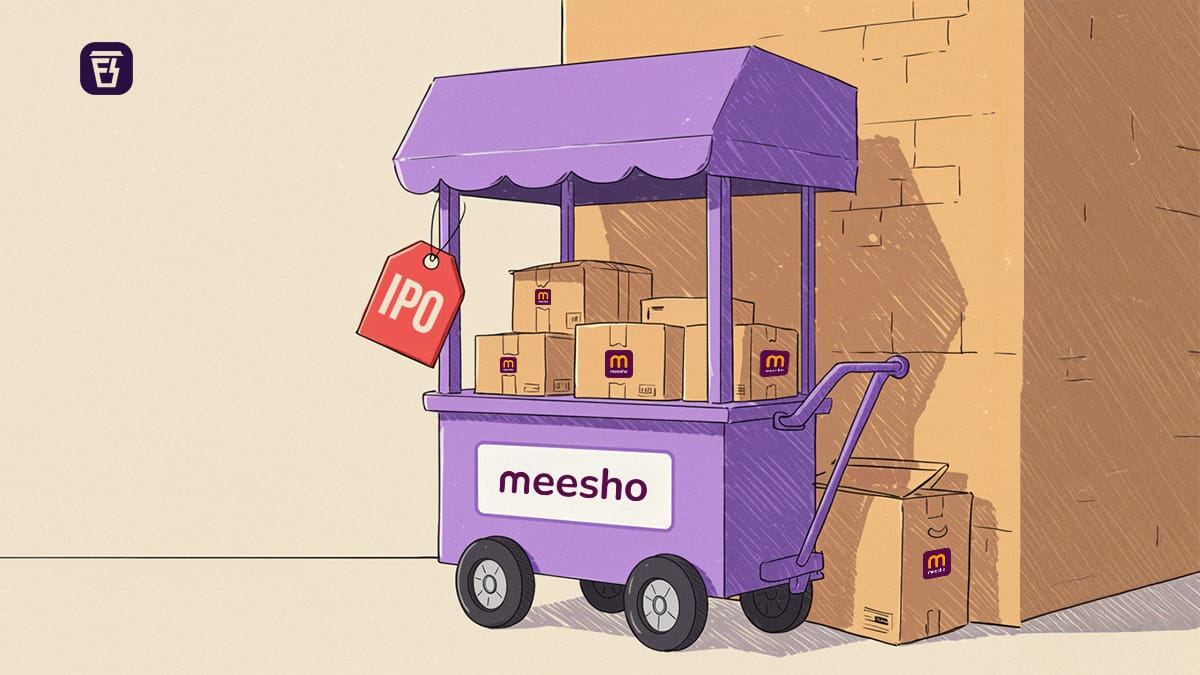
In today’s Finshots, we break down the Meesho IPO, the company that quietly became India’s largest e-commerce platform by order volume, long before most people realised what was happening — as it opens for subscription today and runs till 10 December.
But here’s a quick sidenote before we begin. Insurance actually matters only in one moment — when your family needs to make a claim. Most people never hear real claim stories until it’s too late.
But choosing the right plan is just as important. Many people buy policies that don’t fit their needs, miss key features, or overlook small details that cause trouble later.
So this weekend, we’re hosting a free 2-day Insurance Masterclass built around real cases we’ve handled and simple rules for shortlisting the right plan.
📅 Saturday, 6 Dec ⏰at 10 AM: Life Insurance
How to protect your family, choose the right cover amount, and understand what truly matters during a life claim.
📅 Sunday, 7 Dec ⏰at 10 AM: Health Insurance
How hospitals process claims, common deductions, the mistakes buyers usually make, and how to choose a policy that won’t disappoint you when you need it most.
👉🏽 Click here to register while seats last.
Now, on to today’s story.
The Story
If you live in a big city like Bengaluru, Mumbai, or Chennai, e-commerce feels like a world designed around you. You get same-day deliveries, branded packaging, algorithmic recommendations, and a level of convenience that makes waiting even 24 hours feel unreasonable. But step outside the metros and the entire picture changes.
In Tier-2 and Tier-3 India, incomes are lower, and speed matters far less. People are willing to wait a week if it helps save ₹50 on a T-shirt, and they aren’t as eager to chase brands as they are to get a bargain.
Behind this low-price aesthetic sits Meesho, one of the biggest consumer internet machines India has ever seen. And now, that company wants to go public.
While Amazon and Flipkart poured a lot of money into capturing premium customers in big cities, Meesho quietly built a giant by doing the exact opposite. It embraced India’s price-sensitive heartland, powered its platform with micro-creators, and irresistibly low prices, and in the process, ended up shipping nearly 29–31% of all e-commerce orders in the country. To understand why this matters, we need to first understand what Meesho actually does.
At its core, Meesho is a marketplace that connects millions of small sellers with buyers across the country. But unlike traditional platforms, Meesho doesn’t charge most sellers a commission. It built a zero-commission model that dramatically lowered the barrier to entry for manufacturers and home-grown businesses. When you tell a small seller that they can reach millions of customers without paying upfront fees, they show up in droves. That influx of sellers, in turn, creates the endless variety of low-priced goods that attracts Meesho’s user base. And the magic of the business lies in how people actually shop on the platform.
Unlike Amazon, where most people search for specific products, Meesho is driven by discovery. Users browse through feeds, creator videos, trending items, and curated collections, stumbling upon things they didn’t intend to buy. The purchase journey is closer to scrolling through Instagram than searching through a catalogue. This discovery engine is so central to Meesho that a part of the IPO proceeds will be used to strengthen its creator ecosystem, feed algorithms, and content-driven shopping experience (marketing & brand initiatives).
But Meesho isn’t just the marketplace you see on the app. Buried deep inside the IPO prospectus is another segment the company believes could become important in the future — New Initiatives. This includes low-cost logistics services, a grocery fulfilment network, and Meesho Payments, which aims to provide digital financial services to sellers. Today, these initiatives contribute almost nothing to revenue in absolute terms. But their growth rate tells a different story. Segment revenue went from ₹79.2 lakh in FY23 to ₹1.4 crore in FY24 and then to ₹4 crore in FY25.
For a company operating at Meesho’s scale, even small improvements in logistics costs or the successful rollout of daily-use categories like grocery could have an outsized impact in the future. Similarly, a payments and credit ecosystem for millions of small, unorganised sellers could create higher-margin revenue streams that the core marketplace cannot generate on its own.
Still, the present reality is anchored in the marketplace business. And Meesho’s revenue model is a complex bundle of service fees sellers pay to operate on the platform. Forward and return shipping fees make up a sizable portion of income. Meesho Mall sellers pay mall fees that combine commissions with additional shipping-related charges. Advertising has become a meaningful revenue line too, especially as creators increasingly drive product discovery and sellers pay to promote visibility. The platform also earns from value-added services such as assurance programs that protect sellers from unpredictable return costs, pilot-phase fees routed through logistics partners, and even a share of interest income when NBFC partners lend money to sellers.
Because the RHP (IPO document) does not break these pieces out separately, all of this sits inside the broad Marketplace revenue figure. But you can see the topline story: revenue from operations climbed from ₹5,734 crore in FY23 to ₹7,615 crore in FY24, and then to ₹9,389 crore in FY25. That is good growth in absolute terms.
The bottom line, however, tells a different story. The company recorded a loss of ₹1,564 crore in FY23, followed by a smaller loss of ₹324 crore in FY24, only to swing dramatically to a staggering loss of ₹3,945 crore in FY25.
The financials also raise questions about earnings quality. Other income, at ₹511 crore in FY25, plays a non-trivial role in supporting total income. And “other expenses”, which is a broad category that includes fulfilment, logistics, advertising, and seller enablement costs, is massive at ₹9,120 crore.
But perhaps the most significant structural challenge in Meesho’s business is its relationship with cash-on-delivery (COD). COD is what powered the company’s rise in price-sensitive markets, but it also injects a lot of volatility into unit economics. COD orders are successful only 77% of the time, whereas prepaid orders succeed 97% of the time.
Every unsuccessful COD order carries two logistics costs: the forward delivery and the return, with no revenue to offset them. On a platform built around low average order values, the cost of these failed deliveries can pile up quickly. Add the fact that delivery times are still close to a week, similar to Amazon or Flipkart in the 2010s, and the path to consistently profitable unit economics becomes tricky.
Competition is another pressure point. Deep-pocketed rivals like Amazon and Flipkart can subsidise sellers, waive fees, and undercut prices for longer than Meesho can. The company itself called out the risk of competitors using aggressive pricing strategies that compress Meesho’s market share or force it to increase fulfillment and marketing spends.
This pressure becomes even sharper because Meesho relies heavily on advertising and seller service fees for monetisation. If ad yields fall or sellers reduce promotional spending, revenue growth could slow, and margins could compress even further.
All of this brings us to the heart of the matter. Meesho is a rare business that has built extraordinary scale in markets that were once considered unprofitable or too fragmented. Its audience, seller relationships, content-led demand funnel, and logistics pipes are valuable assets.
But scale is not the same as profitability. The filing presents a company that is growing rapidly but also burning cash aggressively and carrying significant operational challenges. The company wants ₹5,421 crore worth of IPO funds, ₹4,250 crore of which is a fresh issue and will be used to invest in technology, expand logistics, hire AI talent, and deepen its marketplace capabilities. These are sensible areas to strengthen. The rest, a smaller portion of the IPO is an offer for sale.
The valuation seems reasonable if you look at the upper price band of ₹111 relative to its book value per share, which works out to about 9 times (P/B). Meesho’s peers, on the other hand, trade at a P/B ratio of about 17 times. And since Meesho has made losses all these years, its Earnings Per Share (EPS) is negative, which means you can’t compare it to its peers using the P/E ratio.
Yet the bigger question remains whether Meesho can fundamentally improve its unit economics in a model where returns, long delivery cycles, and COD create persistent cost pressure.
For long-term investors, the primary question isn’t whether Meesho can keep growing, but if it will ever translate this growth into healthy margins and sustainable cash flows without repeated injections of capital.
Until then…
Don’t forget to share this story with your friends, family or even strangers on WhatsApp, LinkedIn, and X. And tell them to subscribe to Finshots too.
Last few days left to register for Finshots Idea Lab Season 2!🥳
Students, this is your chance to bag ₹2.25 lakh in cash, pre-placement interviews, cool goodies, and serious bragging rights.

Click here to apply. You don’t want to miss this!