
The Draft IT Rules explained
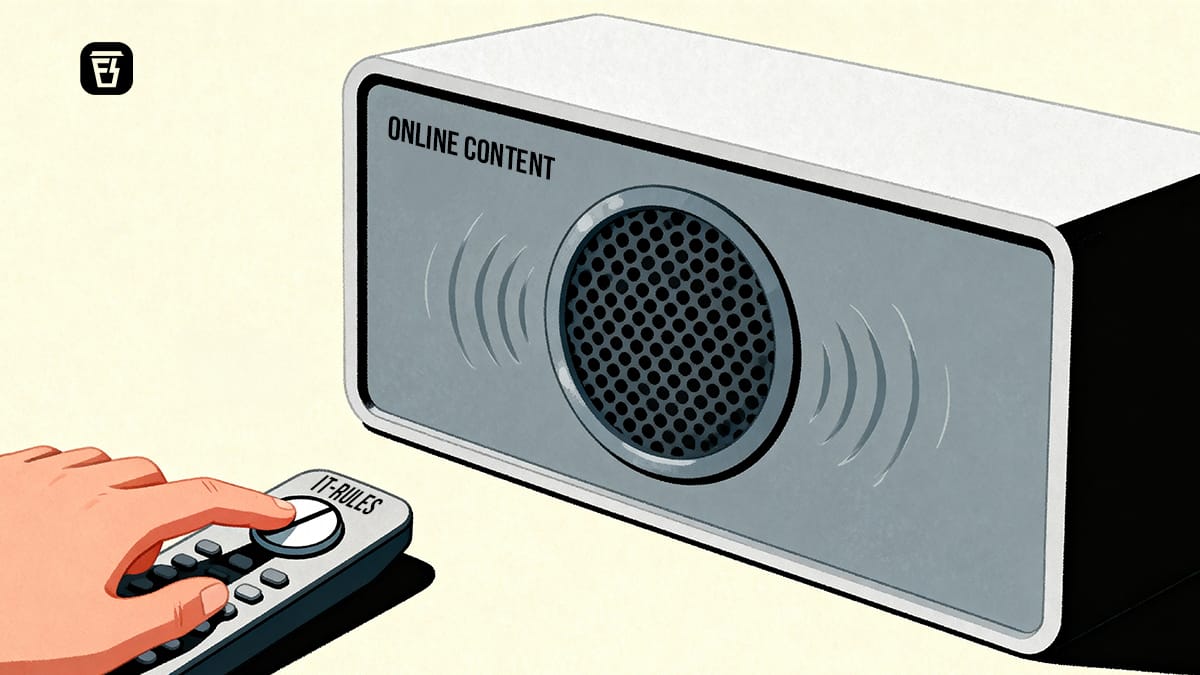
In today’s Finshots, we explain the new draft IT rules and what it means for the creator economy.
But here’s a quick sidenote before we begin. If you’re someone who loves keeping tabs on the world of business and finance, hit subscribe if you haven’t already. And if you’re already a subscriber, thank you! Maybe forward this to someone who’d enjoy our stories but hasn’t discovered us yet.
Now, on to today’s story.
The Story
For a lot of Indians online, their first source of news about the latest policy or change isn’t the TV or newspaper anymore. It’s their favourite creator be it on Instagram, YouTube, X or any other social media platform.
Better yet, their explanation on the topic is short, crisp and sticks to the key points, just like the newsletter you’re now reading (wink wink). Some of them have a reach that goes far beyond a typical newsroom, all with a smartphone and platform. But that also raises another question: if creators are doing the job of newsrooms, should they be treated like one?
Ever since the creator economy blew up in India, the creators themselves have operated in a grey zone. They weren’t registered as publishers so they didn't face the same rules as media companies, but their influence could match or surpass it. Now, with the government's Second Amendment to the IT (Intermediary Guidelines and Digital Media Ethics Code) Rules, 2026, that grey zone is closing fast.
Released by the Ministry of Electronics and Information Technology (MeitY), the draft amendments are framed as "clarificatory and procedural in nature". But what they actually propose is a significant reordering of how India's internet is governed and who gets to govern it.
That’s because at its core, the draft rules are trying to answer a simple question: what happens when individuals start behaving like media institutions?
The answer, at least from the government’s side, seems to be straightforward. If you’re reaching millions, shaping opinions, and explaining public affairs, then the expectations should start looking similar too. In other words, the label may still say “creator”, but the responsibility could begin to look a lot like that of a newsroom.
On paper, that sounds reasonable. After all, misinformation spreads just as easily through a reel as it does through a primetime debate. And unlike traditional media houses, most creators are a one-man army. They don’t have editors, fact-checkers, or legal teams reviewing their content before it goes live. Holding them to higher standards could, in theory, clean up a lot of the noise online.
Because while creators may look like newsrooms on the surface, they don’t function like them underneath. A newsroom is an institution whereas a creator is often just a person, or at best a small team, operating at the speed of the internet.
Applying the same rules to both doesn’t just increase accountability, it also increases the burden of compliance. And that burden doesn’t scale evenly.
There’s also the problem of who exactly counts as a ‘news’ creator?
Is it someone breaking political stories? Or someone explaining them? Does a finance influencer decoding the budget fall into this category? What about a meme page that comments on current events, or a viral thread that shapes public opinion for a day?
The line between information, opinion, and entertainment online is already blurry. Trying to neatly regulate it risks either being too broad, or too easy to bypass.
And then comes the unintended consequence that doesn’t show up in policy documents — the chilling effect. It’s when people start self-censoring not because they are forced to, but because they are unsure of the consequences.
And this is where the definition of “publisher of news and current affairs content” is left open to translation. Because if it’s read broadly enough, it doesn’t just apply to influencers but anyone who consistently posts about public issues.
While this framework already exists for digital news, it’s worth understanding how it works.
Under the current rules, publishers of news and current affairs content are expected to follow a structured system. This includes a code of ethics, a grievance redressal mechanism where users can raise complaints, and a three-tier oversight system that can escalate issues beyond the publisher.
Intermediaries, also known as platforms like social media companies, are required to do their due diligence, which includes acting on flagged content within specific timelines.
In simple terms, traditional digital news operates within a system where content can be questioned, reviewed, and, if required, taken down.
The draft amendments attempt to extend this to the broader internet.
And that’s where things start to expand beyond just newsrooms.
One of the key additions in the draft rules is around synthetically generated or AI-based content. Platforms may be required to ensure that such content is identifiable through labels, disclosures, or other mechanisms. This is especially when it relates to information that could mislead users.
At one level, this is a response to a very real problem. The reason this rule exists is because it’s getting harder everyday to tell the difference between real and AI generated content.
But when combined with a broader interpretation of who counts as a publisher, this creates an interesting overlap.
Because now, the responsibility doesn’t just sit with platforms or large publishers. It could extend to anyone creating and distributing content that falls within these categories — whether that’s a full-time creator, a niche page, or even a highly active individual user.
Which brings us to the bigger picture.
On one hand, these rules are trying to solve real problems in the media today. The internet isn’t just a place to interact anymore. It’s the primary source of information for most of us. That includes regular users, creators, communities and platforms. And when that information is wrong or misleading, the consequences can scale very quickly. Creating systems for accountability, especially in an age of AI-generated content, is not an unreasonable goal.
But at another level, the way these systems are defined begins to matter just as much as the intent behind them.
Because the internet doesn’t operate like traditional media.
It’s not made up of just clearly defined publishers and audiences anymore. And when rules designed for institutions start extending into this space, the boundaries of who they apply to can become less clear.
That’s the trade-off at the heart of this moment.
More accountability could mean cleaner and more reliable information. But it can also mean higher barriers to entry, caution and a change in how people express themselves online.
Most importantly, this isn’t a closed door decision yet. These are still draft rules and they’re currently open for consultation until April 14th. Which means that everybody can read the draft, respond and share their opinions.
The more people understand what’s being proposed, the more informed the conversation becomes. Whether that’s through reading the document, discussing it, or submitting feedback, participation plays a role in shaping how these rules evolve.
Because ultimately, the future of the internet isn’t just written in policy documents.
It’s shaped by how many people are paying attention while those documents are still being written.
And if your first source of news is no longer a newsroom, but a creator on your feed, then the rules shaping that creator will, in many ways, shape how you understand the world itself.
Until next time…
Liked this story?
Share it with a friend, family member or even strangers on WhatsApp, LinkedIn and X.
"I should’ve bought health insurance sooner."
That's what 85% of Indians who paid hospital bills from personal savings & debt ended up saying.
Medical emergencies don't come with a warning. They can strike anyone, anytime, causing years of savings to go down the drain.
So don't wait until a crisis hits you. At Ditto by Finshots, we make insurance simple. Our advisors explain all the policies in simple English and help you pick the right plan. Book a FREE 30-minute consultation today. No spam, no pressure.