
Part 2: What will happen if India gets a 500% tariff?
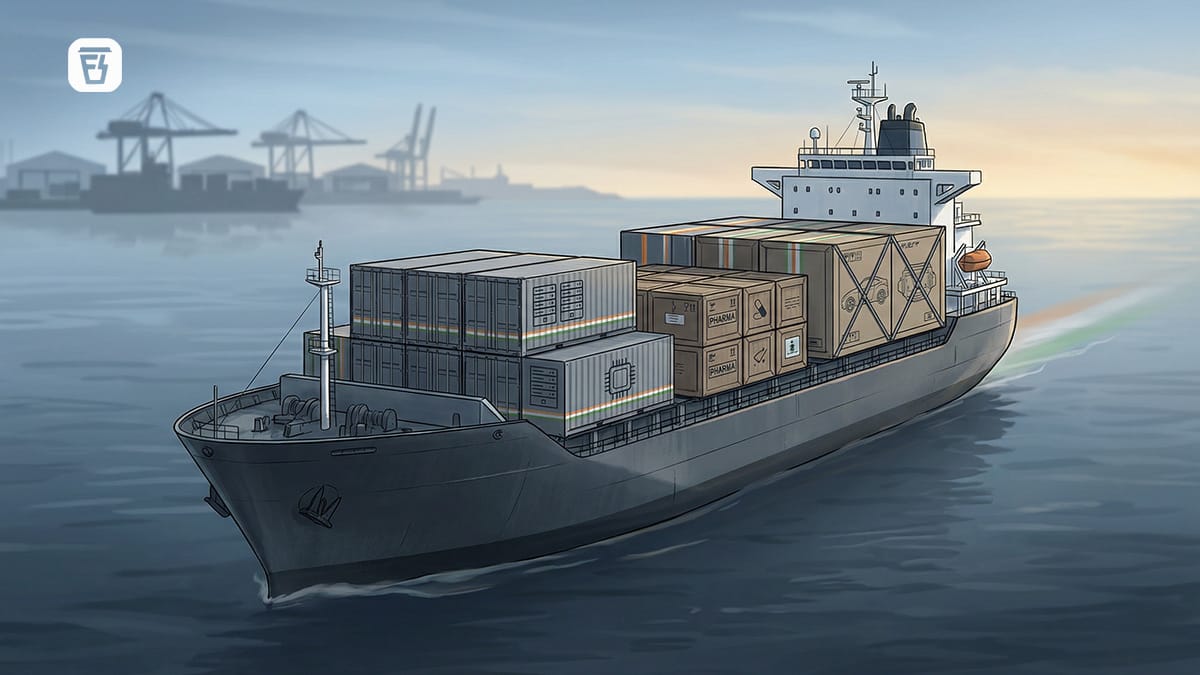
In today’s Finshots, we’re writing a sequel to our previous story about the US imposing a 500% tariff on Indian goods. But this time, it’s not about whether India can survive it. It’s a more uncomfortable question: can the US afford to do this at all?
But before we begin, if you love keeping up with the buzz in business and finance, make sure to subscribe and join the Finshots club, loved by over 5 lakh readers.
Already a subscriber or reading this on the app? You’re all set. Go ahead and enjoy the story!
The Story
When the US imposed a 50% tariff on India, exporters had two options to save their business:
- Cut their margin and protect volumes, or
- Protect margin and cut volumes
Cutting margins meant lowering export prices so that, even after the tariff, Indian goods remained competitive in the US. But a 50% tariff isn’t something you can casually discount away. To fully offset it, exporters would have to slash prices by roughly a third. For most firms, especially in pharmaceuticals, engineering goods, and chemicals, that would mean selling at or below cost.
The alternative was to hold prices steady and accept that demand from the US would fall. That’s exactly what happened.
According to a report by the Kiel Institute, Indian exporters did not reduce prices after the tariff was imposed. Instead, exports to the US fell by 18-24% relative to other destinations, while prices remained unchanged.
In other words, Indian firms chose to protect margins, even if it meant shipping significantly fewer goods to America. And that choice tells us something important.
The tariff didn’t force Indian exporters to “pay up”. It simply meant fewer Indian goods entered the US at the same prices as before. Which raises the obvious question: if exporters didn’t absorb the tariff, who did?
That’s where the US problem really begins.
Consider the electronics sector, one of India’s biggest export categories to America. And what better example than the ubiquitous iPhone? Apple has been ramping up production of iPhones in India. In fact, just last year, it assembled over 40 million iPhones in India and started exporting them in droves. This year, they’re planning to expand that to 80 million. Now imagine you’re an American consumer eyeing the base model iPhone 17 that is made in India.
The iPhone costs $800. With no import duty, you pay roughly $800 at retail. A 50% import tax, which is what India currently has, means Apple (or the importer) must pay an extra $400 on that phone. That cost may be passed on to you, and the $800 device could end up around $1,200. It’s noticeably more expensive – not great, but maybe some die-hard fans would still bite the Apple.
Now, if we have a 500% tariff, an $800 iPhone would balloon to a staggering $4,800 by the time it hits US stores! A device that used to cost as much as a laptop would now cost as much as a used car. And we can safely assume that no American is going to pay six times the price for the same phone. Demand for “Made in India” iPhones would vanish overnight.
So Apple would be forced to reroute production. China becomes the obvious fallback, even though Chinese-made iPhones still face about a 30% US import tariff, pushing an $800 phone to roughly $1,040. Other locations like Vietnam or Mexico could help too, with lower baseline tariffs translating to prices closer to $880.
But this workaround comes at a cost. Apple’s entire strategy was to reduce dependence on China by shifting production to India for the US market. A 500% tariff destroys that plan. It either pushes Apple back toward China or into prohibitively expensive US manufacturing.
In the end, it doesn’t even matter. Making India uncompetitive doesn’t bring manufacturing home. It simply raises prices, disrupts supply chains, and leaves American consumers worse off.
Then, let’s talk about the gems & jewellery industry.
A craftsman grading diamonds in Surat processes 9 out of 10 of the world’s diamonds. In fact, Gems and jewellery are India’s second largest export to the US, totalling just over $9 billion last year. So what happens to American jewellers and couples shopping for engagement rings if those Indian diamonds get a 500% tariff?
If suddenly a cut Indian diamond faced a 500% duty at US customs, its price to the importer would be sixfold, similar to the iPhone scenario. A ring that would cost an American buyer $5,000 might shoot up to $30,000 with tariffs. In reality, such a product simply wouldn’t be imported at all. Jewellers in the US would either have to source from elsewhere or stock far less inventory.
But could they find alternatives?
Possibly to a limited extent. There are other diamond centres, such as Belgium and Israel, but many of those diamonds still eventually get processed in India or have higher costs.
Lab-grown diamonds could be one substitute. Some of them are already made in the US, but that’s a niche. The immediate effect of an extreme tariff would be fewer diamonds coming into the US and much higher prices on whatever does come. Americans celebrating occasions with jewellery might find it significantly more expensive or settle for smaller stones.
Now, so far, we’ve talked about physical goods. But India’s biggest export to the US isn’t something physical. It’s services. From Silicon Valley tech giants to Wall Street banks, US companies heavily rely on Indian talent to keep their businesses running.
Over half of India’s $190+ billion in software and IT services exports go to the US.
Sure, services aren’t directly subject to import tariffs like goods. You can’t put a “500% duty” on a consulting project. But if the US-India relations soured to the point of a trade war, you can bet it would spill into this industry, too.
For example, the US government could pressure companies to onshore jobs or impose new taxes/visa restrictions on outsourcing. President Trump has already hinted at reciprocal measures that go beyond goods. So what happens then? American companies would lose access to a vast pool of affordable, skilled labour, and Indian professionals would lose lucrative opportunities.
Consider Global Capability Centers (GCCs). These are essentially captive offices that multinationals set up in India to handle IT, R&D, and back-office work. There are over 1,700 of these GCCs in India, employing about 1.9 million people, many of them for US corporations.
These centres exist because they save US firms money while often providing round-the-clock services. If geopolitical tension or new trade barriers force companies to scale these back, it won’t result in all those jobs moving back to the US. It will most likely make operations more expensive and less efficient for the companies.
With the help of AI, they might automate more or shift some centres to other countries, but those other locations might not match India’s scale or skill, as our talent pool is enormous.
And this is not just one-sided. Indian workers benefit significantly from these jobs too. Working for a Google, Microsoft, or Citibank office in India often means better pay and working conditions than local firms.
In a way, these service exports are a win-win. They give US firms a competitive edge and give Indian professionals global exposure. Disrupting this synergy hurts both sides. One could argue that outsourcing work to India has also allowed American offices to focus on higher-value tasks (and maybe enjoy better work-life balance) while routine coding or support is done offshore. If suddenly all that had to be done onshore, American firms might struggle to hire enough talent or incur much higher labour costs that could eventually trickle down to US consumers through pricier software or services.
So, can the US afford to lose India?
Based on the above, it’s clear that any attempt to economically wall off India via a 500% tariff would inflict considerable pain on the US itself.
American consumers would see higher prices on many everyday products, from smartphones to jewellery to generic medicines. US companies would lose a key supply base and talent pool, impacting their competitiveness. And strategically, pushing away India could backfire at a time when the US needs reliable allies in Asia for supply chain diversification.
On this Republic Day, India celebrates its sovereignty and economic progress. Part of that progress has come from good ties with America — whether it’s exchanging goods or ideas. It’s a relationship built over decades of trust and mutual benefit. A 500% tariff gambit would jeopardise that for both sides.
And in the end, trade isn’t just about numbers or even just about goods, but about relationships and reliability. Instead of this lose-lose spiral, the logical path is negotiation and compromise.
Until then…
If this story helped you understand the current geopolitical situation going on with the US, feel free to share it with your friends, family, or even strangers on WhatsApp, LinkedIn, or X.
The #1 Financial Mistake Most Indians Make
Delaying buying a term insurance plan.
There could be many reasons for this, but for a lot of people, it's simply because they're unsure or just haven't had the right guidance.
The truth is, term insurance is one of the simplest and most affordable ways to protect your family financially if something were to happen to you. If you’re unsure where to begin, Ditto can help. Book a FREE consultation with an advisor who’ll walk you through it.