
🍳Lexus, Willingdon Island and more...
Hey folks!
When you hear or read “man-made island”, people usually picture Palm Islands in Dubai. And we don’t blame you. They’re flashy, massive, and designed to be seen from space.
But did you know that India has its own man-made island older than Independence?
Yet unlike traditional islands, it wasn’t built for private beaches, luxury villas or Instagram reels, but for something much more practical.
Hidden away in Kochi, Kerala, Willingdon Island was built back in 1936. It is India’s largest man-made island named after viceroy Lord Willingdon. Unlike regular islands that are traditionally for tourism, this was actually built to solve a problem.
In the early 1930s, Kochi had almost everything a port city needed — except a harbour that could handle large ocean-going vessels. The natural harbour was shallow, unpredictable, and increasingly inadequate for global trade. India’s exports had potential, but the ships that carried them simply couldn’t dock efficiently.
So instead of relocating the port, the British colonial administration chose a more radical solution — they reshaped the land itself.
Willingdon Island was formed by reclaiming land from Kochi’s backwaters, using material dredged from the harbour. The result was an entirely new landmass that could house docks, warehouses, rail lines, administrative offices, and naval facilities — all purpose-built to support maritime trade.
Over time, the island grew into a self-contained hub. It housed port authorities, customs offices, shipping agencies, and later became home to the Southern Naval Command of the Indian Navy. Bridges and rail links connected it seamlessly to the mainland, while ferries tied it into Kochi’s wider water network.
Even today, Willingdon Island doesn’t try to stand out. There are no skylines or spectacle. What you’ll find instead are quiet roads, colonial-era buildings, institutional campuses, and a working port that continues to move goods in and out of the country — much like it was designed to do nearly a century ago.
Spread across 775 acres, it now houses the Kochi Naval base of the Indian army, the Central Institute of Fisheries Technology and of course, the Port of Kochi itself.
It’s an island that rarely features on postcards. But without it, Kochi may never have become the port city it is today.
Here’s a soundtrack to put you in the mood 🎵
Kahaan Se Aaya by Kabir Cafe
That’s one recommendation from us. But keep your music recommendations coming. We’d love to feature them in our Sunday editions, especially gems from underrated Indian artists many of us haven’t discovered yet. Can’t wait to hear them!
What caught our eye this week 👀
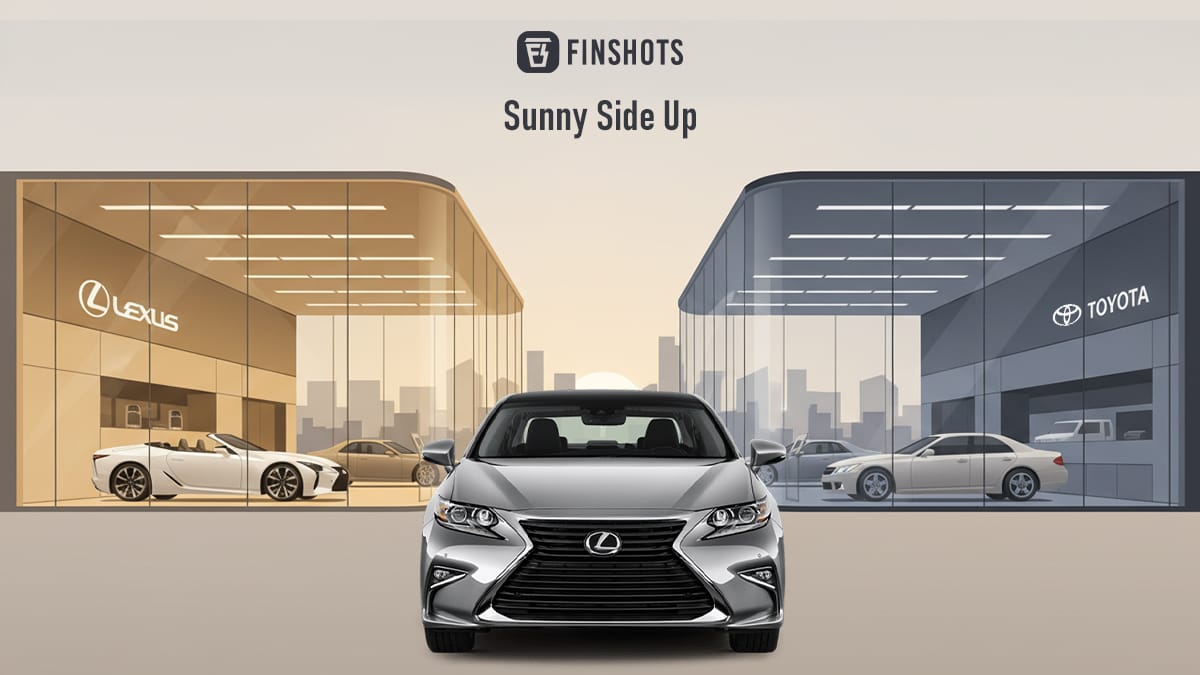
How Toyota learned to sell luxury by not selling a Toyota
There is a popular myth that the word Lexus stands for “Luxury Export to the United States.”It is not true. However, it is also not completely wrong.
Because in the 1980s, that was exactly the problem Toyota was trying to solve. At the time, the United States was the largest car market in the world. And Toyota was already a big player. Its cars were reliable, fuel-efficient, and, more importantly, sensible. Americans trusted Toyotas to start every morning and pretty much run forever.
But that trust came with a ceiling. People were happy to buy an affordable Toyota. However, they were not willing to buy an expensive one.
No matter how well-engineered the car was, spending luxury money on a Toyota badge just did not feel right. So Toyota faced an uncomfortable truth. If it wanted to sell luxury cars abroad, especially in the US, it could not do it as Toyota.
That is when the company made an unusually bold decision, and instead of tweaking its existing image, it decided to build an entirely new brand from scratch. One that had no association with its economic counterpart.
That brand would eventually be called Lexus.
However, before launching it, Toyota did something very un-Toyota-like. It slowed down and went outside Japan.
Guided by the Japanese philosophy of Genchi Genbutsu, which roughly translates to “go and see for yourself”, Toyota sent engineers, designers, and planners to the US years before launch.
Their job was not just to study competitors, but to observe how Americans thought about luxury. What did they value in a premium car? How did they define comfort? What kind of silence felt expensive? What kind of design felt authoritative rather than flashy?
The result was Lexus’ first flagship sedan, the LS 400. When it launched in 1989, it shocked the industry, as it was obsessively well-built and significantly cheaper than its European rivals. There was even an ad campaign that famously stacked champagne glasses on its hood to demonstrate how little the engine vibrated.
But more importantly, buyers did not see it as an expensive Toyota. They saw it as an actual luxury brand. And that rebranding exercise did more than just sell cars. It symbolised something larger about Japan’s economic journey.
After World War II, Japan’s recovery was deeply tied to the US. US occupation policies reshaped Japanese industry, management practices, and trade priorities. Early American demand gave Japanese exporters a massive external market to grow into. This was, in fact, on purpose. Post World War II, an American banker, Joseph Dodge, was sent to Japan during the US occupation to stabilise the Japanese economy.
At the time, Japan was struggling with high inflation, weak public finances, and an economy heavily dependent on government support. That was when a series of economic policies was introduced by Dodge to help the Japanese economy. This was called the Dodge Line.
For decades, Japan exported value to the US by being cheaper, more efficient, and more reliable. The Dodge Line imposed strict fiscal discipline by cutting subsidies, balancing the government budget, and tightening credit. But its most lasting impact came from fixing the exchange rate at 360 yen to the US dollar. That fixed rate deliberately kept the yen weak, which may have been detrimental in the short-term, but it also made Japanese exports more cost-efficient.
But Lexus marked a shift and showed that Japan was no longer just exporting cost efficiency. It was exporting aspiration. By the late 1980s, Japanese companies were confident enough to compete not just on price or quality, but on brand, emotion, and identity.
Over time, Japan diversified its markets and products, even as its economic relationship with the US remained central.
So while Lexus may not officially stand for Luxury Export to the United States, the spirit of that idea still holds.
Because sometimes, to sell something expensive, you do not change the product. But you change the story people tell themselves when they buy it.
Infographic 📊

Readers Recommend 🗒️
This week, our reader K Palak Faguniya recommends reading I Will Teach You to Be Rich by Ramit Sethi.
The book is a practical guide to managing money without guilt or extreme budgeting. The author’s core idea is simple: automate your finances, save and invest first, and then spend freely, guilt-free, on the things you truly care about, while quietly building long-term wealth in the background.
Thanks for the recommendation, Palak!
That’s it from us this week. We’ll see you next Sunday!
Until then, send us your book, music, business movies, documentaries or podcast recommendations. We’ll feature them in the newsletter! Also, don’t forget to tell us what you thought of today's edition. Just hit reply to this email (or if you’re reading this on the web, drop us a message at morning@finshots.in).
🖖🏽
Don’t forget to share this edition on WhatsApp, LinkedIn and X.