
Finshots Holiday Special: The Christmas tradition that started with a pun
Hey folks! The holiday season is in full swing, and we’re sure you’re feeling it too.
As we mentioned earlier, we’re taking a year-end break this week to step away from our usual writing spree and use the time to figure out how we can make Finshots even better in 2026.
And for that, we need your help.
We’ve put together a short Finshots Readers’ Survey to understand what you enjoy about our stories and where you think we can improve. So before you dive into today’s story, please take a moment to fill it out.
But as promised, we haven’t left you hanging. Every day, we’ll bring you a recap of some of the best stories we wrote this year. And once that’s done, we’ll roll into a Holiday Special series with one special edition each day on some of the weirdest and most unique Christmas traditions from around the world.
Let’s kick start today’s edition by revisiting five of our most interesting stories on scams from the year:
The Brightcom saga gets a final verdict!: An explainer on how SEBI caught onto the accounting tricks Brightcom Group has been pulling for years.
Carvana vs Hindenburg simplified: A story where we break down Hindenburg’s latest report against Carvana, an American company known as the “Amazon of cars”.
Amtek Auto’s ₹27,000 crore bank loan fraud: A story where we tell you how Arvind Dham, the promoter of Amtek Auto, committed thousands of crores of bank fraud.
The ₹150-crore prop-trading scam: An explainer on the recent prop-trading scam uncovered by Moneycontrol.
Memecoin fraud just became easier: An explainer on why the US SEC believes memecoins are not securities.
Today’s Finshots Holiday Special: A pun that inspired a Christmas tradition
If you walk through Chinese cities in December, Christmas does not announce itself as it does elsewhere. There are quiet suburban streets, no church bells echoing in the distance, and no plumcakes.
But look closely, and you will see something.
Inside shopping malls, at night markets, in vending machines, and sitting neatly behind glass counters at convenience stores.
Red apples.
They’re wrapped carefully in cellophane and stencilled with a Santa Claus and cursive “Merry Christmas” wishes.
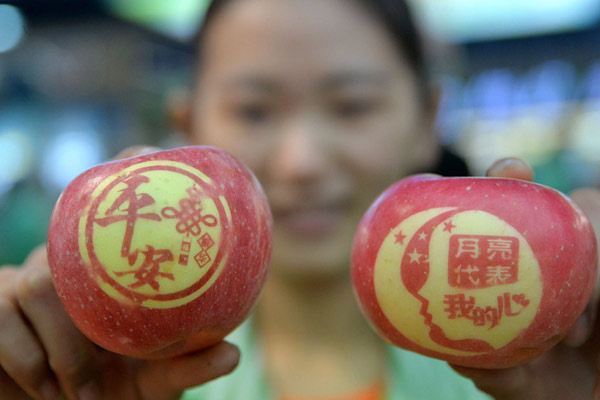
But this wasn’t always a thing. It’s just over the past decade that apples have quietly become a Christmas icon in China.
Which feels odd at first, doesn’t it?
You see, in Mandarin, Christmas Eve is called ping an ye, or “peaceful night”, a name derived from the translation of the carol “Silent Night”. And the word for apple is ping guo. That's why the Chinese started associating the fruit with ‘peace’, which is why when they gift each other apples on Christmas Eve, they often call them ping an guo. Or peace fruit.
Add to that the colour red, which symbolises prosperity and good luck in China, and the apple makes sense. It’s an affordable, meaningful way to wish someone well. At 10-20 yuan per apple, it is affordable and thoughtful. So the younger generation embraced it as something that felt locally intuitive.
And maybe that is why the tradition stuck.
Because China did not inherit Christmas with fixed rituals or expectations, there was no ‘turkey’ to carve or plum-cake to bake. So a new tradition grew organically, shaped by language, symbolism, and everyday habits.
To a peaceful year ahead. And many more to come.
Liked this Finshots Holiday Special? Share it with your friends, family, or even strangers on WhatsApp, LinkedIn, and X.