
Finshots Holiday Special: The Christmas Festival That’s All About Carving a Vegetable

Hey folks! The holiday season is in full swing, and we’re sure you’re feeling it too.
As we mentioned earlier, we’re taking a year-end break this week to step away from our usual writing spree and use the time to figure out how we can make Finshots even better in 2026.
And for that, we need your help.
We’ve put together a short Finshots Readers’ Survey to understand what you enjoy about our stories and where you think we can improve. So before you dive into today’s story, please take a moment to fill it out.
But as promised, we haven’t left you hanging. Every day, we’ll bring you a recap of some of the best stories we wrote this year. And once that’s done, we’ll roll into a Holiday Special series with one special edition each day on some of the weirdest and most unique Christmas traditions from around the world.
Let’s kick start today’s edition by revisiting five of our most interesting stories on the economy from the year:
Is Kerala’s lottery system a masterstroke by the government?: A story where we examine whether the Kerala state government lotteries are a boon or a bane in disguise.
The Budget simplified: The Union Budget 2025 explained.
India exports electricity. So why do we still have power cuts?: A story that unpacks why India sends electricity abroad while homes back here face outages.
Why CEOs and economists look at trucks: An explainer on what truck rentals and sales tell us about the economy.
Did India just cut global poverty?: An explainer on the World Bank's new International Poverty Line (IPL) and how India helped curb the net rise in global poverty.
Why Iran can’t shut down the Strait of Hormuz: An explainer about why the Strait of Hormuz won’t shut down and why that tiny strip of water could still move your portfolio.
Today’s Finshots Holiday Special: Noche de Rábanos in Mexico
If you dropped into a random Christmas celebration anywhere in the world, you would still recognise it. Lights, Crowds, Music, and a sense that something special is happening.
But then there are the details that stop you in your tracks. Details that make you ask, “Why are they even doing that?”
Take Halloween, for example. Carving pumpkins makes sense. It’s a large, hollow vegetable, making it a perfect canvas.
But in Oaxaca (Mexico), Christmas traditions revolve around carving something else entirely.
And it’s a small vegetable you probably last noticed floating awkwardly in a salad.
Every year, as Christmas approaches, Oaxaca hosts Noche de Rábanos, or the Night of the Radishes. And for one evening, the city’s main square fills up with intricately carved radishes shaped into scenes, stories, and miniature worlds.
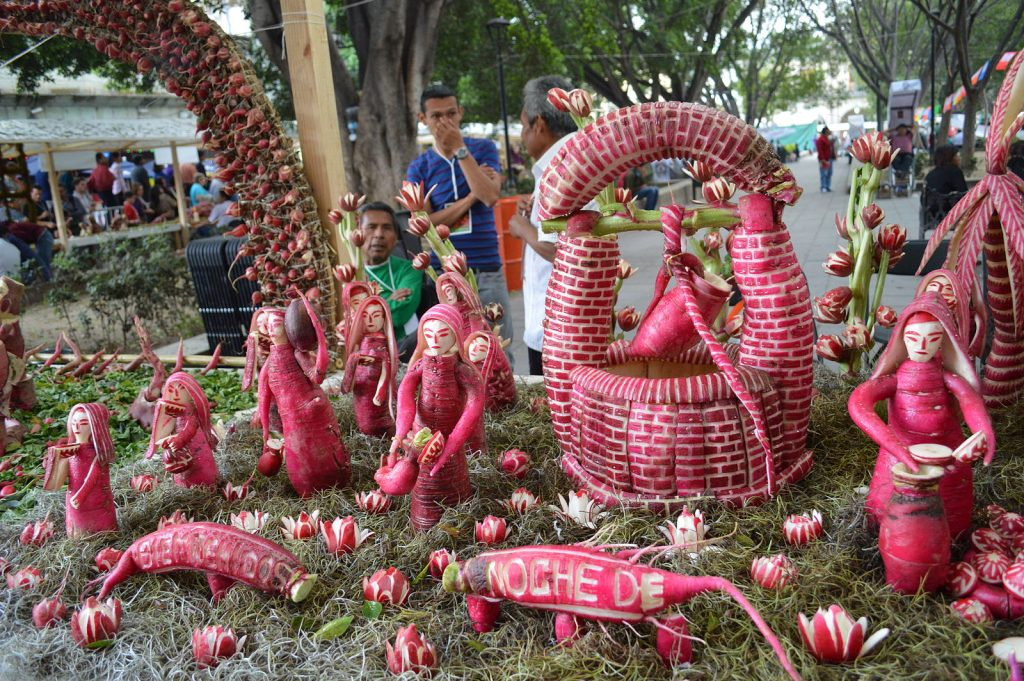
This tradition goes back more than a century.
In the late 1800s, merchants selling vegetables near the town plaza had a simple problem. They wanted to attract shoppers heading to and from Christmas church services. So they began carving decorative shapes into radishes, sometimes turning them into tiny people or embellishing them with other vegetables from their stalls.
Locals loved that spectacle and began buying the most elaborate creations as Christmas centerpieces. What started as a clever sales tactic slowly became something people looked forward to every year.
In 1897, Oaxaca’s mayor made it official, declaring December 23rd the Night of the Radishes, and it is alive and thriving to this day.
Artisans and amateurs alike compete to create the most striking radish display, which is grown especially for the event. They are much larger than usual, and some even weigh up to 3 kg and stretch nearly half a metre long. The radishes are then harvested around a week before the event, giving participants just a few days to carve their designs before returning to the town plaza to show them off.
And people really show up.
Visitors line up for hours to see the displays. By late afternoon, queues can stretch on for blocks. Families, children, and tourists shuffle past tables of radishes carved into nativity scenes, Mayan imagery, local wildlife like snakes and alligators, and even detailed recreations of Oaxaca’s historic architecture.
There’s a competitive edge, too. The creator of the best radish carving walks away with a cash prize of 12,000 pesos (Around $670).
Of course, radishes don’t age well. After a few hours outdoors, the edges start to brown. But that doesn’t slow the celebration. The plaza stays lively for days, with parades, handcrafted floats, fireworks, and traditional holiday meals carrying the festive mood right through Christmas.
It’s strange and pretty unique to this part of the world.
Which is exactly why it works.
While much of the world marks Christmas with evergreen trees and roasted meat, Oaxaca celebrates it with a vegetable that is never the centre of attention.
And yet, for one night every year, it absolutely is.
Liked this Finshots Holiday Special? Share it with your friends, family, or even strangers on WhatsApp, LinkedIn, and X.