
Domestic gas futures, the Petroyuan, and more...
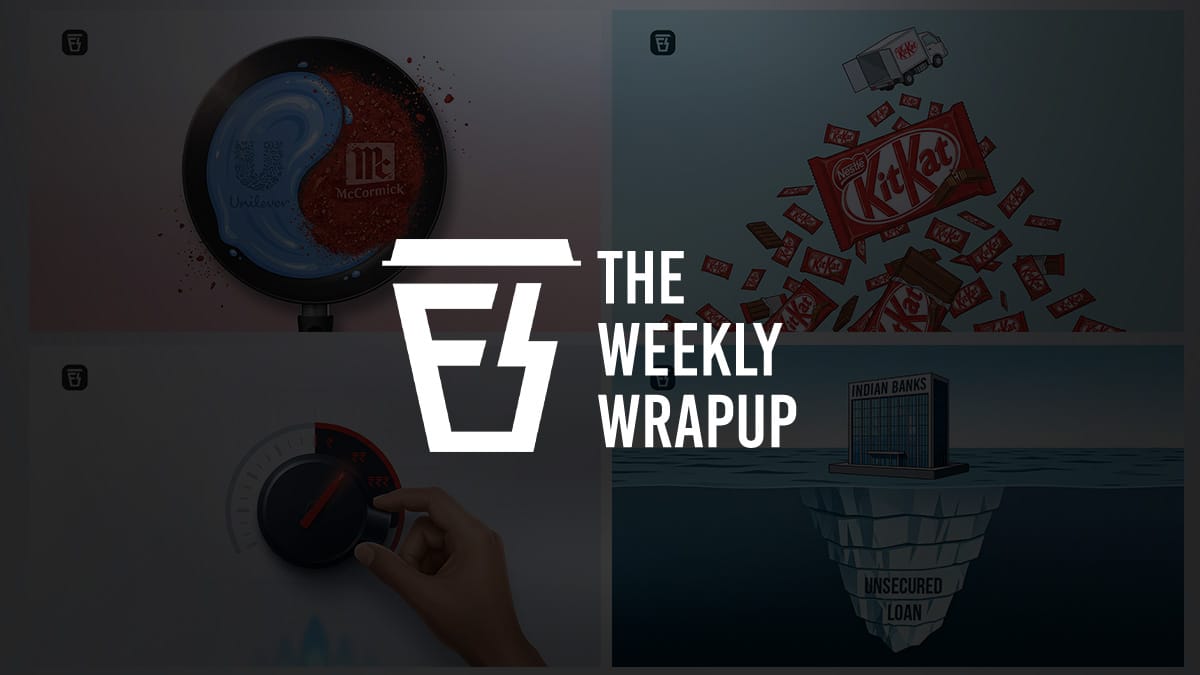
In this week’s wrapup, we talk about the rise of the Petroyuan, why Facebook, Instagram and YouTube got sued, whether Indian banks are underestimating the unsecured loan problem, the economics of stolen Kitkats, and why Unilever sold its food business to McCormick.
Also, in this week’s Markets edition, we discuss India’s first domestic benchmark-linked gas futures, which NSE will soon launch and whether they can succeed given that commodity liquidity has long struggled in India. You can read the full story here.
With that out of the way, let’s look back at what we wrote this week.
Is it time to write the petrodollar’s obituary?
Back in the 1970s, a sort of secret deal between the US and Saudi Arabia shaped how the world traded oil, i.e., in dollars. And for decades, that system worked smoothly.
But it looks like things may slowly be starting to shift.
From sanctions on Russia in 2022 to rising tensions in the Middle East right now, countries are beginning to question their dependence on the US dollar, with some even experimenting with alternatives like the Chinese yuan.
Does this mean that the petrodollar system is at risk? And could a rising “petroyuan” take its place?
Find out in Monday’s newsletter here.
Why Instagram, Facebook, and YouTube got sued
For years, social media platforms have had a pretty solid defense — we just host content, we don’t create it. And that argument has worked again and again.
But a recent court case against them in Los Angeles didn’t go after content, it went after how these apps are built.
Think about it. The endless scroll. Videos that just keep playing. Recommendations that somehow always feel one step ahead of you. None of this is accidental. It’s all designed to keep you from leaving.
Because the moment you treat these platforms like products, you can start asking whether their design itself is causing harm.
And this time, the court seemed to agree. In Tuesday's story we explained how platforms stopped being “just hosts” and started being seen as products.
Are Indian banks underestimating the unsecured loan problem?
Getting credit in India has never been easier. Credit cards, personal loans, and buy-now-pay-later options are now just a few taps away. And for a while, that looked like a win.
More credit meant more spending, more consumption, and more people entering the formal financial system. Banks loved it too, because unsecured loans are high-margin, easy to scale digitally, and don’t need collateral.
But that convenience may now be catching up. Because unsecured lending doesn’t show stress immediately. The risks usually show up 18 to 36 months later. And we could be seeing early signs of that.
Credit card NPAs are rising, and first-time borrowers are juggling multiple loans. Banks themselves have begun to pull back by tightening approval standards, cutting rewards on credit cards, and focusing more on high-quality customers.
Read our full story to find out more.
The economics of stolen KitKats
When 12 tonnes of KitKats went missing somewhere between Italy and Poland, the internet went crazy. Some made memes, while others turned it into a marketing opportunity.
But here’s the thing. Nestlé’s official statement on the heist pointed to a far more serious issue — cargo theft. And it’s not just a one-off incident. Cargo theft has, in fact, been rising sharply across the world. In the US alone, losses touched $725 million in 2025.
Which got us thinking, how does cargo theft, especially in the context of this KitKat heist, affect the economy? What actually happens when something like this gets stolen? Where do these goods go? And more importantly, does any of this activity even count as economic growth?
Check out Thursday’s newsletter, where we answer these questions and more.
Unilever just stepped back from food
Food has always been Unilever’s backbone. From everyday kitchen staples to iconic packaged brands, it’s been a business built on habit — predictable, steady, and deeply embedded in households.
But over time, something changed.
Growth in packaged foods started feeling… different. Not broken, just slower. While the rest of the business began chasing trends, pricing power, and premiumisation, food continued doing what it always had — delivering consistency. So Unilever is now merging its food division with McCormick, effectively stepping away from an entire category to sharpen its focus.
In yesterday’s story, we broke down why Unilever is stepping back from food altogether.
Finshots Weekly Quiz v2.0 🧠
Hey folks! As you probably already know, the Finshots Weekly Quiz has a new avatar. If you missed out, don’t worry. Click here to check out the rules and start participating in the quiz today to stand a chance of making it to this month’s leaderboard, and maybe even winning some merch!
But for now, it’s time to announce the top scorers of our previous weekly quiz. There were a whole bunch of you who participated, and many of you ended up with the same scores. So we’re calling you Bulls, Bears, Unicorns, Blue Chips, and Rising Stars. Here’s how the leaderboard looks right now:
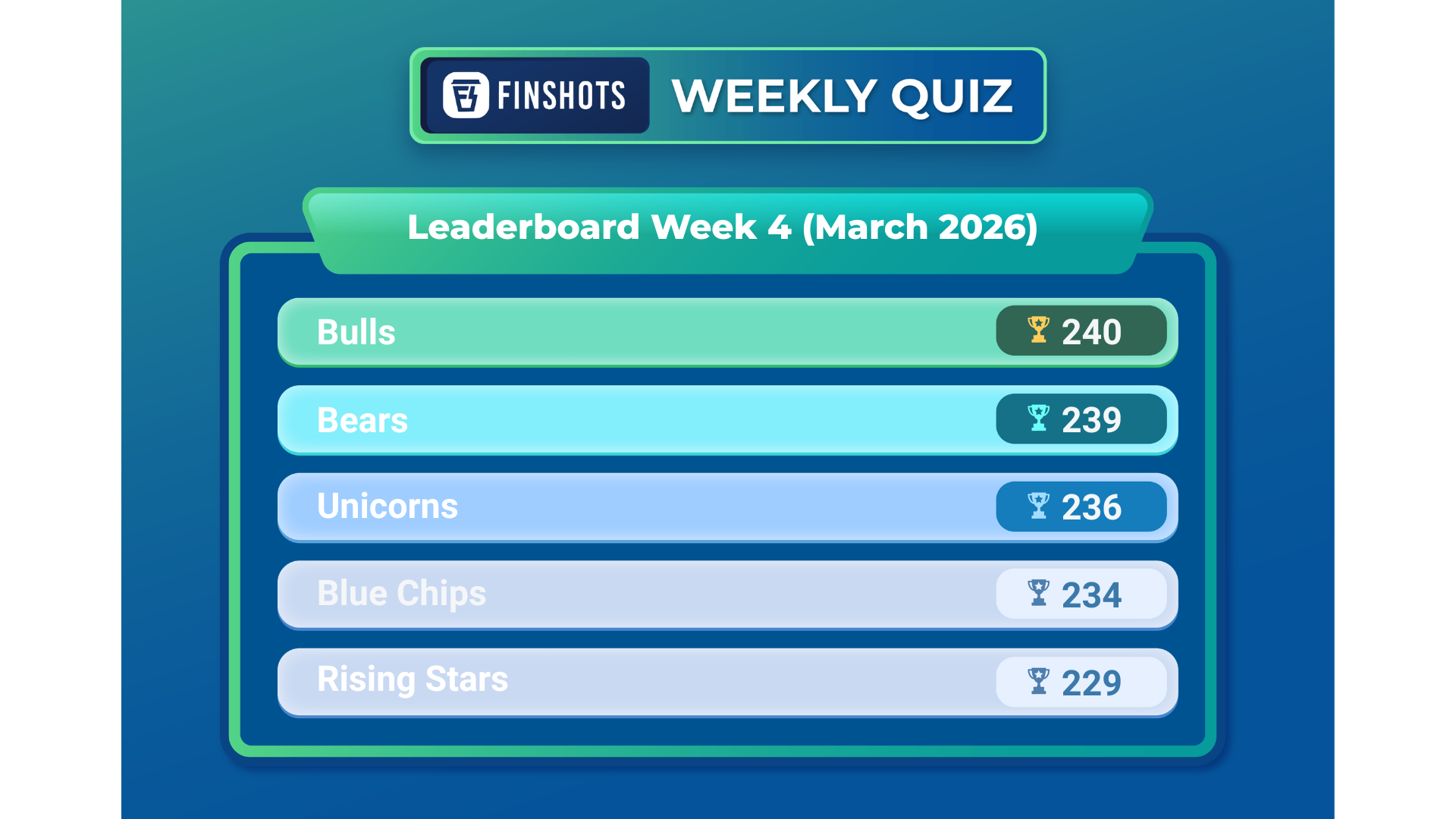
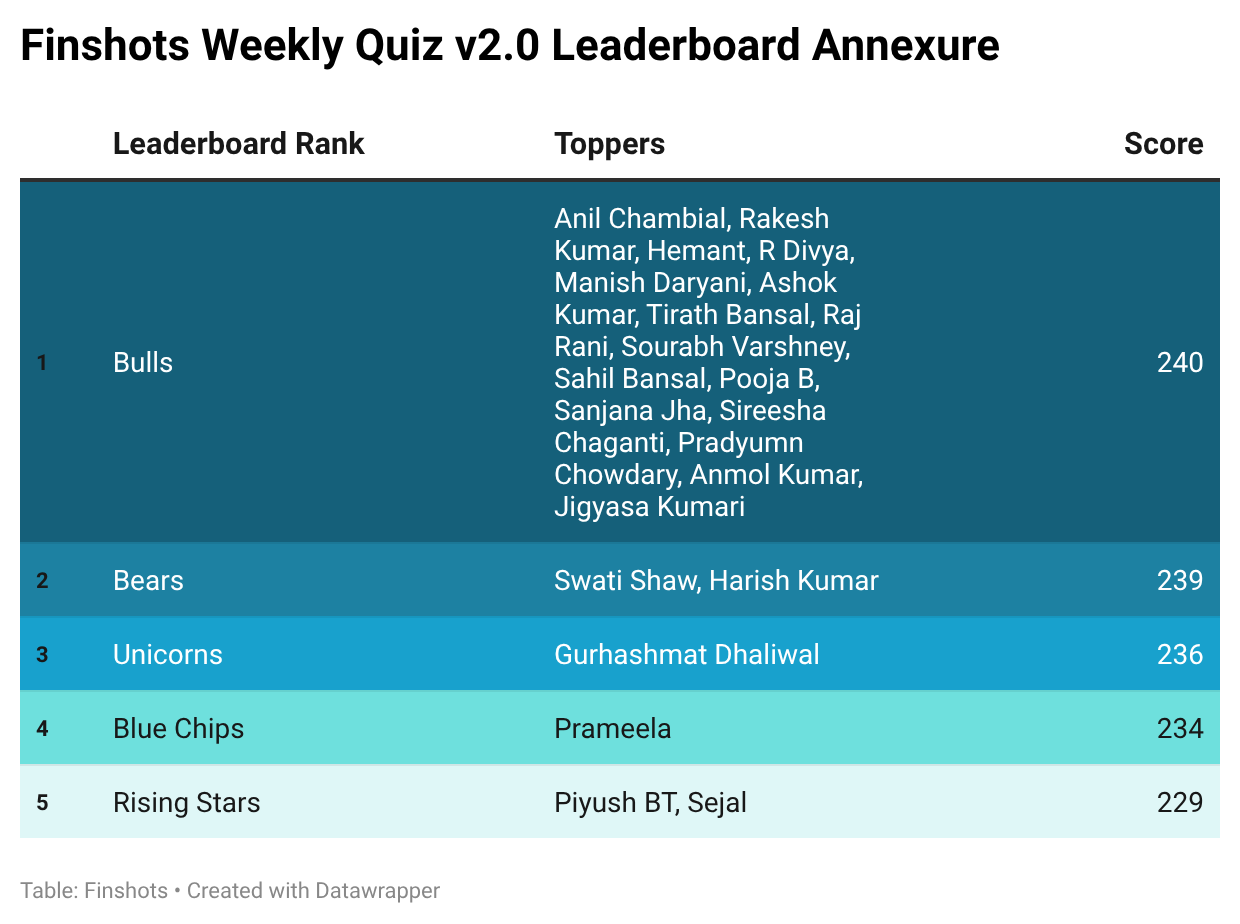
As you can see, we have sixteen top scorers fighting for the merch. But unfortunately, there’s just one merch box to be won every month.
So to break the tie, we’ll be sending a tie-breaker question to all the “Bulls” via email. Keep an eye on your inbox! The one who gets it right the fastest wins the exclusive Finshots merch for March 2026, and we’ll reveal the winner’s name next week.
And to the rest of you whose names made it to the leaderboard, congratulations! You may not have won the merch this time, but you showed up consistently and earned a spot on Finshots’ weekly leaderboard. That’s pretty cool.
So don’t lose hope. Hit the reset button this month and keep answering all the weekly quizzes. Who knows? You might just be the winner this time around.
Click on this link to take this week’s quiz, which is open till 12 noon, Friday, 10th of April, 2026. The more answers you get right, the better your chances of appearing on the Finshots Weekly Quiz leaderboard. We’ll publish it every Saturday in the Weekly Wrapup. And the winner will be announced in the first week of May.
Liked this week’s wrapup?
Don’t forget to share it with your friends, family, or even strangers on WhatsApp, LinkedIn, and X. And subscribe to Finshots, if you haven’t already. Plis!
Myth Alert: I'm Too Young to Buy Life Insurance!
The other day, one of our founders was chatting with a friend who thought life insurance was something you buy in your 40s. He was shocked that it was still a widely held belief.
Fact: Life Insurance acts as a safety net for your family. The younger you are, the cheaper it is. And the best part? Once you buy it, the premium remains unchanged no matter how old you get.
Unsure where to begin or need help picking the right plan? Book a FREE consultation with Ditto's IRDAI-Certified advisors today.