
Copper ETFs, HDFC’s high profile exit, and more...
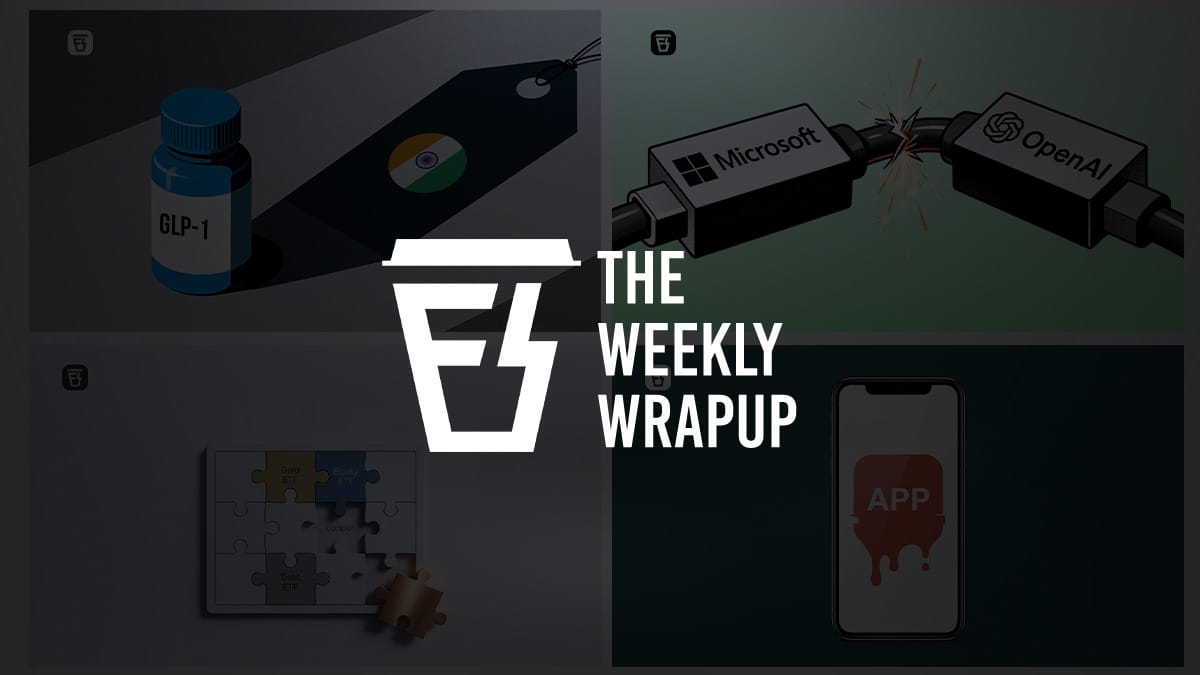
In this week’s wrap-up, we talk about the Metaverse, the high-profile exit at HDFC Bank, why Microsoft and OpenAI are at odds, whether India can become the world’s pharmacy for weight loss drugs, and why apps get worse the more we use them.
Also, in this week’s Markets edition, we discuss why India does not have copper ETFs even though they exist globally. You can read it here.
With that out of the way, let’s look back at what we wrote this week.
The Metaverse just got a reality check
For a while, the Metaverse looked like the future of the internet. Virtual offices, digital concerts, immersive social spaces — all rolled into one.
But reality didn’t quite match the pitch.
Despite billions of dollars in investment, platforms like Horizon Worlds struggled to attract users, while Meta’s Reality Labs burned through over $80 billion with little to show in returns. But the problem wasn’t just execution. Much like electric cars in the 2000s, we can say that the ecosystem itself wasn’t ready.
VR hardware remained bulky. Use cases felt forced. And unlike AI, which delivered immediate value, the Metaverse demanded a complete shift in human behaviour without offering a clear payoff.
Which raises a bigger question: Was the metaverse ahead of its time or solving a problem that didn’t really exist?
Read our full story to find out.
An exit at HDFC Bank without answers
HDFC Bank recently saw the sudden resignation of its chairman, who stepped down citing concerns around “values and ethics”. But beyond that statement, there has been little clarity on what exactly triggered the exit.
The bank has maintained that there are no material governance issues, while regulators have offered reassurance about the institution’s stability. At the same time, some reports point to internal disagreements, questions around certain decisions, and ongoing allegations that may have contributed to friction at the top.
In Tuesday’s story, we talk about the larger picture behind the former chairman’s exit.
Why Microsoft and OpenAI are at odds
At first glance, the fight between Microsoft and OpenAI looks like a classic Big Tech dispute over contracts and cloud dominance.
But it may come down to something as simple as definitions.
Because at the centre of this potential lawsuit is a technical distinction between AI models that remember things and AI models that don’t. This is called ‘stateful’ and ‘stateless’ respectively. Microsoft’s agreement with OpenAI says all stateless AI models must go through Azure. But OpenAI’s new platform, built with Amazon, claims to be stateful and therefore outside that restriction.
However, Microsoft argues that even if the product looks stateful, it still relies on stateless models underneath, meaning the deal is being violated. OpenAI, on the other hand, says users aren’t directly accessing the models at all, just a product built on top of them.
And behind that semantic battle lies something much bigger — control.
Because if OpenAI can freely distribute its models across cloud providers, Microsoft risks losing the edge it paid billions to secure. But if Microsoft enforces exclusivity, it could slow down the shift toward a more open AI ecosystem.
So, in the AI race, what matters more? Owning the model or controlling how it’s distributed?
Read our full story to find out.
Can India become the pharmacy for weight-loss drugs?
A major patent on semaglutide, the molecule behind blockbuster weight-loss drugs, just expired in India. And suddenly, cheaper generics are flooding the market. Sounds like a massive opportunity, right?
India, the “pharmacy of the world”, could step in and make these drugs far more accessible, not just at home, but globally. But there’s a catch. These aren’t just pills. They rely on complex injectable pens, precision manufacturing, and a reliable cold chain.
And that’s where things get tricky because India is essentially the generic king when it comes to pills and capsules, not devices. So can India really pull this off?
Read Thursday’s newsletter to find out.
Why do apps get worse the more we use them?
Last week, Zomato and Swiggy raised their platform fees, which is a cost that you pay even before the food starts moving towards you. But it’s not just food delivery. Payment apps, quick commerce, and shopping platforms all seem to feel a little less user-friendly than they once did.
At first, apps are designed to win you over — clean interfaces, useful features, and generous incentives that make the experience feel seamless. But once they’ve locked in a large user base, the priorities begin to shift.
What starts as a user-first product slowly turns into a profit-first platform. Ads creep in, fees rise, algorithms become more manipulative, and features that once felt helpful begin to serve the platform instead of the user. This gradual decline — often called “platform decay” or “enshittification” is less of a bug and more of a business model.
In our Friday story, we break down why your favourite apps don’t stay that way for long.
Finshots Weekly Quiz v2.0 🧠
Hey folks! As you probably already know, the Finshots Weekly Quiz has a new avatar. If you missed out on it in the last couple of months, don’t worry. Click here to check out the rules and set a reminder to participate consistently starting next month!
Next, let’s move on to the top scorers from our previous weekly quiz. There were a whole bunch of you who participated, and many of you ended up with the same scores. So we’re calling you Bulls, Bears, Unicorns, Blue Chips, and Rising Stars. Here’s how the leaderboard looks right now:
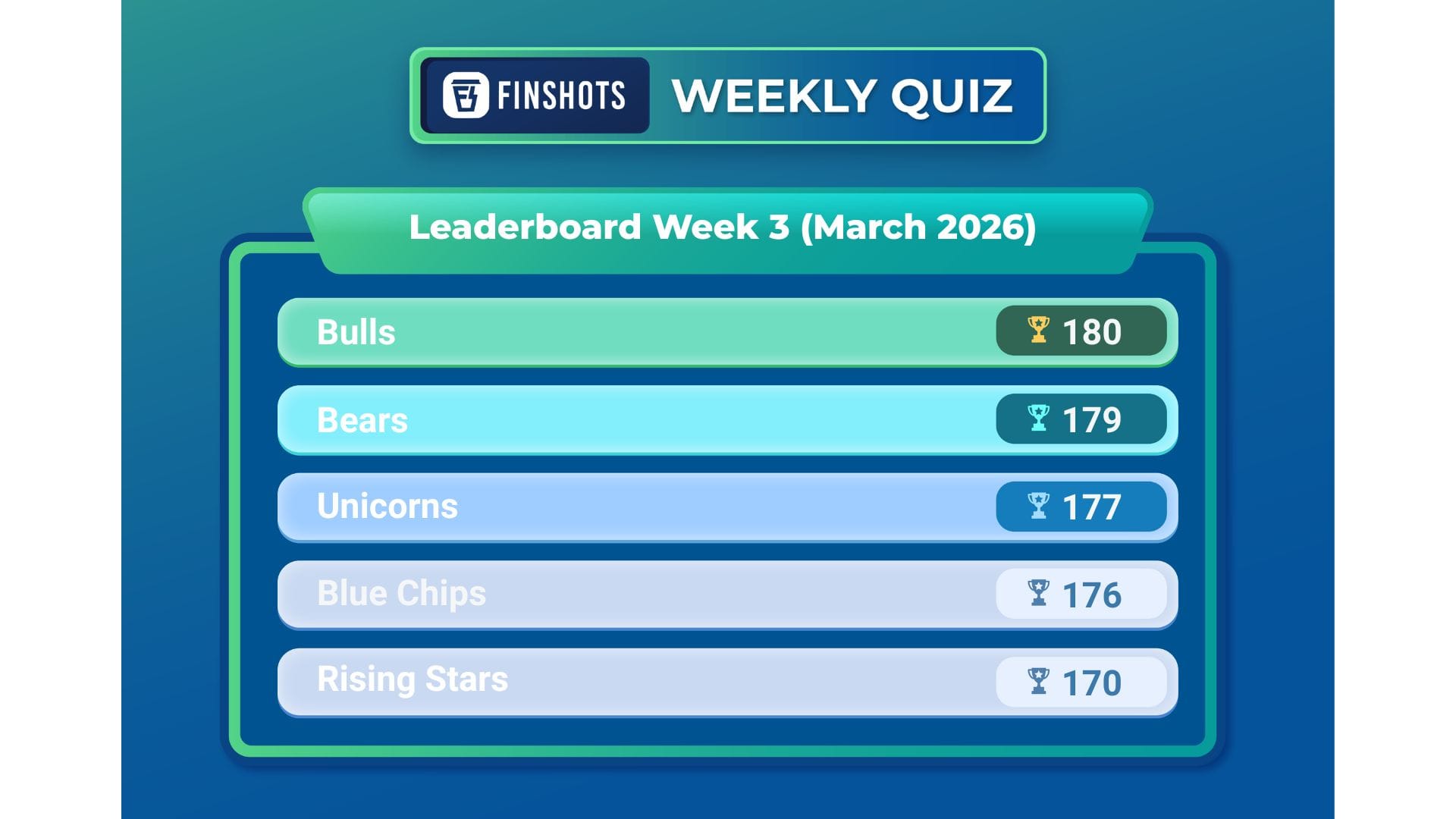
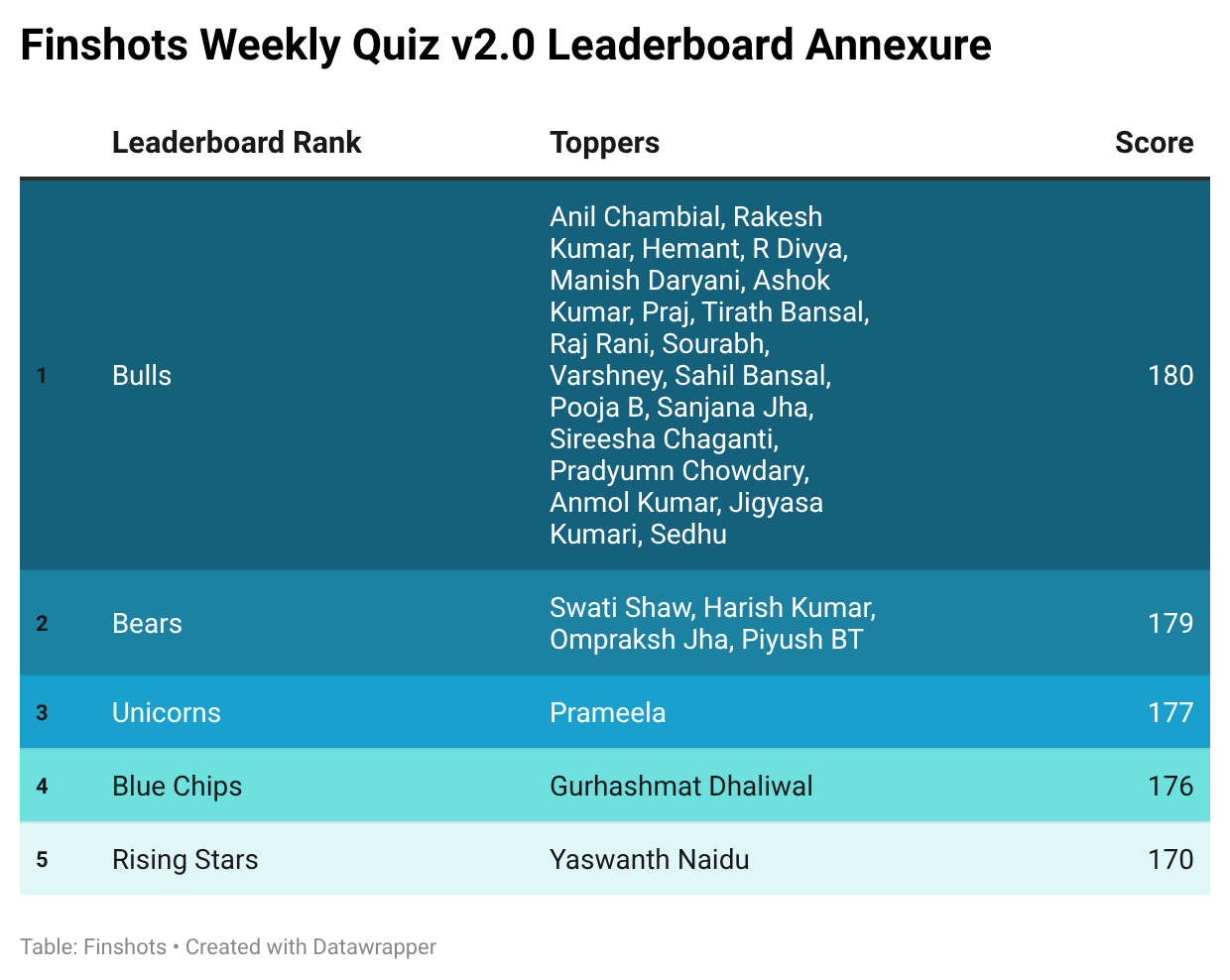
If your name has been featured on the leaderboard, then congratulations! If not, don’t lose hope. If you attempted last week’s quiz, keep at it and answer all the weekly quizzes this month. You never know when the turntables! Click on this link to take this week’s quiz, which is open till 12 noon, Friday, 3rd of April, 2026. The more answers you get right, the better your chances of appearing on the Finshots Weekly Quiz leaderboard. We’ll publish it every Saturday in the Weekly Wrapup. And the winner will be announced next week.
Liked this week’s wrapup?
Don’t forget to share it with your friends, family, or even strangers on WhatsApp, LinkedIn, and X. And subscribe to Finshots, if you haven’t already. Plis!
🚨Three insurers are revising their term premiums!
Three prominent insurers are set to revise their term insurance premiums. Policies issued after the revision will reflect the updated pricing. If you have already generated a quote, the premiums may change once the revision comes in.
Here’s why this matters: When you purchase a term life insurance policy, you pay a premium or a small fee each year to protect against financial risks. In the unfortunate event of your passing, the insurance company pays out a substantial sum to your family or loved ones.
If you've been considering a term plan, now is the perfect time to act. To assist you in the process, our advisory team at Ditto is here to help. Click on the link here to book a FREE call with our IRDAI-certified advisors.