
🍳BOSE is a research company, 25-hour days and more...
Hey folks!
It’s a brand new year, and this is our first Sunny Side Up edition of 2026. So let’s start by asking you a simple question. When the calendar flipped, what really changed?
For most of us, the answer feels obvious. New Year, new energy. Suddenly, waking up early may have seemed doable. Eating mindfully felt realistic. Or that unread book on your shelf may have finally got a chance.
Psychologists even have a name for this — the fresh start effect. Certain milestones like New Year’s Day, birthdays, or even Mondays give us the feeling of a clean slate. Past failures fade into the background, and motivation gets a temporary boost.
But here’s a fun twist.
One day in the very distant future, a “new year” could feel different in a very literal sense. Not because of resolutions or mindset shifts. But because the day itself might be longer.
Yes, longer days. As in 25 hours instead of 24.
Now, before you get excited, this isn’t happening anytime soon. We’re talking tens or even hundreds of millions of years away. But scientists are fairly confident it will happen. And the reason is quietly playing out right now.
See, a day is roughly 24 hours because that’s how long Earth takes to spin once on its axis. But it wasn’t always this way. When Earth first formed, a day lasted just about 6 hours. Things changed dramatically after a Mars-sized object collided with the Earth, eventually forming the Moon. That collision, and the Moon that followed, began slowing Earth down.
Simply put, Earth spins faster than the Moon goes around it. And the Moon’s gravity pulls on Earth’s oceans, creating tides. But because Earth keeps spinning underneath those oceans, the tidal bulges don’t line up perfectly with the Moon. They get dragged slightly ahead. And when the Moon pulls back on these off-centre bulges, it creates a tiny braking effect, like resistance on a spinning wheel.
It’s incredibly subtle. So each century, a day gets longer by just 1.7 to 2.3 milliseconds. And you’d never notice it in a lifetime. But stack those milliseconds over millions of years, and eventually, you end up with a 25-hour day.
So yeah, while we complain about not having enough time, rushing through mornings, squeezing workouts into evenings, wishing for “just one more hour”, future generations might actually get it. And we’ll just have to imagine what they’ll do with it.
But knowing our species, they’ll probably fill it with more work and wish the day were even longer. What do you think?
Here’s a soundtrack to put you in the mood 🎵
Khula Aasman by Punit Singh
That’s one recommendation from us. But keep your music recommendations coming in 2026. We’d love to feature them in our Sunday editions, especially gems from underrated Indian artists many of us haven’t discovered yet. Can’t wait to hear them!
What caught our eye this week 👀
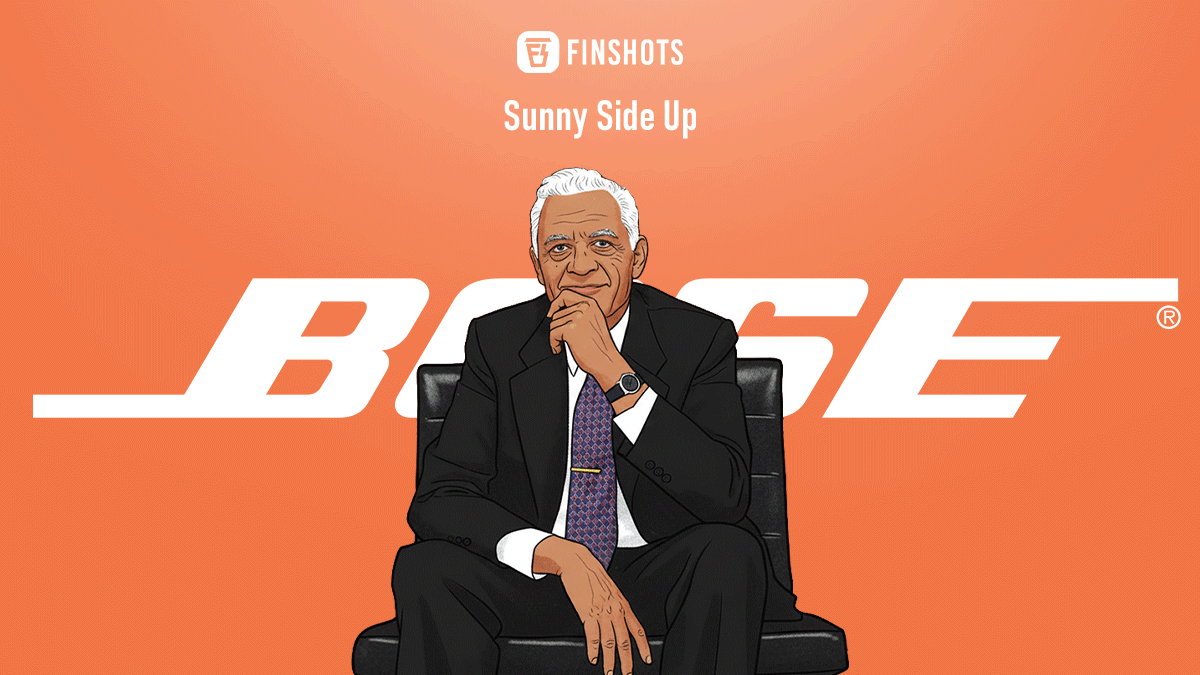
Built by a Professor, not a VC: The Bose Story
Recently, some of our teammates have started moving away from everyday earbuds and on-ear headphones toward in-ear monitors and high-fidelity audio gear. And a funny thing happens when people around you start getting serious about sound.
One day it’s just earbuds and playlists. The next, they’re talking about DACs (Digital to Analog Converters), frequency curves, and why this pair of headphones is “more honest” than that one.
And once you fall into that rabbit hole, you realise something pretty quickly.
Not every audio company is chasing the same thing.
Some want to impress audiophiles. Some want to sell lifestyle gadgets. Some want to win on price. And then there’s Bose, a name that keeps popping up, even though it doesn’t quite fit into any of those buckets.
That’s because Bose was never really built like a typical audio company in the first place.
It started with a professor who was annoyed.
The company is named after Amar Bose, who grew up in Philadelphia in the 1930s, fascinated by radios and electronics. As a teenager, he ran a radio repair shop out of his basement, mostly because he wanted to understand how things worked.
That curiosity followed him to MIT, where he studied electrical engineering, earned a PhD, and eventually returned as a professor. From 1956 to 2001, Bose taught and conducted research there.
And it was during those years that the idea for Bose, the company was born.
The trigger was almost comically simple.
Bose bought a pair of speakers that were considered “high quality” at the time. On paper, they were excellent. But in real life, they sounded… off. They didn’t feel like a live performance at all.
And that bothered him.
Instead of tweaking an existing design, Bose asked a much bigger question: Why doesn’t recorded sound feel real in the first place? And more importantly, how do humans actually experience sound in real spaces?
The first attempt to answer that question was a disaster.
In 1966, Bose built the Bose 2201 speaker, an ambitious design with 22 transducers (the part that converts electrical audio signals into physical vibrations, which then become the sound you hear). It failed spectacularly. Fewer than 50 units were ever made.
Most companies would have called it quits or pivoted to something safer. But Bose did the opposite. He went deeper into research.
He and his team began studying psychoacoustics or the way humans perceive sound. They recorded audio from different seats at the Boston Symphony Orchestra, analysing how sound reflected, dispersed, and reached listeners in real concert halls.
That work eventually led to the Bose 901 speaker, designed to recreate how sound is actually heard in live settings. This time, it worked. The product took off. And just like that, Bose became a company built on research first, and products second.
The 1970s made the contrast even clearer.
This was the decade when Apple and Microsoft were founded. When Star Wars changed how audiences experienced sound in cinemas. Technology companies were racing to scale, ship, and dominate markets.
Bose, meanwhile, was quietly doing something else.
They were designing audio systems for concert venues, engineering speakers specifically for car interiors, and working on an idea that sounded borderline ridiculous at the time — using sound to cancel sound.
That noise-cancellation research started with aviation headsets for pilots, where constant engine noise was a real problem. It would take decades before it showed up in consumer headphones. But Bose kept funding it anyway.
By the late 1970s, it was obvious that Bose didn’t behave like a normal consumer electronics company. And that raised an obvious question.
How did it survive?
The answer sits in a decision most big hardware companies never make — staying private.
While companies like Apple, Sony, and Samsung eventually answered to shareholders, Bose didn’t. That mattered more than it sounds. Developing active noise-cancelling technology alone cost the company close to $50 million spread over years, long before there was anything to sell.
In a public company, that would have been a problem because shareholders want timelines, returns, and certainty. But Bose had the freedom to say, “We’re not there yet”, and keep going.
Amar Bose once put it:
“I would have been fired a hundred times at a company run by MBAs. But I never went into business to make money.”
That mindset carried through to the end.
In his later years, Bose donated a majority stake of the company to MIT. When asked what the institute should do with it, his answer was simple: “Whatever you think is best.”
Today, Bose still operates as it always has. MIT receives dividends to fund research and innovation. The company stays private. And the focus remains squarely on engineering problems first, products later.
Which is why Bose doesn’t behave like a brand chasing audiophile approval or spec-sheet bragging rights.
It behaves like what it really is — a research lab that just happens to sell headphones.
Fun fact: To test durability, Bose engineers reportedly blast Norwegian death metal through speakers at their R&D centre. If it survives that, it’ll survive everyday use.
Infographic 📊

Readers Recommend 🗒️
This week, our old friend Nidhi Dhanani recommends listening to the Huberman Lab Podcast by Andrew Huberman.
It’s simple, science-based podcast about how the brain and body work together, and how you can use that knowledge to sleep better, focus more, manage stress, and improve everyday health.
Thanks for the recommendation, Nidhi!
That’s it from us this week. We’ll see you next Sunday!
Until then, send us your book, music, business movies, documentaries or podcast recommendations. We’ll feature them in the newsletter! Also, don’t forget to tell us what you thought of today's edition. Just hit reply to this email (or if you’re reading this on the web, drop us a message at morning@finshots.in).
🖖🏽
Don’t forget to share this edition on WhatsApp, LinkedIn and X.
For the third year in a row, we present Finshots’ Current Affairs Round up 2025!
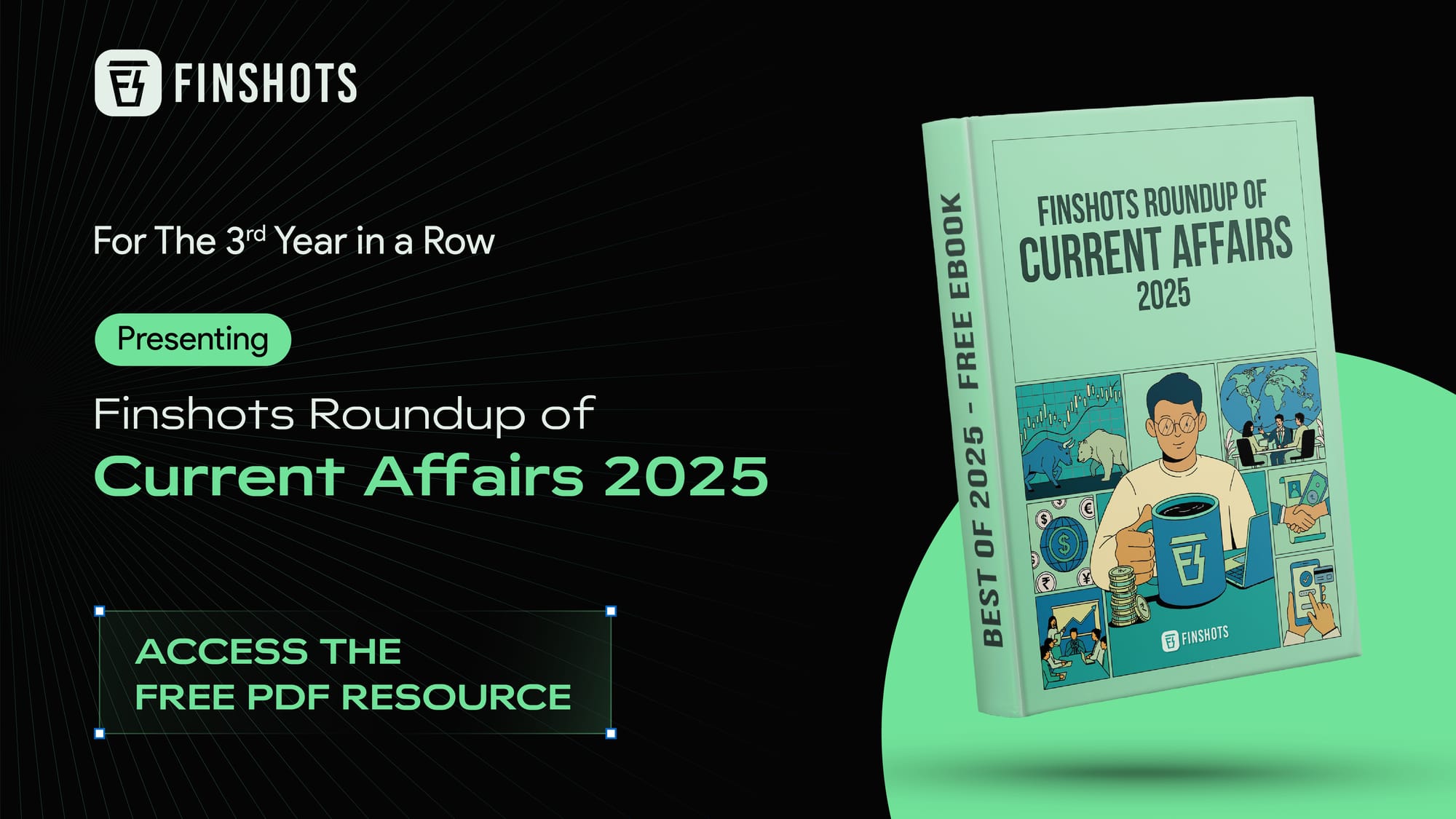
A FREE and comprehensive compilation of our most impactful financial, economic, tech and business highlights of the year is here. Get our classic 3-min reads in an easy to access PDF eBook.
Plus, we made sure to add our signature infographics too! Click here to access the PDF resource now.
And don’t forget to share this with your peers, friends, and anyone in your network who might benefit from it.
Happy Reading :)